Exploring features and benefits of industrial rooftop solar panel systems
By Rosalind Desai 28-07-2026 87
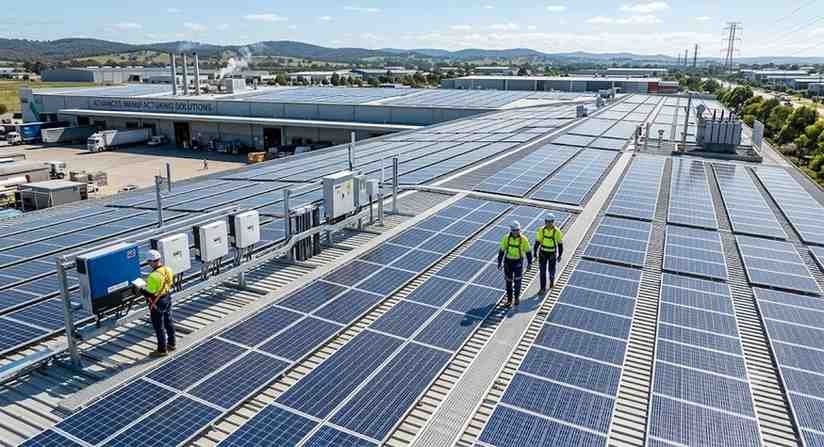
Industrial rooftop solar panel system is an installation of solar energy built on top of the warehouse and factories roofs and that generates clean electricity to meet the power requirements of one or more industries. It is necessary now for Indian industries to install industrial rooftop solar panel systems to reduce the increasing cost of electricity, improve energy security, and make the manufacturing sector sustainable. Industrial rooftop solar panel systems reduce the reliance on costly grid electricity thus helping to cut power bills leading to increased profitability of businesses in the long term. Industrial rooftop solar panel systems have come essential in producing renewable energy, minimizing the emissions of harmful pollutants, and providing reliable and cost-effective electricity for industrial activities.
Industrial Rooftop Solar Panel System Components, Working Principle & Importance
A industrial rooftop solar panel systems consists of the solar panels, support structures, inverters, DC and AC wires, junctions, protective devices, monitoring devices, and optional battery storage systems. These components all are essential in producing, converting, protecting, monitoring and delivering solar energy for industrial power. In a rooftop solar panel system, sunlight is converted to direct current using photovoltaic cells which is changed into alternating current for use in industrial machines by the inverter.
Advantages of industrial rooftop solar panel systems
Solar panel systems on industrial rooftops provide multiple benefits, such as allowing businesses to cut their electricity expenses, lessen their dependency on the power grid, and guard against increasing electricity costs. They make clean renewable energy on-site and help in making the use of electricity more efficient. These systems also need little maintenance, last for over 25 years, and give high returns on investment owing to long-term savings. In addition to reducing emissions, using solar systems leads to regulation compliance and companies’ sustainability branding and image boost while increasing profitability.
Limitation of industrial rooftop solar panel systems
There are several disadvantages of industrial rooftop solar systems that must be considered when evaluating their viability. First of all, they require a hefty upfront installation investment, and operationally they rely upon sunlight to produce electricity. This also means that they do not work effectively at night and produce less energy during cloudy days when there is no battery present. More factors that can affect the effectiveness of industrial rooftop solar energy systems include the amount of space available on the roof, shadow from nearby buildings, accumulation of dirt, and poor upkeep of the equipment. Besides, companies that use an enormous amount of energy may still need grid-sourced electricity or other power options, making industrial rooftop solar systems an addition to the existing sources of electricity.
Conclusion
Solar panels for the industrial rooftop system are changing the industrial sector by offering an effective, economical, and eco-friendly source of electricity. Their benefits over the long term, including lower bills, greater energy security, lower carbon footprint, and larger profitability, outweigh the challenges faced, like cost, dependence on weather, and limited space of rooftops. As technology keeps improving and the role of renewable energy in the industry gets stronger due to government backing, companies with rooftop systems will benefit all the more from renewable energy sources.