Introduction
Hair loss does not occur overnight; for the majority of the population, hair loss feels as subtle changes like increased hair density in the shower drain, patchy bald appearance, or a receding hairline that becomes harder to ignore over time. With growing interest in the field of regenerative medicine, new approaches are emerging for hair rejuvenation. The intent is to support the body's natural biological processes rather than simply masking the symptoms of hair thinning.
One treatment that has attracted significant attention in recent years is Exosome Therapy for Hair loss. While research is still developing, exosome therapy for hair loss supports scalp health and boosts follicular function.
What Is Exosome Therapy for Hair?
Exosomes are tiny nano-sized molecules that are naturally released by the cells. They can be thought of as messengers that carry important biological signals between cells. Exosomes are cargoes that carry bioactive molecules, including proteins, growth factors, cytokines, signalling molecules, microRNAs, and active lipids. These molecules trigger the natural process and aid in hair rejuvenation.
In regenerative science, researchers are widely focused on understanding the activation of dormant hair follicles, boosting the repair mechanism, regeneration of the hair, reducing inflammation, and activating hair follicle stem cells. Unlike stem cells, exosomes are not living cells. Instead, they deliver biological instructions that may influence how surrounding cells respond and function.
How Exosome Therapy Works for Hair Loss?
Healthy hair growth depends on much more than the hair follicle itself. The surrounding scalp environment, blood supply, cellular communication, and growth signals all play a role in how follicles perform over time.
Exosome therapy is designed to support these natural processes. The growth factors and signaling molecules carried within exosomes may help encourage communication between cells in and around the hair follicle. Researchers believe this activity could help create conditions that are more supportive of healthy hair growth.
Preclinical studies reflected the safety and tolerance of exosomes among individuals. It supports the scalp's natural repair mechanisms and influences biological pathways involved in the hair growth cycle. The future is focused on launching large-scale clinical trials to establish the safety and efficacy of the treatment for the long term.
Who Can Consider Exosomes Treatment?
Exosomes Treatment for Hair is often considered by people experiencing early to moderate hair thinning. Men and women with pattern hair loss may explore this option when they are looking for non-surgical approaches to hair restoration. The ideal candidates include:
- Individuals who want to address hair thinning before experiencing significant loss
- Supports existing hair follicular health; it is generally most relevant when active follicles are still present.
- Supports hair thinning caused by genetic factors, hormonal fluctuations, stress, nutritional deficiencies, medical conditions, or other factors.
- Dermatologists determine the underlying cause to recommend adequate treatment options.
What Happens During the Treatment?
The process usually begins with a consultation, where a healthcare professional evaluates your scalp, discusses your medical history, and reviews your treatment goals. The treatment procedure includes:
- Scalp preparation, scalp is cleaned, and introduced with localised numbing cream at the targeted area.
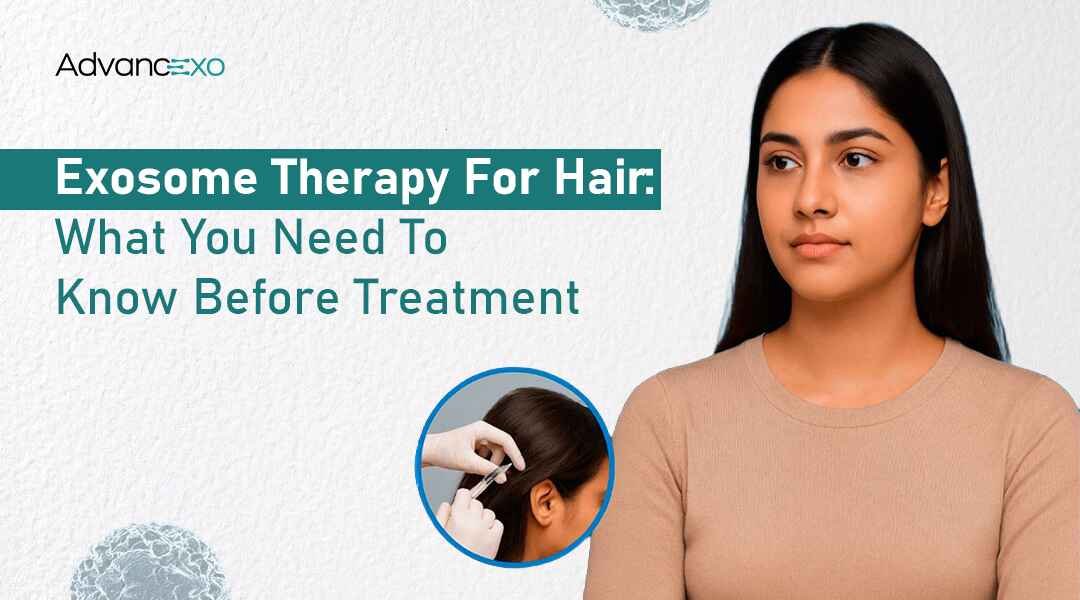
- For a better outcome, the target area is subjected to microneedling. The procedure creates tiny punctures.
- Exosomes at a desirable volume and concentration are topically massaged at the microneedling site.
- Post-procedure, an individual can have short-term side effects like redness, mild sensitivity, and tenderness.
- The changes occur gradually, depending on the improvement, the dermatologist recommends the number of sessions.
What are the Potential Benefits of Exosomes?
The potential benefits include:
- improvement in hair thickness
- supports fuller-looking hair
- maintains existing hair density, creates a healthier scalp microenvironment
- The procedure is minimally invasive
- makes changes naturally
*The results vary from person to person. The factors influencing the outcome includes age, genetics, cause of the hair loss, and overall scalp health can all influence outcomes.
What is the Cost involved in Exosome Therapy?
Exosome Hair Therapy Cost depends on various factors. These key factors include:
- Number of sessions required
- Complexity of the treatment plan
- Source and isolation procedure
- Clinic expertise, practitioner experience, and geographic location
*It is crucial to consider the quality of the product, the credentials of the provider, and the standards behind the products, rather than focusing on the treatment cost.
What to Keep in Mind Before Choosing Treatment?
Exosome therapy represents an exciting area of regenerative medicine, but it is still an evolving field. While early research and clinical experience have generated interest, scientists continue to study its long-term effectiveness and optimal use in hair restoration.
Set realistic expectations while opting for the treatment. The outcome can vary, and there is no guaranteed solution for every type of hair loss; outcomes can differ from one person to another.
Discussing the science-backed reasoning and logic prior to opting for the treatment.
Conclusion
Exosome therapy for hair has gained immense interest with the emergence of regenerative medicine. It supports the biological processes involved in scalp and follicle health.
Currently, the research is still developing. Understanding how the treatment works, what the procedure involves, and the factors that influence exosome hair therapy cost can help you make a more informed decision.