Emergencies don't send a warning. Someone collapses at a family barbecue. A coworker chokes during lunch. A kid at daycare has an allergic reaction nobody saw coming. In each of these moments, the person standing closest matters more than the ambulance still minutes away.
That's the entire point of CPR and first aid certification. It's not a formality for a job application or a line on a resume. It's the difference between watching an emergency unfold helplessly and actually doing something about it.
At KT Global CPR, we've spent years training people across Houston, from nurses to teachers to parents who just wanted to feel prepared, and we've seen firsthand how much this training changes what people are capable of in a crisis.
The Real Reason This Training Matters
Most people assume someone else will know what to do if something goes wrong. The problem is that everyone tends to think that, which means nobody actually steps in until it's too late.
Combined training changes that dynamic completely. It turns bystanders into responders. Instead of standing frozen, waiting for help to arrive, a trained person can start acting immediately, and those first few minutes are usually what determine the outcome.
Here's what tends to happen without trained people nearby:
- Minor injuries get worse because nobody knows basic wound care.
- Panic spreads faster than any actual help.
- People call 911 and then just wait, even when there's something useful they could be doing.
- Survivable situations become tragic ones simply because nobody acted fast enough.
None of this is inevitable. It's what happens when preparation gets skipped.
What This Certification Actually Covers
People sometimes assume CPR and first aid are the same thing. They're related, but a first aid course covers different situations than CPR does, which is exactly why combined training makes sense.
A solid first aid course typically includes the following:
- Treating cuts, burns, and sprains before they get worse
- Recognizing signs of a heart attack, stroke, or severe allergic reaction
- Handling choking emergencies using the Heimlich maneuver
- Controlling severe bleeding
- Knowing when an injury needs more than a bandage
CPR training, meanwhile, focuses specifically on cardiac emergencies:
- Recognizing when someone is in cardiac arrest
- Performing chest compressions at the right depth and rate
- Giving rescue breaths when needed
- Using an AED correctly and confidently
Together, CPR and first aid certification give you a complete toolkit instead of just half the picture.
Who Actually Needs This Training
It's tempting to think first aid training is only for healthcare workers, but that's a narrow way to look at it. Teachers, coaches, daycare staff, office managers, and parents all end up in situations where these skills matter.
KT Global CPR trains a wide range of clients for exactly this reason, including
- Hospital staff and healthcare professionals
- Police departments and first responders
- Schools, churches, and daycare centers
- General office teams and businesses of every size
Basically, if you spend time around people, there's a real chance you'll be the one closest when something happens. Being ready is simply more useful than hoping it never comes up.
Hands-On Practice Is What Makes It Stick
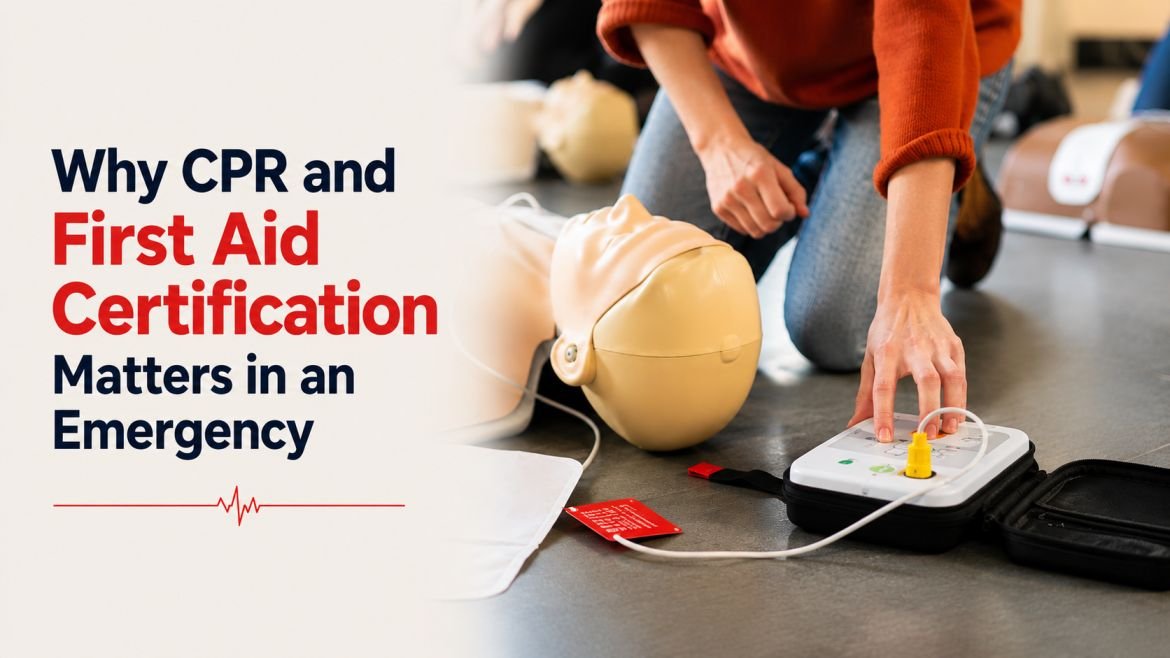
Reading about CPR is nothing like actually doing it. There's a real difference between watching a video and physically practicing compressions on a manikin while an instructor corrects your hand placement in real time.
That's why our first aid training at KT Global CPR is built around hands-on practice rather than passive lectures. People remember what they physically do far better than what they simply watch, and that muscle memory is exactly what shows up when the pressure is real.
Staying Current Matters Just as Much as Getting Certified
Skills fade if you don't use them, and guidelines get updated as research evolves. That's why CPR recertification exists and why letting a card quietly expire is a bigger deal than it seems.
An expired card can mean the following:
- Losing job eligibility right when you need to renew a contract
- Rusty technique that no longer matches current standards
- A false sense of confidence based on outdated training
KT Global CPR makes CPR recertification simple and fast. Our renewal classes are shorter than the original course but still hands-on, so you refresh exactly what matters without sitting through material you already know.
Why Train With KT Global CPR
KT Global CPR is a family-owned business based in Houston with over 20 years of combined healthcare experience behind our instructor team. We offer both AHA and American Red Cross courses, and we bring training directly to your location for group and on-site sessions when that's easier than traveling to us.
A few things that set our training apart:
- Small class sizes so instructors can give real, individual feedback
- Instructors with actual clinical and emergency response backgrounds
- Flexible scheduling built around your team or your own availability
- Classes that combine CPR and first aid skills into one practical course
Whether you're getting certified for the first time or handling a routine renewal, our goal is the same. You should walk out of the room genuinely capable, not just holding a card.
Preparation Is the Difference Maker
Emergencies rarely happen at a convenient time, and they never wait for someone to feel ready. This training closes that gap before it matters, so you're acting on trained instinct instead of panic when someone needs help.
The people who handle emergencies well aren't the ones who got lucky. They're the ones who trained ahead of time, and it showed when it counted.
Ready to Get Certified or Renew?
KT Global CPR offers CPR and first aid certification, along with fast and thorough CPR recertification, for individuals, teams, and businesses across Houston. Visit ktglobalcpr.com to book a free quote and find a class that fits your schedule. Or call (832) 262-4622 to talk through the right training option for you.