Hair loss often feels like a slow, inevitable process, but advancements in regenerative medicine are changing how we approach thinning strands. For many individuals in the region, the search for a non-surgical solution has led to the rise of exosome therapy. This treatment moves beyond traditional topical solutions by focusing on the cellular signaling that governs hair follicle health.
When we talk about exosome hair in Dubai, we are referencing a procedure that utilizes the regenerative power of exosomes—nanoparticle vesicles derived from stem cells. Rather than simply coating the hair shaft, these vesicles act as messengers. They deliver growth factors and proteins directly to dormant follicles, theoretically waking them up and encouraging them to transition back into the anagen, or growth, phase. It is a precise, biological approach to a problem that has historically been managed with harsher chemicals or invasive surgical procedures.
The Science Behind Regenerative Hair Therapy
The core of this treatment lies in the signaling capability of exosomes. In a healthy scalp, follicles receive consistent signals to produce hair. When hair loss begins, those signals become muted or distorted. Exosomes essentially provide a refreshed set of instructions to the cells in the dermal papilla.
These vesicles are rich in cytokines, growth factors, and genetic material that promote angiogenesis, which is the formation of new blood vessels. By improving the blood supply to the scalp, the therapy ensures that each follicle receives the oxygen and nutrients required for structural integrity. Unlike a transplant, which redistributes existing hair, this therapy aims to optimize the environment for the hair you currently have.
Candidates for Exosome Treatment
Not every type of hair loss responds to regenerative therapy. This procedure is generally most effective for:
Individuals in the early to mid-stages of androgenetic alopecia.
Patients experiencing thinning due to environmental stress or nutritional deficiencies.
Those who have undergone a hair transplant and wish to improve the density of the surrounding non-transplanted hair.
Individuals seeking a preventative maintenance plan to delay further shedding.
If your hair loss is scarring or caused by specific autoimmune conditions, a clinical evaluation is necessary to determine if your follicles have reached a point where they can no longer be stimulated.
What to Expect During the Procedure
The process is relatively straightforward and is designed for minimal disruption to your daily schedule. Here is how the typical session unfolds:
Scalp Assessment: A professional examines the scalp to identify areas of thinning where follicular activity remains present.
Sanitization: The scalp is thoroughly cleaned to ensure a sterile environment for the application.
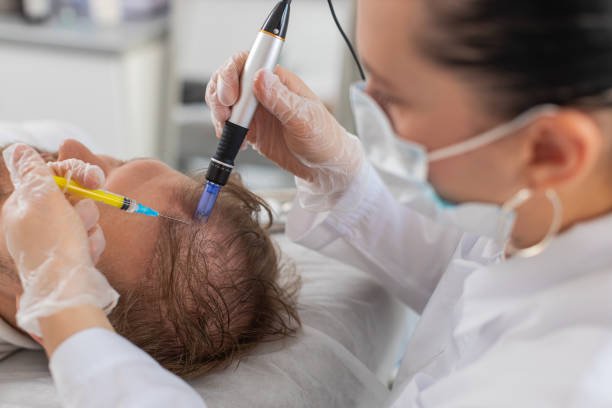
Delivery: The exosome solution is applied via micro-needling or localized injections. The use of micro-needling creates tiny channels in the skin, allowing the exosomes to penetrate the scalp barrier effectively.
Post-Care: Most patients experience mild redness, similar to a light sunburn, which typically subsides within 24 hours.
Recovery and Timeline of Results
One of the common misconceptions regarding hair restoration is that results appear overnight. Regenerative medicine requires patience. Because the treatment works by altering cellular behavior, it takes time for the hair growth cycle to reflect these changes.
Realistic Expectation Timeline:
Weeks 1-4: Many patients report a stabilization in shedding. The scalp feels healthier, and inflammation decreases.
Weeks 8-12: You may begin to notice the appearance of vellus hair, which is fine, soft hair that eventually matures into terminal hair.
Months 3-6: Visible increases in density and hair thickness usually become apparent.
Consistency is essential. While a single session can provide a boost in nutrient delivery, most successful outcomes are achieved through a curated series of sessions spaced out over several months.
Managing Scalp Sensitivity and Maintenance
Post-procedure, your scalp will be more sensitive than usual. It is standard advice to avoid harsh styling products, excessive heat, and intense physical activity that causes heavy sweating for the first 48 hours. Using a mild, sulfate-free shampoo is recommended to keep the scalp clean without stripping away natural oils or causing irritation.
Maintaining results is just as important as the procedure itself. Many people find that pairing exosome therapy with a balanced diet rich in iron, zinc, and B-vitamins creates a synergistic effect. Since the exosomes are fueling your follicles, ensuring your body has the raw materials to build new hair is vital for the best possible outcome.
Frequently Asked Questions
Is exosome hair therapy painful?
Most patients describe the sensation as a minor prickling or tingling. Because the needles used for delivery are extremely fine, discomfort is generally low and manageable without anesthesia.
How many sessions are required for visible improvement?
While this varies depending on the severity of hair thinning, a standard protocol usually consists of 3 to 5 sessions spaced 4 to 6 weeks apart to see consistent density improvements.
Are there any side effects to worry about?
Side effects are minimal. You may experience slight swelling, redness, or tenderness in the treated area. These symptoms are temporary and typically resolve within a day or two.
Can I combine this with other hair loss treatments?
Yes. In many cases, it is used as a companion to other therapies like PRP or specialized scalp serums. It is important to wait for a clearance from a professional before combining multiple treatment modalities.
Choosing the Right Path for Your Hair
Addressing hair thinning is a personal journey that requires professional guidance to ensure you are choosing a method that matches your specific hair type and degree of loss. For those exploring the most advanced options for exosome hair in Dubai, it is important to visit a facility that prioritizes sterile protocols and uses high-grade, purified exosome solutions. If you are ready to take the next step in your hair restoration journey, the team at Tajmeels Clinic provides expert consultations to help you understand if this innovative therapy is the right fit for your needs.