EPR Registration Made Simple: Step-by-Step Guide for Importers with AEO T1 Status
By Jack 15-10-2025 56
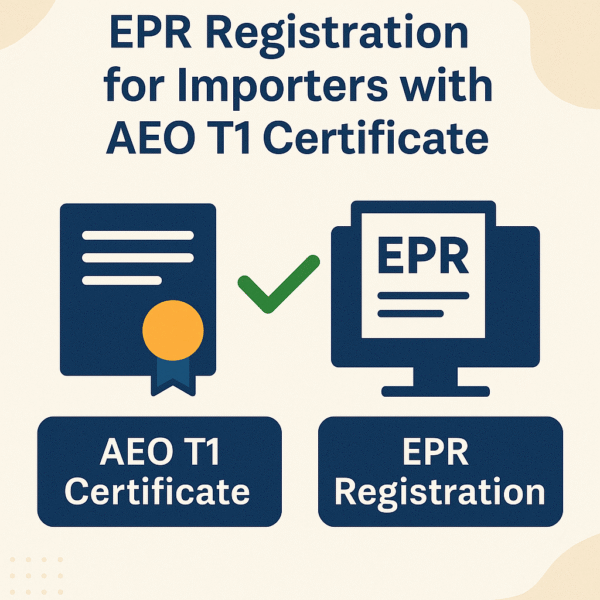
If you're an importer from India who happens to carry an AEO T1 Certificate, you already benefit from quicker customs clearances and fewer inspection stoppages. But there is one compliance more that is now downright inevitable — EPR Registration.
Whether you import electronics, packaged goods from plastic, batteries, or tyres, the Extended Producer Responsibility (EPR) system holds you liable for the waste resulting from your imports on a legal front. And unless you possess proper EPR registration, not even your AEO T1 status can save you from Custom House delay.
In this article, we’ll simplify the EPR Registration process for importers with AEO T1 and guide you step-by-step.
What is EPR Registration?
Extended Producer Responsibility (EPR) is an extension of producer responsibility for which the Producers, Importers, and Brand Owners (PIBOs) are responsible for taking up the used product and ensuring it gets recycled and disposed off environmentally sustainably.
For the importer, that would mean: if you import:
- Plastic packaging (primary or secondary)
- Electric appliances (TV, refrigerator, AC, etc
- Batteries (lithium-ion, lead-acid, EV batteries, etc.)
- Tyres
You need to obtain EPR Registraiton from the CPCB EPR Portal prior to clearing your consignments from Custom’s Custody.
Why Importers Under AEO T1 Must Consider EPR Seriously?
- AEO T1 Certificate provides you with quicker clearances and credibility, but the EPR compliance falls now under the jurisdiction of Customs itself.
- According to CPCB's letter to Customs (June 2025), every importer shall submit evidence of valid EPR Registration during the clearance process.
- Even the AEO-authorized importers will experience shipment detention, delay, or penalty if EPR compliance is lacking.
- Both AEO T1 and legitimate EPR Registration make your company very credible to Customs and CPCB, and your logistics runs more smoothly.
Step-by-Step Guide for EPR Registration for Importers (2025)
1. Find Your Category
Below are the following categories for which EPR Registration is required:
- EPR Plastic Waste → for FMCG, packaged commodities, toys, cosmetics, etc.
- EPR E-Waste → for electronics and electrical appliances.
- EPR Battery Waste → for portable, industrial, or EV battery applications.
- EPR Tyre Waste → for tyres on trucks or machinery.
2. Gather the required documents:
- Company Incorporation Certificate / Partnership Deed
- PAN, GST, IEC Certificate
- Authorized Signatory ID & Board Authorization Letter
- Factory/Trade License (if applicable)
- Details of Imported Goods (category, weight, HS Code)
3. Online Enrolment via CPCB's EPR Portal
- Open your account with information regarding PAN, GST, and IEC.
- Enter company details and product details.
- Upload documents and sign the form online.
4. Pay the Registration Fee
Your charge depends on your plastic/ewaste/battery/tyre generation slab. In EPR Plastic Waste 2025, for example, the following tax shall be
- < 1,000 TPA → ₹10,000
- 1,000–10,000 TPA → ₹20,000
- 10,000 TPA → ₹50,000
(Similar slabs apply under other categories with CPCB guidelines.)
5. Obtain Approval and Certificate
Once it is assessed by CPCB/SPCB, your EPR Registration Certificate is issued online.
6. Continuing Compliance after Registration
- File the Annual Returns by 30th June annually
- Pay yearly processing fee (25% of the registration fee) plus returns
- Keep records for recycling tie-ups, imports, and volumes sold
- Procure EPR Credits if you cannot meet collection/recycling targets directly
Benefits of Association of EPR with AEO T1
- Faster Customs Clearance → No delay for your shipment due to missing EPR.
- Reduced Risk of Penalties → CPCB & Customs see you as fully compliant.
- Business Credibility → Sustainable importers are respected by buyers and partners.
- Future-Proof Compliance → As India tightens up its waste management regulations, you're one step ahead.
How V International Can Assist?
At A V International, we engage in helping the importers with:
- EPR Registrations for Plastics, E-Wastes, Batteries, and Tyre waste.
- Filling of Annual Return with CPCB.
- Purchasing EPR Recycling Credits.
- End-to-end compliance that keeps your advantage of AEO T1 Registration intact and shipments running without halts.
✅ Final Word: If you are an importer who holds AEO T1 status, don't turn a blind eye toward EPR. Both compliances run together in 2025. Register for EPR today, remain compliant, and get hassle-free clearances.
Tags : .....