The food delivery industry has moved far beyond simple online ordering. Today, customers expect personalized recommendations, real-time tracking, multiple payment options, faster deliveries, digital wallets, loyalty programs, and seamless communication with restaurants and delivery partners. As competition increases, businesses are turning to technology to create food delivery platforms that are scalable, intelligent, and convenient.
To understand how technology is shaping the next generation of food delivery platforms, we spoke with the team at Dev Technosys, a technology company specializing in digital product development and on-demand solutions.
Interviewer: How has technology changed the food delivery industry?
Dev Technosys: Technology has completely transformed how customers discover restaurants, place orders, make payments, and track deliveries. Earlier, food delivery was primarily focused on connecting restaurants with customers. Today, it is a much broader digital ecosystem.
Modern platforms bring together customers, restaurants, delivery executives, administrators, and payment providers within a single connected environment. Technologies such as GPS, cloud computing, artificial intelligence, analytics, and automation are helping businesses improve operational efficiency while delivering a more personalized customer experience.
The focus is now shifting from simply delivering food to building a complete digital experience around food ordering and delivery.
Interviewer: What should businesses consider before developing a food delivery application?
Dev Technosys: The first step is to clearly define the business model. A startup may require a marketplace model that connects multiple restaurants with customers, while an established restaurant chain may need a dedicated ordering application.
Businesses should identify their target audience, delivery geography, restaurant partnerships, monetization strategy, and operational requirements before development begins.
From a technology perspective, scalability should also be considered from day one. A platform that works for a few hundred orders should be capable of supporting thousands or millions of users as the business expands.
This is where professional Food Delivery App Development Services can help businesses plan architecture, features, integrations, security, and long-term scalability.
Interviewer: Which features are becoming essential in modern food delivery apps?
Dev Technosys: Customers expect convenience and transparency. Some of the important features include:
User registration and profile management
Restaurant and food discovery
Advanced search and filters
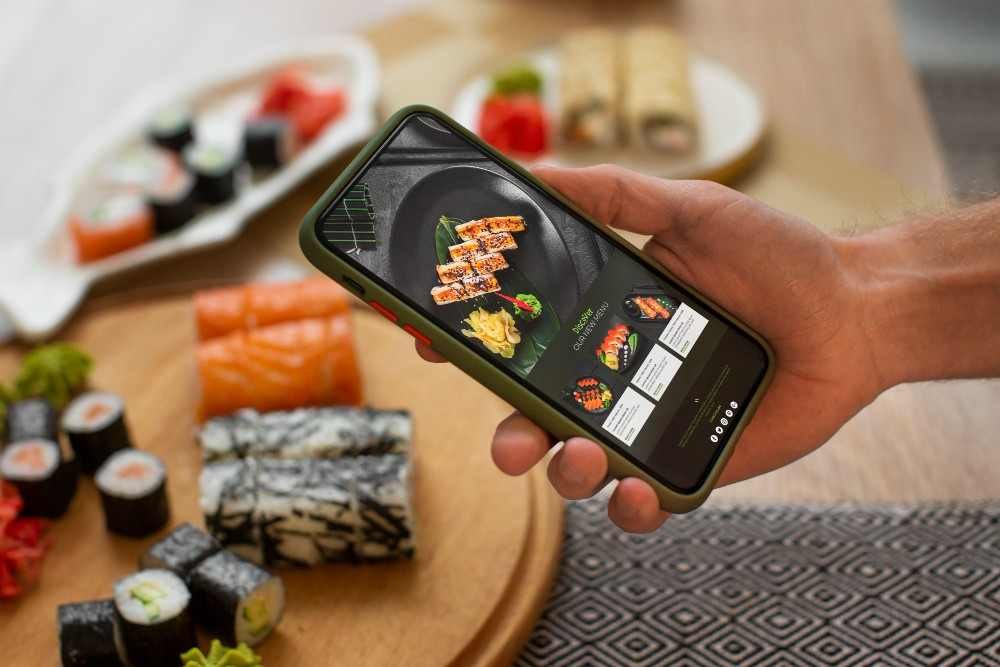
Digital menus
Cart and checkout
Multiple payment options
Real-time order tracking
GPS and location services
Push notifications
Order scheduling
Ratings and reviews
Discounts and promotional offers
Loyalty and rewards programs
Customer support
Order history
Restaurant management
Delivery partner management
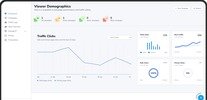
Admin dashboards
Analytics and reporting
For delivery executives, features such as route navigation, order acceptance, earnings management, availability status, and delivery history can improve the overall delivery workflow.
Interviewer: How is AI influencing food delivery platforms?
Dev Technosys: Artificial intelligence is becoming an important technology across the food delivery ecosystem. One of its most visible applications is personalization.
AI systems can analyze customer behavior, previous orders, preferred cuisines, locations, and purchasing patterns to generate relevant recommendations.
AI can also support demand forecasting. Businesses can analyze historical order data, seasonal trends, weather information, and customer behavior to anticipate demand in different locations.
Another important application is intelligent customer support. AI-powered chatbots can handle common questions related to order status, payments, refunds, delivery times, and restaurant information.
AI can also assist businesses with fraud detection, delivery optimization, inventory forecasting, and marketing automation.
Interviewer: How important is real-time tracking for food delivery businesses?
Dev Technosys: Real-time tracking has become an important part of the customer experience. Customers want to know whether their order has been accepted, prepared, picked up, and delivered.
GPS integration allows platforms to provide location updates and estimated delivery times. For businesses, tracking also provides operational visibility.
Delivery managers can monitor active orders, identify delays, and understand delivery patterns. Route optimization can further help delivery partners select efficient routes based on available location data.
A well-designed tracking system can therefore benefit both customers and businesses.
Interviewer: What role does personalization play in food delivery?
Dev Technosys: Personalization can make food discovery more relevant. Instead of presenting every restaurant or menu item in the same way, platforms can use customer data to organize recommendations around individual preferences.
For example, a returning customer may see previously ordered meals, preferred cuisines, nearby restaurants, or relevant promotional offers.
Businesses can combine analytics and AI to understand customer behavior while ensuring that data is handled responsibly. Personalization should improve convenience without compromising user privacy.
Interviewer: What security measures should food delivery platforms implement?
Dev Technosys: Security should be considered throughout the development lifecycle rather than treated as an additional feature.
Food delivery platforms handle sensitive information such as account details, addresses, order information, and payment-related data. Businesses should implement secure authentication, encrypted communication, access controls, secure APIs, and appropriate payment security measures.
Role-based access can ensure that customers, restaurants, delivery partners, and administrators only access the information required for their responsibilities.
Regular security testing, vulnerability assessments, secure cloud infrastructure, monitoring, and proper data-management practices can further strengthen the platform.
Interviewer: How can businesses make their food delivery apps scalable?
Dev Technosys: Scalability begins with the technical architecture. Businesses should select technologies and infrastructure capable of handling increasing traffic, transactions, restaurants, and delivery operations.
Cloud infrastructure can provide flexible resources as demand changes. Modular architecture can also make it easier to introduce new features without disrupting the entire platform.
Performance monitoring, database optimization, caching, API optimization, automated testing, and continuous maintenance are equally important.
Businesses should think beyond the initial launch and create a technology roadmap for future growth.
Interviewer: What trends do you expect to influence food delivery apps?
Dev Technosys: The industry will continue moving toward intelligent and automated experiences. AI-powered recommendations, predictive analytics, voice-enabled ordering, automated customer support, smarter delivery management, and advanced business intelligence are likely to become increasingly common.
We also expect greater integration between food delivery platforms and digital wallets, loyalty ecosystems, smart devices, restaurant management systems, and other connected services.
The businesses that focus on convenience, reliability, personalization, and operational efficiency will continue to invest in technology that supports these objectives.
Interviewer: What advice would you give businesses planning to build a food delivery platform?
Dev Technosys: Businesses should begin with a clear understanding of their customers and operational model rather than simply copying existing applications.
Start with a well-defined MVP containing the features required to validate the business model. Once customer feedback and usage data are available, additional capabilities can be introduced based on actual business needs.
It is also important to select an experienced technology partner that understands mobile development, backend architecture, APIs, cloud infrastructure, payment integration, GPS technology, and security.
The objective should be to create a platform that can evolve with the business.
Final Thoughts
The future of food delivery is being shaped by intelligent technology, changing customer expectations, and increasingly connected digital ecosystems. From personalized recommendations and real-time tracking to AI-powered automation and predictive analytics, technology is helping businesses rethink the traditional food ordering experience.
With the right strategy, architecture, and development approach, businesses can build platforms that support customers, restaurants, and delivery partners while remaining prepared for future growth.
For companies planning to enter or expand within the on-demand food delivery market, investing in reliable Food Delivery App Development Services can provide the technical foundation needed to transform an idea into a scalable digital platform.