Guests expect a comfortable stay when they check into a hotel. They want a clean room, a comfortable bed, and a quiet environment where they can relax. Even small details, such as the sound of a minibar running through the night, can affect their experience.
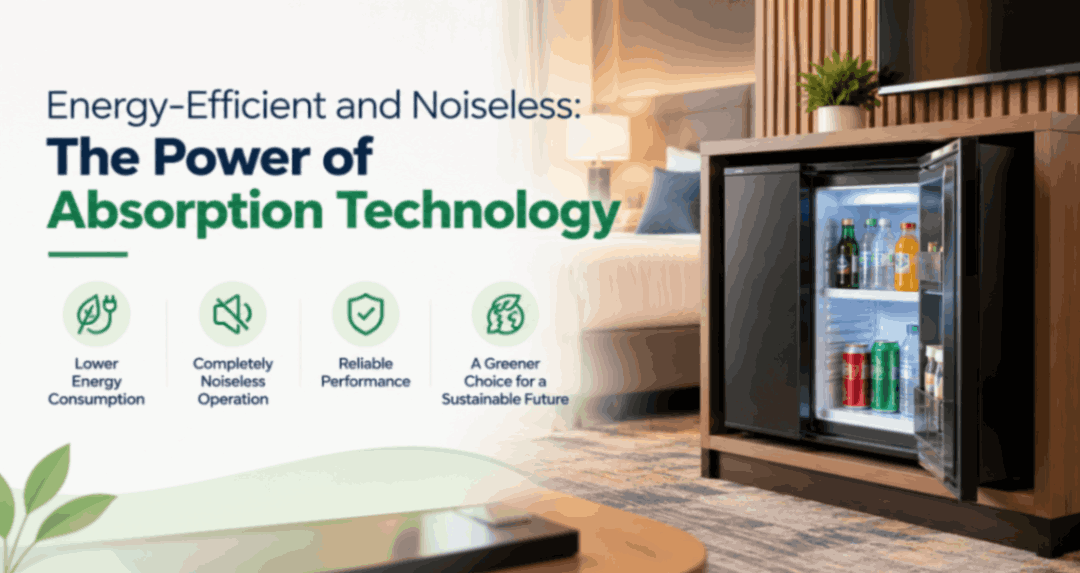
This is where absorption technology comes in. Absorption cooling is used in hotel minibars and other refrigeration systems where low noise is important. Unlike conventional compressor-based refrigerators, absorption systems use heat to drive the cooling process rather than relying on a mechanical compressor.
For hotels, this offers an alternative worth considering when choosing room appliances. However, energy consumption, room temperature, ventilation, and the appliance's cooling performance still matter when comparing different models.
How Does Absorption Technology Work?
Absorption technology uses heat to run a cooling cycle instead of a mechanical compressor. In a typical absorption minibar, a heating element drives a sealed system that uses refrigerant and an absorbent to remove heat from inside the cabinet.
The biggest difference is that the system has no compressor motor or moving mechanical parts in its cooling circuit. This means there is no regular compressor hum or vibration, making it suitable for hotel rooms where guests expect a quiet environment.
Why Do Hotels Choose Absorption Minibars?

Hotels choose absorption minibars mainly for their quiet operation. Unlike conventional compressor refrigerators, these units can run without the familiar motor noise that guests may notice at night.
Here are a few reasons hotels consider them:
- Quiet operation: They help maintain a peaceful room, particularly in bedrooms and suites.
- Fewer moving parts: The cooling system has fewer mechanical components that can cause vibration.
- Guest comfort: Guests can keep drinks and snacks cool without the sound of a compressor switching on and off.
- Convenient placement: Their quiet operation makes them suitable for installation inside guestroom furniture, provided the required ventilation space is maintained.
However, silent operation does not automatically mean lower electricity consumption. Absorption minibars can use more electricity than modern compressor models, depending on the unit and operating conditions. Hotels should compare actual energy consumption figures before buying.
Is Absorption Technology Energy-Efficient?
Energy efficiency depends on how the appliance is designed and used. Absorption minibars typically operate for long periods because they use a steady heat source to maintain cooling. Their actual electricity consumption depends on the model, room temperature, ventilation, and how frequently the door is opened.
For hotel operators, the best approach is to check the manufacturer's stated consumption in kWh per 24 hours. Multiply this figure by the number of units and days of operation to estimate annual electricity use.
For example, a hotel with 50 minibars can compare the expected annual consumption of different models before making a bulk purchase. This helps the team understand the likely running costs rather than relying on the purchase price alone.
Proper installation also matters. Leave the recommended clearance around the minibar, keep ventilation openings unobstructed, and avoid placing the unit in an excessively hot enclosure. Poor ventilation can affect cooling performance and increase energy use.
What Should Hotels Check Before Buying?
Before choosing an absorption minibar, consider the following points:
- Capacity: Select a size that suits the room category and the items guests are likely to store.
- Cooling performance: Check the operating temperature range and the manufacturer's recommended ambient conditions.
- Energy consumption: Compare the stated kWh per day across different models.
- Installation: Confirm the required ventilation clearance and cabinet dimensions.
- Maintenance: Check the warranty, service arrangements, and availability of replacement units.
These checks are especially useful when purchasing appliances for multiple rooms, where a small difference in running costs can add up across the property.
Choosing the Right Hospitality Supplies
Minibars are only one part of a comfortable hotel room. Lighting, door locks, kettles, safes, and other room appliances also affect the guest experience.
When comparing hospitality goods supplies, hotel managers should consider the purpose of each product, its expected lifespan, maintenance needs, and operating costs. Buying everything based on the lowest initial price may lead to higher replacement and servicing costs later.
It is also worth reviewing other room equipment, such as energy saving switch supplies, to identify practical ways to manage electricity use across the property.
Final Thoughts
Absorption technology offers a practical solution for hotels that prioritise quiet guest rooms. Its main benefit is the absence of compressor noise and vibration, although it may consume more electricity than some modern alternatives.
Before making a purchase, compare cooling performance, energy consumption, installation requirements, and long-term maintenance costs. The right choice will depend on your property's room conditions, guest expectations, and operating budget.
For hotels, the goal is simple: choose appliances that keep guests comfortable while making sense for everyday operations.
Tags : hospitality gadget