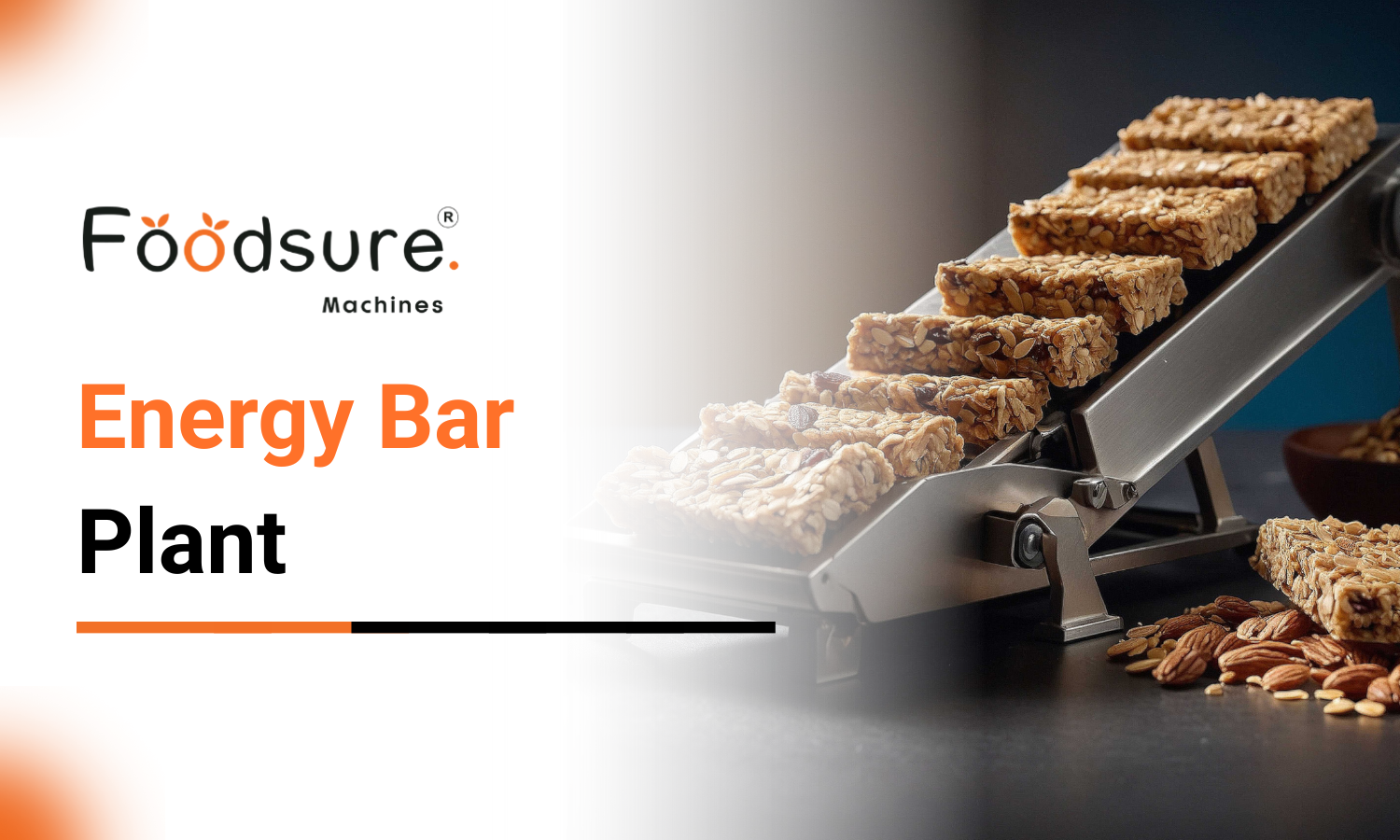
The market for healthy food in India is undergoing a quick and significant transformation, and one key contributor is the energy bar. The energy bar has evolved from a niche item primarily targeted towards athletes to a product category now finding its way into children's tiffin boxes, professional desks, and supermarket shelves. Let's take into account what you need to enter into the energy bar plant business, costs, set up, and what your actual growth opportunities may be if you are going to set up an energy bar manufacturing unit.
Why Energy Bar Plants Are Becoming Popular
Energy bars are no longer viewed only as being for activities in gyms or can only be purchased in sporting goods stores. Consumers are considering energy bars to be healthy snacks that are convenient and that can provide quick energy. Several contributing factors to the higher market demand for energy bars are:
- Growing numbers of health-focused consumers are interested in snacks made with protein.
- Increase in e-commerce sales of healthy snack options.
- Increasingly busy lifestyles that allow for easy-to-eat or portable food.
- Growing demand for nutrition products meeting export standards.
For manufacturers, there are opportunities developing for Energy Bar Plant production for domestic and direct export.
Key Essentials for Starting an Energy Bar Plant
If you want to invest in this sector, you will need some basic items.
Machinery and Equipment: An energy bar factory will need machinery to mix the dry and wet ingredients, shape and cut the bars, and pack them. Using automated machinery will help you with proper sanitation and consistency.
Raw Materials: A lot of energy bars consist of oats, nuts, seeds, dehydrated fruit, sweeteners, and a protein blend. This base recipe is a rounder, allowing you to develop varieties such as protein bars and vegan bars based on your target market.
Employees: You will need a small workforce to manage operations, complete quality control, and packaging. You can minimize labor efforts with automation work, such as noted above.
Compliance: Every energy bar factory has to comply with the FSSAI food safety standards. You will be required to use compliant food-grade machinery to get an inspection, and your buyers will have a level of trust in your facility.
Cost of Setting Up an Energy Bar Plant
The price can vary widely based on the size of the facility:
Small facility - ₹ 20 - 30 lakhs - Best for local market/contract work.
Medium facility - ₹ 50 lakhs - ₹ 1 crore - Best for companies that plan/hope on the regional/national market.
Large/full facility - ₹ 2 crore-plus. Best for export and collaborating with big-box retail.
If you do some smart planning, it is worth it to pay the cost of an energy bar facility, particularly when you start small and grow when demand comes.
How Profitable Is an Energy Bar Plant Setup?
Presented below are several key manufacturing pieces of equipment for producing energy bars:
Mixing/Blending Machine: Mixes and blends ingredients thoroughly.
Extrusion Machine: Shaped the bars; this is a common piece of equipment used to produce protein, energy bars, etc.
Cutting Machine: Cutting the bars down into even sizes. Therefore, we can cut a bar with great accuracy and precision. It can be used, for example, to add coatings of chocolate or some other sort.
Cooling Tunnel: Cools bars all the way through uniformly.Packaging Machine Wrap, seal, and preserve bars automatically, and ensure shelf life freshness.
Conveyors: Used to transport your product or materials either internally or to the next step of production. They monitor the bars' production for specificity, consistency, and hygiene.
Challenges in Running an Energy Bar Plant
Producers of energy bars face challenges, including competition from big brands. Ensuring taste and texture consistency, shelf-life of natural ingredients, and packaging that is acceptable for consumers. It is also strong enough to ship. Aside from those challenges, automation can assist (not solve) problems such as consistent products. when combining recipes, mixing, and bulk processes.
Automation also allows programs to apply shelf life preservatives, such as sodium benzoate. And operate in conjunction with professional visible food packaging in adherence to international food packaging legislation. With these improvements, there will be less overall waste, less human error, and greater capacity to scale, all of which are key to staying competitive in the marketplace and satisfying consumer demands for quality and beauty.
Why Starting an Energy Bar Plant Now Makes Sense
The energy bar category is still a new category when compared to biscuits or chips, which also means that there is room for new entrants. Consumers are still trying new flavors and looking for new brands. If you are going to enter this space now, and you can create the right environment, both socially and honestly, just having an energy bar plant, you can create a great position before the next wave of entrants comes into this space.
Conclusion
Starting an Energy Bar Plant is not just another food market concept; it's part of the health movement. There is an increasing demand with strong margins, it is exportable; the opportunity is profitable and sustainable. If you are going to start, the secret is selecting the right machinery, hygiene, and safety standards, along with recipes that fit current demand by consumers.
FAQ
Q1. What is a typical profit margin for Energy Bar Plant?
Ans: Profit margins are typically between 20 and 35% depending on scale, sales, and distribution.
Q2. What are the initial costs for an Energy Bar Plant?
Ans: For a small-scale plant, the typical startup costs would be between ₹20 - 30 lakhs, ₹50 lakhs -₹1 Crore for a mid-size plant, and a large, fully automated plant could cost ₹2-3 Crores or more.
Q3. What is the size of the Energy Bar market in India?
Ans: The Energy Bar market is growing at a rate of over 20% each year and is increasingly growing in urban and semi-urban markets where more consumers are looking for healthy on-the-go snacks.