Endothelial Cells: Structure, Function, and Their Role in Vascular Health
By Kosheeka Primary Cells for Research 13-07-2026 141
Introduction
Blood vessels in the body form an intricate network in the body. They carries more than 5 liters of blood to every body part. They deliver oxygen, nutrition, and blood throughout the body. Endothelial Cells are a group of specialized cells that line the inner linings of the blood vessels. Although only a single cell thick, this lining is far from passive. It actively regulates blood flow, supports communication between the bloodstream and surrounding tissues, and helps keep blood vessels healthy.
For decades, endothelial cells were thought to function mainly as a protective barrier. Today, researchers know they are among the body's most dynamic cell types. They influence cardiovascular health, immune function, tissue repair, and even brain health. Damage to these endothelial cells leads to endothelial dysfunction. This triggers a range of diseases, including heart disease, metabolic disorders like diabetes, stroke or neurodegenerative disorders.
Understanding how endothelial cells work is helping scientists uncover new ways to prevent disease, improve drug delivery, and develop regenerative therapies.
What Are Endothelial Cells?
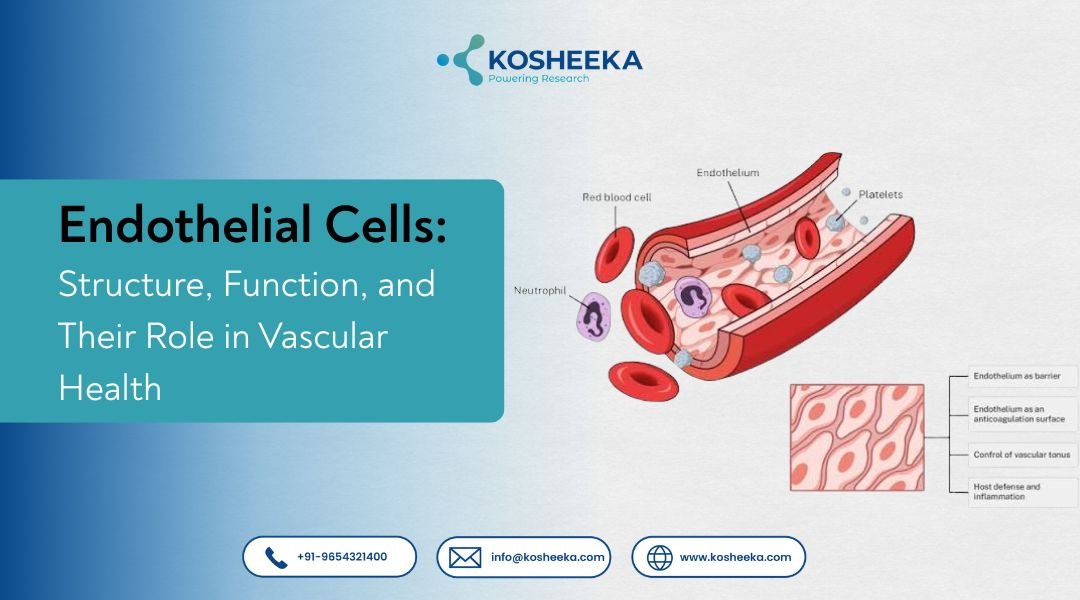
Endothelial cells form the innermost lining of every blood vessel, from large arteries and veins to the smallest capillaries. Together, they create the endothelium, a delicate but highly active layer that separates circulating blood from the tissues beneath it.
Endothelial cells constantly sense changes in blood flow, blood pressure, oxygen levels, and inflammatory signals, then adjust their behavior to keep the vascular system functioning normally.
These cells are also highly adaptable. Endothelial cells found in the lungs, liver, kidneys, and brain all have distinct characteristics that allow each organ to perform its specialized functions. This diversity is one of the reasons endothelial biology remains an important area of medical research.
Understanding Endothelial Cell Function
One of the most important jobs of endothelial cells is maintaining balance within the circulatory system. They produce a variety of signaling molecules that help blood vessels expand or contract depending on the body's needs.
Nitric oxide is one of the best-known molecules released by endothelial cells. It relaxes blood vessels, improves circulation, and supports healthy blood pressure. At the same time, endothelial cells help regulate vascular tone by responding to mechanical forces created by flowing blood. Endothelial Cell Function includes:
- acts as selective gatekeepers
- controls the supply of nutrients, hormones, oxygen, and immune cells
- Facilitates the movement of these compounds between the bloodstream and surrounding tissues
- Regulated exchange enables organs to receive the necessary supply
- Prevents unnecessary leakage or toxin entrance
- Detects infection or injury, signals immune cells to leave the bloodstream and reach the affected tissue
- Once healing begins, they restore normal vascular function
- Maintains balance between clotting and bleeding
- Discourage unnecessary blood clot formation, regulate fibronectin function
- Plays a central role in angiogenesis, aids in wound healing, tissue repair, and recovery after injuries or reduced blood supply.
Vascular Endothelial Cells: Supports Healthy Blood Vessels
Vascular endothelial cells line arteries, veins, and capillaries throughout the body. Their adaptive functions includes:
- Endothelial cells in arteries withstand constant pressure created due to constantly heart pumping. They maintain vessel flexibility and respond to blood flow changing patterns.
- In veins, they assist with returning blood to the heart. Reduces inflammation and prevents unwanted clot formation.
- Within capillaries, vascular endothelial cells create an efficient exchange surface where oxygen and nutrients move into tissues while waste products enter the bloodstream for removal.
- The cells regularly communicate with smooth muscle cells, immune cells, and surrounding connective tissue.
Brain Endothelial Cells and the Blood-Brain Barrier
Brain endothelial cells form the foundation of the blood-brain barrier (BBB). It is complex and forms the body's most sophisticated protective systems. Brain Endothelial Cells are tightly connected, creating an exceptionally selective barrier. They prevent toxins, harmful microorganisms, and many circulating molecules from reaching sensitive brain tissue.
BBB is vital for maintaining the stable environment required for normal brain function. Even small disruptions to this barrier can affect neurological health.
Researchers have linked abnormalities in brain endothelial cells to conditions such as Alzheimer's disease, stroke, multiple sclerosis, and traumatic brain injury. Because of this, these cells have become a major focus in neuroscience and pharmaceutical research, particularly in efforts to develop medicines that can safely cross the blood-brain barrier.
What Is Endothelial Dysfunction?
Healthy endothelial cells constantly work to keep blood vessels functioning smoothly. However, when they become damaged or lose their normal function, endothelial dysfunction develops.
One of the earliest changes is a reduction in nitric oxide production. As a result, blood vessels become less able to relax, inflammation increases, and blood flow may become impaired.
Several lifestyle and medical factors contribute to endothelial dysfunction, including smoking, diabetes, high blood pressure, elevated cholesterol, obesity, aging, chronic inflammation, oxidative stress, and physical inactivity.
Progressively, the risk of disease increases, including:
- atherosclerosis
- coronary artery disease
- stroke
- peripheral artery disease
- kidney disease
- lung disorders
- neurodegenerative conditions
Why Endothelial Cells Matter in Biomedical Research
Endothelial cells have become indispensable in modern biomedical research because they provide valuable insight into how blood vessels function in both health and disease.
Researchers use cultured endothelial cells to investigate inflammation, vascular permeability, angiogenesis, and cellular communication. These models help scientists better understand disease mechanisms while providing reliable platforms for testing new drugs before they move into clinical studies.
Endothelial cells are also playing an increasingly important role in regenerative medicine and tissue engineering. Creating functional blood vessels remains one of the biggest challenges in building artificial tissues and organs, making endothelial cells essential for future advances in this field.
Conclusion
Endothelial cells regulate circulation, immune responses, control blood clotting, and maintain communication between the bloodstream and surrounding tissues. Specialized populations such as vascular endothelial cells and brain endothelial cells perform even more specialized tasks that are essential for organ function.