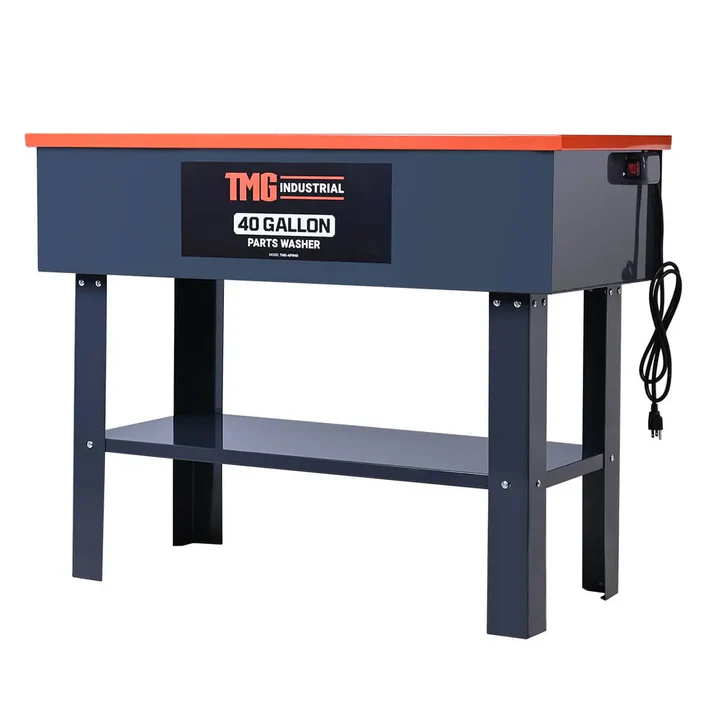
Across Canadian automotive shops, equipment repair facilities, and industrial maintenance departments, cleaning greasy, oily components is a daily necessity. Manual scrubbing with rags and solvent is slow, messy, and exposes workers to chemicals. A 40 gallon parts washer provides a recirculating solvent system that cleans components efficiently while keeping hands out of the cleaning fluid. Canadian mechanics, equipment technicians, and shop managers use these units to clean engine parts, transmission components, bearings, and tools before inspection or reassembly.
Proper parts cleaning is essential for quality repairs. Dirt and debris left on components can cause premature wear, seal failure, and contamination of lubricants. A parts washer ensures that components are clean before installation, reducing the risk of warranty claims and repeat repairs.
Common Applications and Cleaning Methods
The washer uses a submerged electric pump to circulate cleaning solvent from the reservoir up through a flexible brush hose. The operator directs the solvent stream onto the part while scrubbing with the brush. Contaminants fall through the fluid return and settle at the bottom of the tank, while clean solvent continues to circulate. The 6 gallon per minute flow rate provides steady cleaning action.
Cleaning Efficiency and Solvent Management
Recirculating solvent systems use cleaning fluid more efficiently than manual methods. The same solvent cleans multiple parts before needing replacement. The 24 gallon working capacity allows extended operation between solvent changes. The embedded flush hose delivers a steady solvent stream, while the brush loosens stubborn deposits.
Solvent selection affects cleaning performance. Water-based degreasers are less flammable and easier to dispose of but may require more scrubbing. Petroleum-based solvents clean faster but pose higher fire and fume risks. Parts washers with fusible link covers provide automatic fire protection if temperatures exceed safe levels.
Technical Principles and Operational Considerations
Several factors affect parts washer performance and safety. Pump flow rate determines cleaning speed. Tank size limits the size of components that can be submerged. The fusible link cover automatically closes if exposed to high temperatures, starving a fire of oxygen. ETL certification indicates the electrical components meet safety standards.
Proper solvent level is essential for pump operation. Running the pump without adequate fluid can damage the pump seal. The storage shelf keeps rags, brushes, and replacement parts within easy reach of the work area.
Safety Practices and Maintenance Guidelines
Safe parts washer operation requires several key practices:
- Use only approved cleaning solvents
- Keep fusible link cover clear of obstructions
- Never wash hands directly in solvent stream
- Wear chemical-resistant gloves during use
- Ensure adequate ventilation for solvent fumes
Maintenance includes changing solvent when visibly dirty, cleaning the pump intake filter regularly, inspecting hoses for leaks, checking electrical cord condition, and testing the fusible link mechanism annually.
Advantages and Limitations
Advantages of a 40 gallon parts washer include:
- 24 gallon working capacity for extended use
- 6 gallon per minute flow rate for effective cleaning
- Fusible link cover for fire safety
- ETL certified electrical components
- Integrated storage shelf for supplies
- Heavy-duty steel stand for stability
Limitations to consider:
- Requires regular solvent changes
- Electrical pump needs 120 volt outlet
- Not for use with flammable solvents near ignition sources
- Solvent disposal requires proper handling
- Large footprint uses shop floor space
Real-World Application Example
A Canadian automotive repair shop in Ontario serviced 20 vehicles daily. Technicians cleaned engine components with spray cans and rags, creating waste and exposing themselves to chemicals. The shop purchased a 40 gallon parts washer. Technicians placed dirty components in the tank and used the brush hose to remove grease and grime. Cleaning time per component dropped by 60 percent. Solvent consumption decreased because recirculated fluid cleaned multiple parts. The fusible link cover provided peace of mind during overnight use.
Conclusion and Future Outlook
Parts washers are essential tools for Canadian repair shops that rebuild engines, transmissions, and hydraulic components. Recirculating solvent systems clean more efficiently than manual methods while reducing solvent waste. As environmental regulations tighten, demand for water-based solvent systems and closed-loop parts washers will likely increase. Future designs may include heated solvent for improved cleaning and automated filtration for extended solvent life.
Shop managers should evaluate parts washers for any facility performing component-level repairs. The combination of 40 gallon capacity and 6 gallon per minute flow makes this washer suitable for diverse Canadian automotive and industrial maintenance applications.
Tags : 40 gallon parts washer