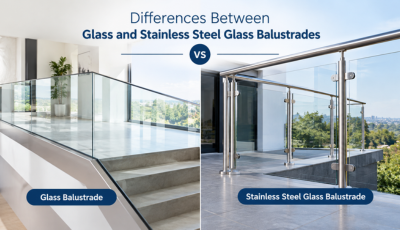
Modern architectural railing systems use Glass Balustrades to provide safety while maintaining an open, visually appealing appearance. These systems function as protective barriers. They are supported through different structural arrangements depending on the floor type. Stainless Steel Glass Balustrades bring additional strength, durability, and design flexibility to the installation. The metal provides a rigid framework. Understanding the differences helps in selecting the right balustrade system for specific project conditions. The choice relies on site needs and structural loads.
What Are Glass Balustrades?
Glass Balustrades are protective railing systems that use glass panels as the primary visual element. Their main purpose in residential and commercial spaces is edge protection and safety against falls. The glass creates an open, unobstructed appearance while functioning as a solid physical barrier. You can find them in frameless and framed designs depending on the structural needs. Common installation areas include balconies, staircases, walkways, and pool fencing. Selecting suitable safety glass is mandatory. Installers use toughened safety glass or laminated glass for these applications. The structural load relies heavily on the glass thickness. The base channel holding the panel takes the tension load. This channel gets bolted deep into the concrete floor. The glass does the work of keeping people safe while remaining mostly invisible.
Advantages of Glass Balustrades
These systems maximize natural light transmission inside a building. The frameless variants offer uninterrupted views of the outside surroundings. They do not block sightlines across a room. They hold up against wind pressure and standard environmental elements. Cleaning requires standard glass cleaning liquids and a basic squeegee. The design suits modern minimal aesthetics well. There are no vertical posts to interrupt the horizontal view. The thick glass resists heavy impacts from accidental bumps.
What Are Stainless Steel Glass Balustrades?
Stainless Steel Glass Balustrades combine stainless steel structural elements with glass panels. The metal parts include vertical posts, top handrails, mounting brackets, and specialized fittings. These components provide the primary structural support for the entire system. The glass acts as an infill panel rather than taking the main structural load. The steel elements offer high corrosion resistance. Installers specify marine-grade 316 stainless steel for outdoor use. This system has a modern architectural appearance with visible metallic lines. It works well for both indoor and outdoor applications. Using SS Glass Balustrades reduces the thickness requirement for the glass panels. The steel posts take the wind load and the human impact load. The glass simply fills the gap between the posts. The posts bolt directly to the floor substrate using heavy anchor bolts.
Advantages of Stainless Steel Glass Balustrades
The metal posts handle heavy impact loads better than base-fixed frameless systems. The steel components do not rust easily under normal weather conditions. They provide a strong gripping surface for people using stairs or ramps. Installation is straightforward because the posts bolt directly to the floor surface without needing a deep trench. You have multiple finish options like brushed steel or polished mirror steel. The system allows for easy replacement of single glass panels if breakage occurs.
Glass vs Stainless Steel Glass Balustrades: Key Differences
Compare both systems based on these exact technical parameters.
Structural support: Frameless systems use thick glass fixed at the base. Steel systems rely entirely on metal posts and handrails to bear the structural load.
Appearance: Pure glass setups give a minimal, invisible look. The steel versions introduce visible metal lines that break up the view but look industrial.
Durability: Both withstand standard impacts well. Steel systems absorb stress better because the metal framing flexes slightly and protects the glass edges from hits.
Maintenance: Glass systems need frequent cleaning to remove fingerprints. The steel posts require occasional wiping to prevent localized tea staining on the metal surface.
Corrosion resistance: Glass panels do not corrode. Steel systems require specific marine grade materials if installed near coastal areas to stop rust from forming.
Installation requirements: Frameless units need deep base channels fixed into solid concrete. Steel post setups use surface-mounted base plates spaced along the concrete edge.
Design flexibility: Pure glass offers a clean, uniform barrier. Steel systems allow different post shapes, handrail profiles, and clamp designs to match specific site layouts.
Safety considerations: Both use rated safety glass. A steel top rail adds a secondary barrier if a panel breaks, keeping the edge secure until replacement.
Indoor and outdoor suitability: Both work indoors and outdoors. Pure glass suits interior stairs. Steel setups work well in heavy-traffic outdoor commercial walking areas.
Long-term performance: Base channels in frameless units can collect water if not drained. Steel posts remain elevated, preventing water accumulation and extending the hardware lifespan.
Differences Between Glass and Stainless Steel Glass Balustrades
This table explains the practical differences between the two railing systems to help compare their specifications based on standard parameters.
Common Mistakes to Avoid When Selecting Balustrades
Buyers often make errors during the specification process. Choosing glass based only on appearance leads to weak barriers that fail building inspections. Ignoring structural requirements can cause the railing to fail under physical pressure. Using unsuitable glass specifications creates severe safety hazards on high balconies. Buyers must select toughened or laminated glass. Selecting low-quality fittings causes rust, panel slippage, and eventual system failure. Overlooking corrosion exposure in coastal zones ruins the metal components within months. Failing to consider installation conditions makes fixing the base track impossible. A weak floor cannot hold a frameless track. Ignoring applicable safety standards violates local building codes and incurs fines. Choosing components without checking compatibility leads to loose panels that rattle in the wind. Focusing only on initial cost ends up increasing long term replacement expenses. Low-cost hardware degrades fast. Installers must evaluate the floor depth before deciding on a frameless or steel post system. A shallow slab requires surface mounted steel posts.
Conclusion
The decision between Glass Balustrades and Stainless Steel Glass Balustrades depends entirely on specific project conditions. The appropriate choice hinges on structural requirements, the glass specification, and the specific installation environment. Design preferences, durability expectations, and maintenance needs dictate the final specification. Both systems perform well when specified correctly and installed securely.