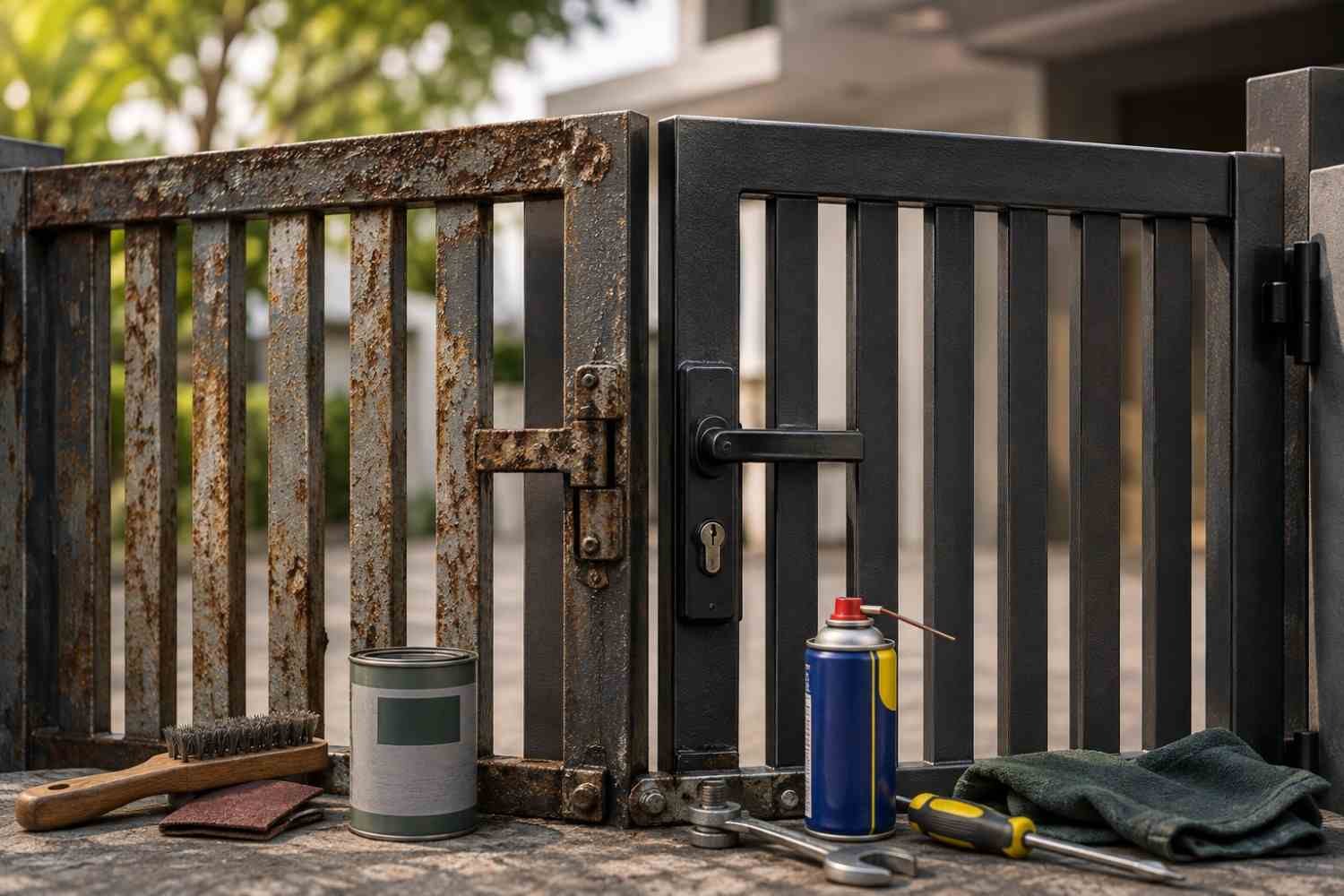
Metal gates are built to last — but they aren’t built to be ignored. Homeowners often find themselves dealing with rust, misalignment, squeaky hinges and broken latches. Most problems are from neglect , weather exposure , or wear over time . The good news: A lot of these faults can be repaired without having to replace the whole gate.
If you've been dealing with a stubborn metal door gate in Singapore, you're not alone. The humid tropical climate here accelerates corrosion and wear faster than in temperate countries. Understanding what's going wrong — and acting early — saves you money and extends your gate's lifespan significantly.
Why Metal Gates Deteriorate Faster in Singapore
The climate in Singapore is hard on metal. Steel and iron gates are constantly exposed to moisture with humidity averaging over 80% for the year and frequent rain fall. Salt-laden air adds to the corrosion risk of coastal areas like Pasir Ris, Sembawang and Punggol.
One of the main causes of premature structural deterioration of residential properties is poor maintenance of external fixtures like gates and grilles, according to the Building and Construction Authority (BCA) of Singapore. And for that reason, gate maintenance is not merely cosmetic. This is the first line of physical security for your home.
Problem 1: Rust and Surface Corrosion
Rust is the most visible and common metal gate problem in Singapore. It usually starts at the joints, welds, or areas where the paint has chipped. Left untreated, it eats through the metal entirely.
How to Fix It
- Use a wire brush or sandpaper to remove loose rust from the affected area.
- Apply a rust converter or rust-inhibiting primer before repainting.
- Use an exterior metal paint rated for high-humidity environments.
- For deep rust that's penetrated the metal's core, the section may need to be cut out and re-welded by a professional.
Prevention tip: Inspect your gate every three to six months. Touch up paint chips before rust has a chance to take hold. A simple coat of anti-rust spray on exposed joints after heavy rain makes a noticeable difference over time.
Problem 2: Misaligned or Sagging Gate
A gate that drags on the floor, doesn't close properly, or sits crooked is usually a hinge or post problem. Over time, hinges loosen or bend under the gate's weight. In some cases, the gate post itself may have shifted due to soil movement or poor original installation.
How to Fix It
- Tighten loose hinge bolts first — this solves the issue in many cases.
- If the hinge is bent or cracked, replace it entirely. Don't just tighten a damaged hinge.
- For a leaning gate post, check whether the concrete footing has cracked. This typically requires professional re-anchoring.
- Adjustable hinges are worth upgrading to if you're replacing them — they allow micro-adjustments without full disassembly.
A sagging gate also puts uneven stress on the locking mechanism, which can cause secondary problems. Fix the alignment before addressing the lock.
Problem 3: Squeaky or Stiff Hinges
This is the easiest problem to fix and also the most commonly ignored. Squeaking happens when hinges dry out or accumulate grime. Stiffness usually means the hinge is binding due to dirt, rust, or misalignment.
How to Fix It
- Clean the hinge with a degreaser to remove built-up grime.
- Apply a heavy-duty lubricant such as WD-40, lithium grease, or a specialist gate hinge oil.
- Work the gate back and forth several times to distribute the lubricant evenly.
- Repeat every three to four months as part of regular gate maintenance.
Avoid using cooking oil or general-purpose oils — they attract dust, create sticky residue, and accelerate grime buildup over time.
Problem 4: Faulty Latch or Lock
Lock problems are a security risk and a convenience issue. Whether it is a latch will not catch, a padlock hole that is out of true or a digital lock that is malfunctioning. This is especially so for HDB gates and landed property main gates in Singapore.
How to Fix It
- For a misaligned latch, loosen the strike plate and reposition it to match the latch bolt. This is usually a ten-minute fix.
- If the lock body is damaged or corroded internally, replace it entirely rather than lubricating — internal corrosion compromises security.
- Digital gate locks should be inspected by a locksmith if they're showing error codes or failing intermittently.
- Ensure the gate is plumb and level before assuming the lock is the problem — a misaligned gate is often the root cause.
Problem 5: Peeling or Faded Paint
Underneath is metal, covered with paint. When it peels or fades, the bare metal is exposed to moisture, UV rays and oxidation . This is not only a cosmetic issue, it is the beginning of corrosion.
How to Fix It
- Sand down all peeling sections until the surface is smooth and bare.
- Wipe with a clean cloth and apply a metal primer designed for exterior use.
- Use a topcoat in a colour and finish that matches your gate's original look.
- Two thin coats give better protection than one thick coat — allow full drying time between applications.
If your gate was powder-coated originally, home painting won't replicate the finish exactly. For a proper powder-coat repair, a metalwork fabricator will need to strip and re-coat the gate professionally.
When to Repair vs. When to Replace
Not every problem warrants a full replacement. Use this quick guide to decide:
A general rule: if repair costs exceed 60–70% of the price of a new gate, replacement is the more economical choice over a three to five year horizon.
Gate Maintenance Schedule for Singapore Homeowners
Consistent, simple upkeep prevents most of the problems above. Here's a practical routine:
- Monthly: Wipe down the gate surface. Check for new paint chips or rust spots.
- Every 3 months: Lubricate hinges and moving parts. Inspect the latch and lock for smooth operation.
- Every 6 months: Check hinge bolts for tightness. Inspect welds and joints for early corrosion.
- Annually: Touch up paint or apply anti-rust treatment. Check gate post for any movement or cracking.
This kind of routine adds years to a gate's functional life — and keeps minor issues from compounding into expensive repairs.
When You Need a Professional
Some repairs are genuinely DIY-friendly. Others aren't. Call a professional metalwork or gate specialist when:
- The gate post has shifted or its concrete base is cracked.
- A weld has broken and the frame is structurally compromised.
- The gate is dragging on the floor despite tightened hinges.
- You're dealing with an automated gate system that's malfunctioning.
Attempting structural repairs without the right tools or expertise can make the problem worse — and create a safety hazard for your household.
If your gate is beyond repair or you're simply ready for an upgrade, Doorgate Studio offers a range of steel and metal gate solutions designed for Singapore's climate and residential requirements — whether you're replacing an old gate or starting fresh.
Frequently Asked Questions
How often should I service my metal gate in Singapore?
Lubricate hinges and check for rust every three months. Singapore's humidity accelerates corrosion, so more frequent checks are better than annual ones. A full inspection — including bolts, welds, and the gate post — should be done at least twice a year.
Can I paint over rust on my metal gate?
No. Painting over rust without treating it first will trap moisture and worsen the corrosion. Always remove loose rust with a wire brush, apply a rust-inhibiting primer, and then repaint with an exterior-grade metal paint suitable for humid conditions.
Why is my metal gate not closing properly?
The most common causes are loose or worn hinges, a misaligned latch strike plate, or a shifted gate post. Start by tightening hinge bolts. If the gate still sags or drags, check whether the post footing is intact and the frame is still square.
What type of lubricant should I use for gate hinges?
Use a heavy-duty lubricant, such as lithium grease or a dedicated gate-hinge oil. WD-40 is a degreaser and a temporary fix. Avoid household oils – they attract dust and leave a sticky film, which over time can increase stiffness.
Is it worth repairing an old metal gate or should I replace it?
If the frame is sound, most problems — rust, hinges, latches, paint — can be fixed. If the metal is badly corroded, the welds are broken or the cost of repair is close to the price of a new gate then a replacement is the smarter long-term investment.
How do I prevent rust on my metal gate?
Apply an anti-rust primer and exterior metal paint. Repair any chips in the paint promptly and lubricate joints regularly. In Singapore’s humid climate, an annual anti-rust treatment to exposed welds and joints is especially important for gates exposed to the elements in coastal or high rainfall areas.
Tags : metal door gate in Singapore