Commercial & Industrial Embroidery Digitizing In USA: Efficiency & Durability
By Embroidery digitizing 09-02-2026 229
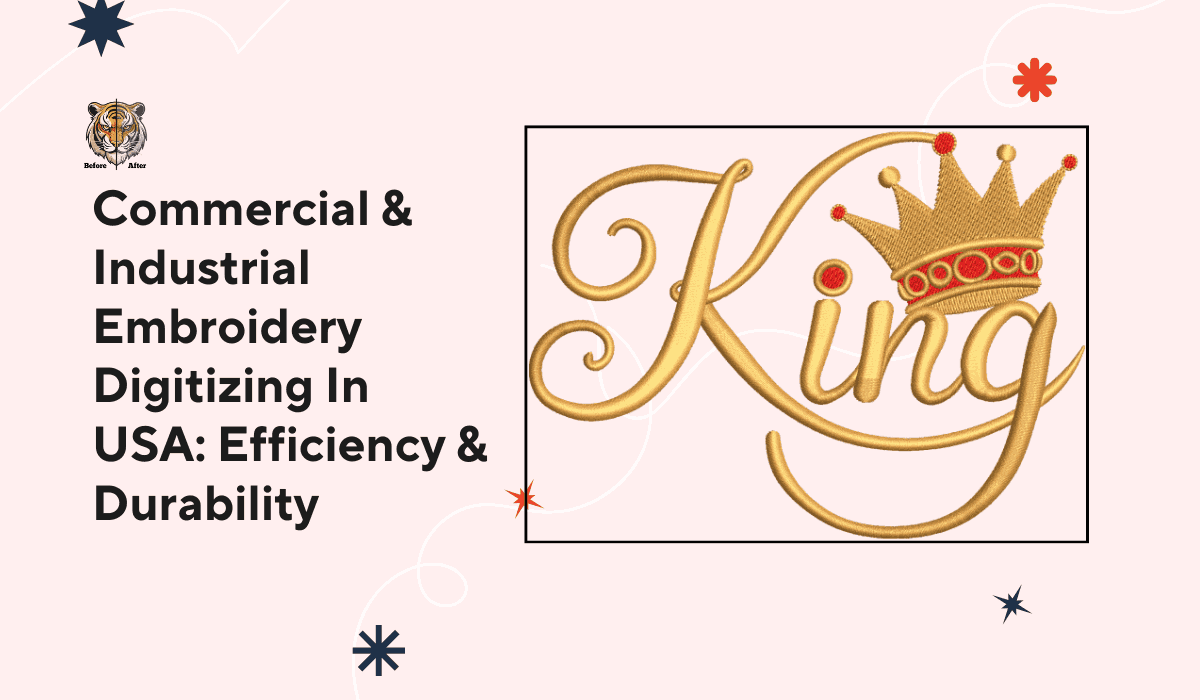
When we talk about embroidery, we often picture a single personalized hat or a monogrammed towel. However, the backbone of the industry is commercial and industrial application producing thousands of uniforms for a logistics company, branding heavy-duty workwear for construction crews, or creating patches for law enforcement. In this high-stakes environment, efficiency is everything. This is where embroidery digitizing in USA becomes a critical asset for large-scale operations.
Commercial embroidery is not just about making a design look good; it is about engineering a file that can run on 12-head or 24-head industrial machines without stopping. A single thread break on a multi-head machine shuts down the entire production line, costing the manufacturer time and money. Therefore, digitizing for industrial purposes requires a completely different mindset than digitizing for a boutique shop.
We will examine why US-based digitizing services are the preferred choice for high-volume, industrial applications where precision and speed are the metrics of success.
Engineering for Speed and Efficiency
In an industrial setting, the primary goal is "machine uptime." Every minute the needles are moving is profit; every minute they are stopped for trims, color changes, or thread breaks is a loss. Embroidery digitizing in USA for commercial clients focuses heavily on pathing optimization.
An amateur digitizer might create a design that looks fine on screen but forces the machine to trim the thread 20 times. A professional industrial digitizer will redesign the path so the machine only trims 4 times. Over a run of 1,000 shirts, those saved seconds add up to hours of gained production time. They utilize "travel runs" carefully hidden under the design to move the needle from one section to another without cutting the thread. This continuous sewing motion keeps the machine rhythm consistent and reduces wear and tear on the equipment.
Durability for Workwear and Uniforms
Commercial embroidery often ends up on garments that take a beating. Industrial laundering, heavy abrasion, and exposure to the elements are common for work uniforms. A delicate, artistic stitch that looks beautiful on a bridal handkerchief will unravel instantly on a mechanic's jacket.
US digitizers understanding industrial needs adjust the structural integrity of the design. They increase the density of the underlay to anchor the design firmly to the tough fabric. They avoid long satin stitches that can snag on machinery or tools. Instead, they might use a "tatami" or fill stitch, which is flatter and more durable. This foresight ensures that the branding lasts as long as the garment itself, maintaining a professional appearance for the lifespan of the uniform.
Handling Difficult Substrates
Industrial embroidery rarely happens on simple cotton. It happens on heavy canvas, thick leather, waterproof nylon, and high-visibility safety vests. These materials are notoriously difficult to stitch. Waterproof coatings, for example, can cause friction that heats up the needle and melts the thread.
Expertise found in embroidery digitizing in USA includes specific settings for these substrates. For a waterproof jacket, the digitizer will reduce the density to prevent perforating the fabric so much that it leaks. For leather, they will use a specific type of underlay that doesn't punch a hole that effectively cuts the design out of the material. This technical knowledge prevents costly damage to expensive blank garments.
Scalability and Consistency
Large corporations often have multiple vendors producing their uniforms across the country. A franchise in Florida needs to look identical to a franchise in Oregon. This requires a centralized, standardized digitizing file.
US-based digitizing houses often serve as the "brand guardians" for these large accounts. They create a master file that is locked and distributed to approved vendors. This ensures that no matter which local shop runs the embroidery, the thread consumption, size, and stitch angles are identical. This scalability is vital for maintaining brand integrity across a massive workforce.
Conclusion
For the commercial and industrial sector, embroidery is a manufacturing process, not just a decoration. The choice of embroidery digitizing in USA is a strategic decision to maximize production efficiency and product durability. By focusing on machine pathing, minimizing trims, and engineering designs for specific rugged materials, US professionals enable large-scale manufacturers to meet deadlines and maintain quality.
In a world where margins are tight and speed is crucial, having a digitizing partner who understands the mechanics of mass production is invaluable. It transforms the embroidery process from a potential bottleneck into a streamlined, profitable operation.
FAQs
Q: What is the difference between commercial and home digitizing?
Commercial digitizing focuses on speed, efficiency, and durability for high-volume runs on multi-head machines. Home digitizing focuses on aesthetics for single items, often ignoring thread trims or production time.
Q: Why is "pathing" so important for industrial embroidery?
Pathing determines the route the needle takes. Good pathing minimizes stops (trims) and jumps. In a run of 5,000 items, saving 30 seconds per item through better pathing saves over 40 hours of production time.
Q: Can industrial digitizing handle waterproof garments?
Yes, but it requires skill. The digitizer must lower the stitch count to avoid turning the waterproof fabric into a sieve. They also adjust settings to reduce friction, which can melt synthetic threads on coated fabrics.
Q: Do industrial digitizers use different file formats?
They use the same formats (DST, PES), but the content of the file is different. An industrial file will have specific commands for automatic thread trimmers and color changes that home machines might not recognize or utilize effectively.
Q: How do you digitize for 3D puff embroidery on caps?
3D puff requires a specific technique where the satin stitch is widened and the density is nearly doubled to cut the foam. The ends of the letters are "capped" to enclose the foam. This is a highly technical skill common in US commercial digitizing.