Choosing High-Quality Orthopedic Instruments for Better Surgical Outcomes
By Mediwave India 15-07-2026 67
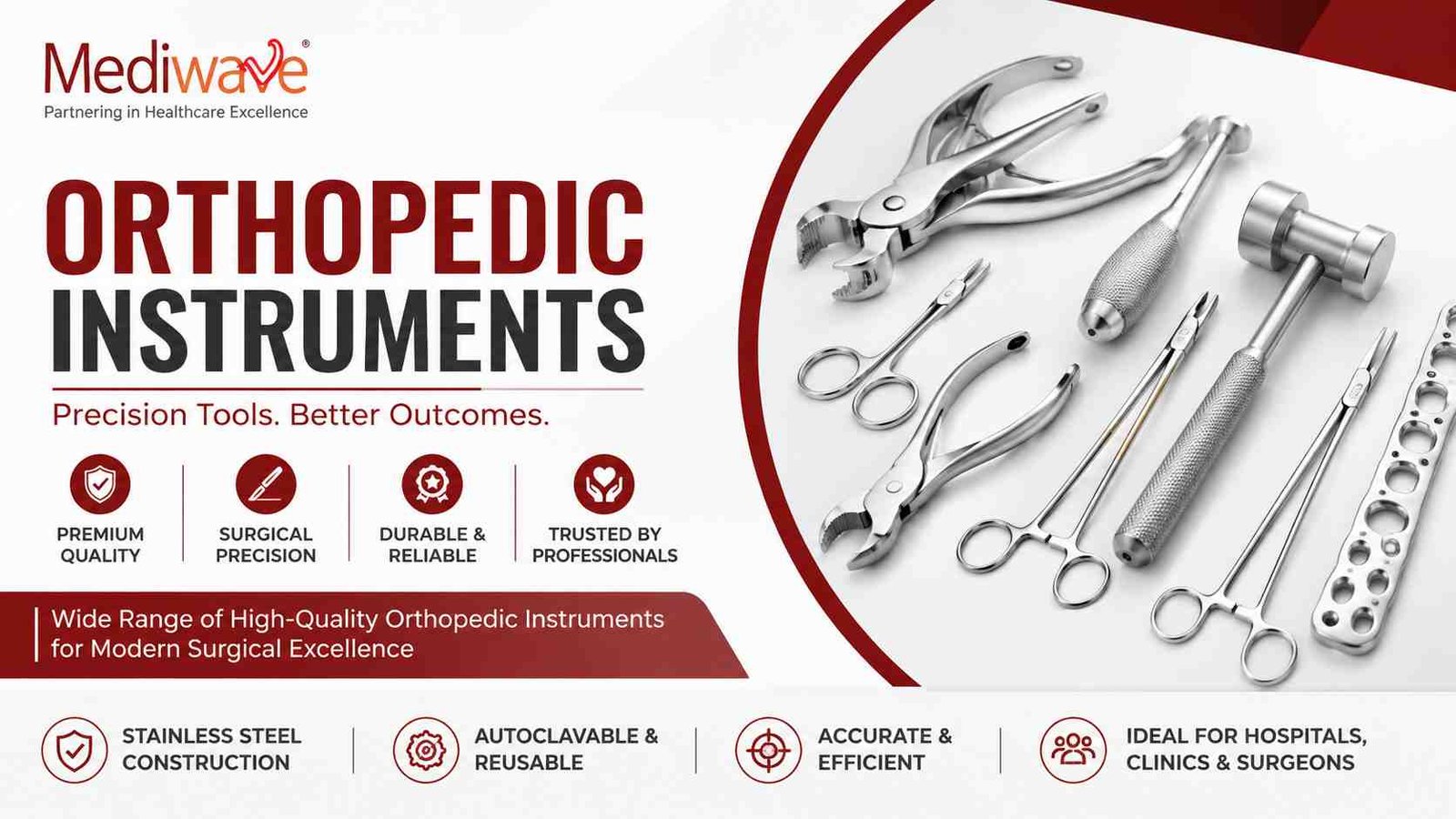
Because the weakness usually appears after purchase, not during quotation. A bone rongeur arrives polished, the sample feels acceptable, and the rate looks attractive. Then jaw alignment shifts, the grip develops play, or staining appears after repeated reprocessing. High-quality Orthopedic Instruments reduce these risks, but buyers must judge function, documentation, and repeatability—not photographs. WHO’s original eight-hospital checklist study recorded complications falling from 11% to 7%, showing what disciplined control can change in surgery.
The Specification Details That Decide Instrument Reliability
Match the Tool to the Task
Bone-cutting, holding, drilling, curettes and files, retractors and elevators, and trauma or spine tools should not sit under one vague “orthopedic set” description. Mediwave separates its range into six groups because edges, jaws, shafts, hinges, and tips face different loads.
Record More Than Material Grade
Buyers should specify material, finish, dimensions, joint action, tip geometry, corrosion resistance, and autoclave compatibility. Medical-grade stainless steel is common, while titanium and cobalt-chrome may suit selected tools. Here’s what gets missed: two forceps with the same catalogue name can have very different jaw contact and ratchet engagement.
Test Reprocessing Before Bulk Approval
Steam sterilization commonly uses 132°C–135°C for 3–4 minutes for instruments, although the validated cycle and manufacturer’s instructions remain controlling. And yet, many teams test one sample once and approve the lot. Repeated cleaning and sterilization trials are harder than expected, but they expose staining, loose joints, rough edges, and trapped residue.
Five Checks Before Approving Orthopedic Instruments Manufacturers
1. Quality-system evidence: Ask for certificate scope, issuer, validity, and product coverage. ISO 13485:2016 is the third edition of the medical-device quality standard. “We will share ISO after payment” is a bad answer.
2. Lot consistency: Compare production pieces with the approved sample using written tolerances. “Handmade items naturally vary” is not an inspection plan.
3. Traceability: Request batch identity, inspection records, material evidence, and packing references. A plain invoice cannot trace a defective tool.
4. Reprocessing guidance: Confirm cleaning, lubrication, sterilization, drying, and storage instructions. “Any autoclave setting works” is careless.
5. Defect handling: Put the inspection window, replacement responsibility, freight cost, and response time in writing. A supplier using “case by case” has no policy. Buyers usually lose that argument after delivery.
How Better Instruments Protect Patients and Budgets
Lower substitution risk: Accurate jaws, stable joints, and serviceable edges reduce mid-procedure instrument changes.
Longer usable life: Controlled finishing and corrosion resistance reduce premature replacement.
More predictable reprocessing: Smooth surfaces and accessible joints make CSSD inspection easier.
Better surgeon control: Balanced handles and accurate working tips support controlled force.
Fewer tray delays: Standardised sets reduce missing-tool checks and theatre borrowing.
Stronger audits: Traceable records provide evidence rather than promises. WHO’s 19-item surgical checklist cut major postoperative complications by roughly one-third across eight sites; reliable instruments follow the same logic of controlling preventable risk.
Availability from Orthopedic Instruments Manufacturers in India
Hospitals, distributors, medical universities, and sellers can find standard instruments, specialized kits, and restocking supply from Orthopedic Instruments Manufacturers. Mediwave operates from Jalandhar, Punjab, PIN 144003, and specializes in manufacturing and supply in ten different categories of medicine and accessories.
This means that location plays a crucial role in supply-chain management decisions. The Punjab location aids in road deliveries to Northern hospitals, but international shipments require proper packing, batch references, and paperwork. The buyers looking to compare the sellers in terms of exporting Orthopedic Instruments from India should consider the export packing before negotiating the last 2% of the price.
Why We Separate a Tray Before We Quote It
We divide our orthopedic catalogue into six working groups rather than one catch-all list, because a drill, curette, reduction forceps, and retractor cannot pass the same functional test. Our wider range covers ten clinical and accessory categories, reducing the number of vendors a hospital must coordinate.
We publish four quality credentials: ISO 13485:2016, ISO 9001:2015, Good Manufacturing Practices, and a Certificate of Compliance. Certificates do not replace inspection. They give it a documented starting point.
Send the Instrument List, Not Just the Department Name
Send us the instrument name, image or drawing, size, quantity, finish, sterilization method, certificates, and delivery city. We aim to acknowledge enquiries within 24 working hours. For standard items, MOQ can begin at one piece, subject to model availability; custom work may require a higher quantity. Our published supply information covers single tools and bulk hospital orders. We quote faster when dimensions and quantities are clear.
Choose Orthopedic Instruments for Repeatable Performance
Across six core instrument groups, the right Orthopedic Instruments should behave consistently after cleaning, sterilization, storage, and repeated handling—not merely look good during sample approval. Compare suppliers on functional inspection, traceability, reprocessing guidance, and written defect terms. The next procurement cycle should produce fewer substitutions, cleaner audits, and better-controlled surgical readiness.
FAQs
1. What Orthopedic Instruments should be inspected carefully?
Inspect cutting edges, gripping parts, ratchets, box joints, drill connection, and long shafts. Inspection has to be based on the instrument's functionality.
2. How should customers compare manufacturers of Orthopedic Instruments?
Comparison of identical dimensions, functionality, sterilization test, documentation list, and defective items. In case of different dimensions, price comparison is impossible.
3. Can manufacturers of Orthopedic Instruments in India manage big volume orders?
Most manufacturers can handle bulk order, but check the manufacturer's last lot information and confirm the manufacturer's ability to duplicate the sample over entire volume.
4. What distinguishes Precision Orthopedic Instruments Manufacturers?
They determine tip geometry, alignment of jaws, motion, balance, finish, and documentation. Note: Having “precision” on the catalogue does not mean much.
5. Do Indian Orthopedic Instruments Exporters supply shipping papers?
Most reputable exporters will. However, ensure you know exactly what documents to expect from the invoice, packaging and origin/destination countries.