China Agricultural Machinery Market: Mechanization and Smart Farming Are Reshaping Farm Operations
By Adam Williamson 20-05-2026 69
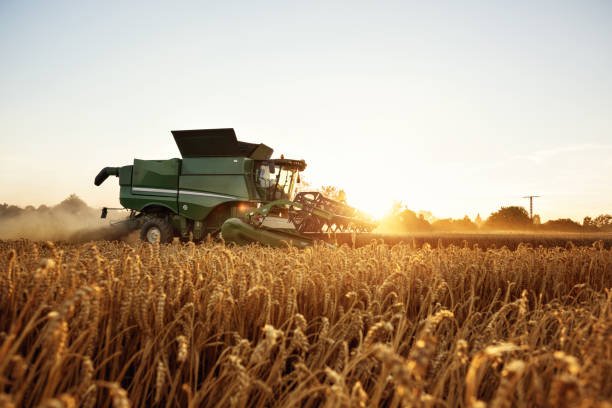
China’s agriculture sector is moving through a structural mechanization cycle as food security priorities, labor constraints, large-scale grain production, and digital farming policies reshape equipment demand. As per a study published by Vyansa Intelligence, the China Agricultural Machinery Market was valued at USD 25.8 billion in 2025 and is estimated at USD 27.5 billion in 2026. The market is projected to reach USD 36.2 billion by 2032, growing at a CAGR of 4.96% during 2026-2032.
The demand base is supported by China’s large agricultural production system. According to the National Bureau of Statistics of China, total grain production reached 714.88 million tons in 2025, increasing by 8.38 million tons compared with 2024. This production scale strengthens the need for tractors, harvesting machinery, planting equipment, irrigation systems, and post-harvest machinery across major grain-producing provinces.
Food Security Is Strengthening Mechanization Demand
China’s agricultural machinery demand is closely linked with national food security planning. Higher grain output requires consistent field preparation, sowing, crop protection, harvesting, threshing, and post-harvest handling. Manual farming remains less efficient for large production cycles, especially where seasonal windows are short and weather volatility affects planting or harvesting schedules.
The Ministry of Agriculture and Rural Affairs reported that China’s comprehensive mechanization rate for crop cultivation and harvesting reached 76.7% in 2025. The same source noted that agricultural scientific and technological progress contributed more than 64% to agricultural development, showing how machinery and technology are becoming central to productivity improvement.
Tractors Remain the Core Equipment Category
Tractors hold 40% share in the China Agricultural Machinery Market, making them the leading type segment. Their dominance reflects broad operating flexibility across plowing, cultivating, seedbed preparation, hauling, planting support, spraying, and harvesting assistance. In fragmented as well as commercial farming systems, tractors remain essential because they serve multiple stages of the farming cycle.
This segment also benefits from China’s continued focus on rural mechanization. Tractors are not limited to large farms; compact and utility tractors support smaller holdings, while higher-horsepower models are increasingly used in large-scale grain production zones. As mechanization deepens, tractor demand is expected to remain tied to productivity improvement and labor-saving operations.
Semi-Automatic Machinery Fits China’s Farm Structure
Semi-automatic equipment accounts for 55% share by automation in the China Agricultural Machinery Market. This leadership reflects a practical balance between affordability and productivity. Fully automatic systems remain costly for many small and medium-sized farms, while manual machinery may not deliver sufficient efficiency for modern cultivation needs.
Semi-automatic seeders, sprayers, harvesters, irrigation systems, and tractors are suitable for China’s diverse farming environment because they reduce manual effort without requiring full digital infrastructure. This makes the segment particularly relevant in provinces where farm sizes remain varied and mechanization adoption must align with cost sensitivity.
Smart Agriculture Is Moving From Policy to Field Use
Smart farming is becoming one of the most important China Agricultural Machinery Market trends. Reuters reported that China launched a 2024-2028 smart agriculture action plan to accelerate digital transformation across the agricultural value chain. The plan aims to establish a digital planting technology system and a national agricultural and rural big data platform by 2028, while incorporating big data, GPS, and artificial intelligence into farming processes.
This policy direction supports demand for GPS-enabled tractors, smart irrigation systems, precision spraying equipment, autonomous machinery, agricultural drones, and data-supported fleet management tools. For equipment manufacturers, the opportunity is shifting from basic mechanization toward connected systems that improve field accuracy, reduce input waste, and enhance machine utilization.
Agricultural Drones Are Expanding Precision Operations
Agricultural drones are becoming important within plant protection, crop monitoring, spraying, and precision farming workflows. According to the Ministry of Agriculture and Rural Affairs, China’s agricultural drone fleet surpassed 300,000 units in 2025, with annual operating coverage exceeding 460 million mu, equivalent to 30.67 million hectares.
This adoption strengthens demand for machinery ecosystems that combine field equipment, aerial monitoring, and digital farm management. Drone use also supports faster pesticide and fertilizer application, especially in large farms or areas where manual spraying is inefficient. As a result, precision agriculture is becoming a practical demand driver rather than only a technology trend.
Manufacturing Capacity Is Supporting High-End Equipment Supply
China’s machinery supply base is also modernizing. LOVOL’s intelligent agricultural machinery base in Weifang has reported annual capacity for 100,000 high-horsepower tractors above 100 HP, supported by digital manufacturing, 5G-enabled systems, and integrated production processes. This indicates stronger domestic capability for high-end tractor production and smart machinery platforms.
At the product level, LOVOL introduced the E1000 electric tractor at AGRITECHNICA 2025, featuring a fully electric drivetrain, lithium iron phosphate battery technology, and smart operating features. While diesel machinery continues to dominate heavy-duty field operations, electric and smart tractor launches show how manufacturers are preparing for longer-term shifts toward low-emission and digitally integrated farm equipment.
Cost and Fragmented Landholdings Remain Adoption Barriers
Despite strong modernization momentum, high equipment costs and fragmented landholdings continue to limit faster adoption. Many small farms need machinery that is affordable, easy to maintain, and suitable for smaller plots. This creates demand for compact tractors, shared equipment services, modular attachments, and semi-automatic machinery that can improve productivity without imposing high capital burdens.
Service coverage is also important. Machinery adoption depends not only on purchase cost but also on spare parts, operator training, maintenance access, and local dealer networks. Manufacturers that address these practical constraints will be better positioned to support mechanization across both commercial and smallholder farming systems.
Conclusion
The China Agricultural Machinery Market is being shaped by food security priorities, rising grain output, mechanization policy support, semi-automatic equipment adoption, tractor demand, and smart farming integration. Official data confirms that mechanization and agricultural technology are already embedded in China’s productivity strategy, while company-level developments show stronger capacity for advanced machinery production. Vyansa Intelligence frames this market as part of China’s broader transition toward efficient, technology-enabled, and productivity-focused farm operations.
Tags : .....