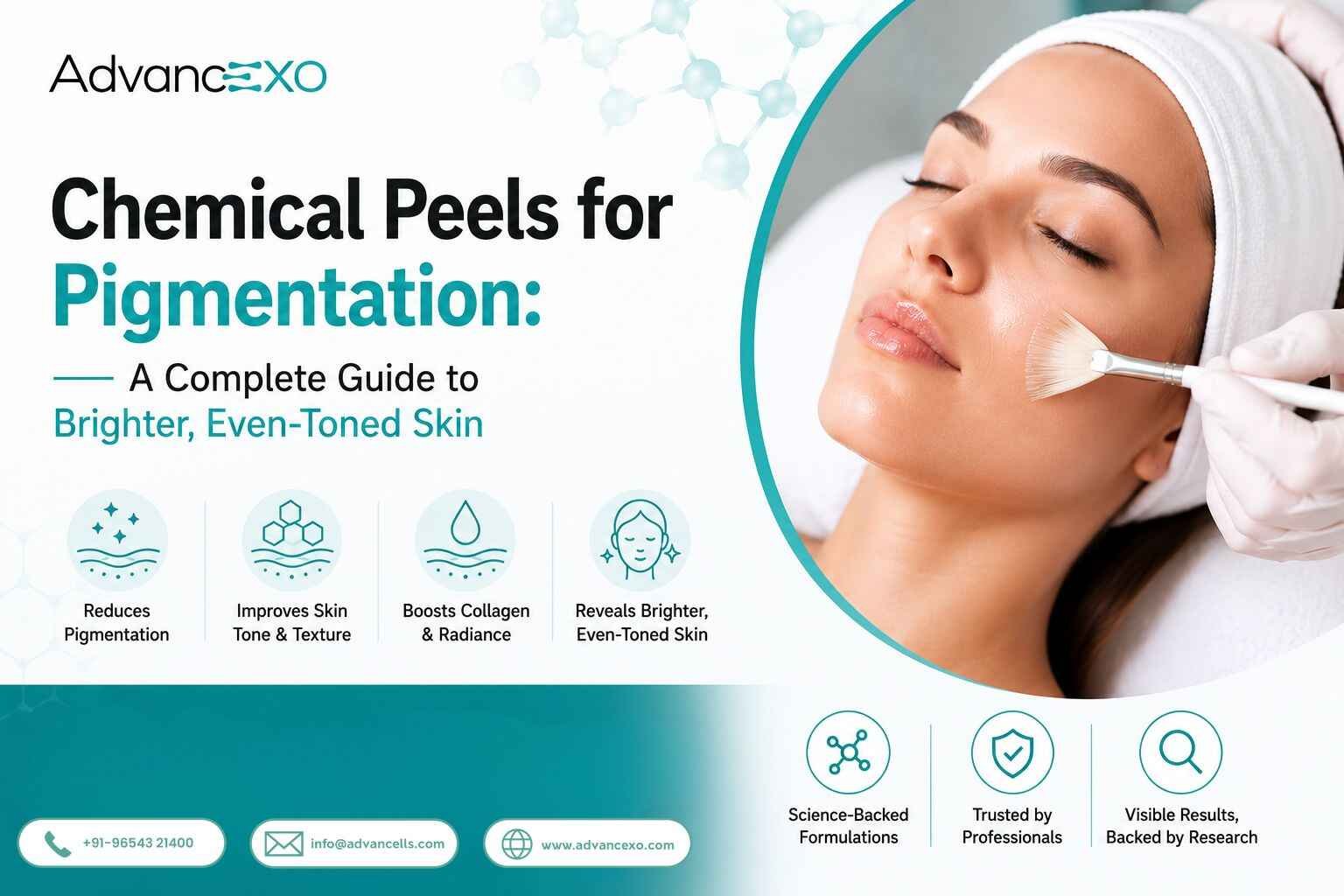
Chemical Peels for Pigmentation: A Complete Guide to Brighter, Even-Toned Skin
By Advancexo 12-06-2026 131
Introduction
Skin problems like acne-mediated dark spots, patches of melasma, or uneven skin tone can be frustrating to deal with for many. The major skincare products available in the market aid in some skincare aspects. However, stubborn discoloration often requires a more targeted approach.
Dermatologists widely recommend Chemical Peels for Pigmentation to remove surface-level damage on the skin and encourage new, healthier skin cells to emerge. This results in gaining a brighter complexion, smoother texture, and even skin tone gradually. Currently, researchers and dermatologists are widely exploring a combination of chemical peels with a regenerative approach to gain a better solution.
What Are Chemical Peels?
Despite the name, chemical peels for pigmentation aren't as intimidating as they sound. They involve applying a carefully selected solution to the skin, which gently exfoliates the outermost layers. As these older skin cells shed, newer and healthier cells replace them. One can think of chemical peels as a refresh button on the skin.
Based on the individual's need, the dermatologist recommends a chemical peel solution and its depth. The choice also depends on factors such as skin type, pigmentation depth, and desired results.
Why Are Chemical Peels Effective for Pigmentation?
Pigmentation occurs when excess melanin—the pigment responsible for skin color—accumulates in certain areas of the skin. This can happen due to acne, inflammation, hormonal changes, aging, or sun damage.
Chemical peels for pigmentation help by speeding up the skin's natural renewal process. As pigmented cells are gradually removed, fresh skin surfaces with a more even appearance are revealed.
Beyond reducing discoloration, chemical peels can also:
- Improve skin texture and smoothness
- Brighten a dull complexion
- Minimize acne marks
- Enhance the effectiveness of skincare products
- Promote healthier-looking skin overall
Results are usually gradual, which is why a series of treatments is often recommended.
Can Chemical Peels Help Different Types of Pigmentation?
The short answer is yes, but the results can vary depending on the underlying cause.
Melasma
Melasma often appears as symmetrical brown patches on the cheeks, forehead, or upper lip. It is commonly linked to hormonal fluctuations and sun exposure. Melasma is a stubborn condition prone to recurrence. A dermatologist often combines chemical peels with broad-spectrum sunscreen and other skincare products based on skin type.
Sun Damage and Age Spots
Sunburn is a common problem where chemical peels aid in lifting these superficial pigment deposits, making the skin appear clearer and more refreshed.
Post-Inflammatory Hyperpigmentation (PIH)
Post-inflammatory hyperpigmentation is characterized by dark marks after acne, insect bites, or skin irritation. Post-Inflammatory Hyperpigmentation Chemical Peels can be particularly beneficial because they encourage the gradual fading of excess pigment while improving overall skin quality. Depending on your skin type, peels containing glycolic acid, mandelic acid, or lactic acid may be recommended.
Chemical Peels for Dark Circles: Do They Really Work?
Not all dark circles are created equal. Some are caused by genetics, thinning skin, or blood vessels beneath the skin, while others result from excess pigmentation.
When pigmentation is a contributing factor, carefully selected chemical peels aid in brightening the under-eye area. Since the skin around the eyes is extremely delicate, only mild formulations are typically used.
While chemical peels for dark circles can improve the appearance of pigmented dark circles, they may not fully address dark circles caused by structural or vascular factors.
Chemical Peels for Skin Brightening
Many people search for "skin whitening" treatments when what they actually want is healthier, more radiant skin. Chemical Peels for Skin Whitening refreshes skin, removes dullness, damaged cells, and reduces uneven pigmentations. Post-procedure, the skin looks brighter, shinier, and refreshed.
The goal is healthier-looking skin—not lighter skin.
Which Chemical Peels Are Commonly Used for Pigmentation?
There isn't a one-size-fits-all peel. Dermatologists select formulations based on individual skin concerns.
- Glycolic acid peels are popular for treating dullness, pigmentation, and early signs of aging.
- Mandelic acid peels are often preferred for sensitive and darker skin tones because they work more gently while still improving pigmentation.
- Lactic acid peels involve mild exfoliation and hydration
- Salicylic acid peels are frequently used for pigmentation on acne-prone or oily skin.
- For deeper or more stubborn pigmentation, TCA peels are recommended.
What Should You Expect After a Chemical Peel?
- One of the most common misconceptions is that everyone experiences dramatic peeling. In reality, recovery depends on the type of peel used.
- After treatment, you may notice mild redness, dryness, or flaking for a few days. The skin can feel slightly tight as it renews itself.
- The most important part of recovery is protecting your skin from the sun. Freshly treated skin is more sensitive to UV exposure, and skipping sunscreen can undo the benefits of the procedure.
- Patience is also important. Pigmentation usually fades gradually, and visible improvements often become more noticeable after multiple sessions.
Combination of Chemical Peels and Exosomes
Chemical peels for pigmentation involves creating controlled exfoliation, while exosomes induce a regenerative solution. Exosomes are tiny extracellular vesicles that carry bioactive molecules such as proteins, lipids, cytokines, signalling molecules, and microRNAs. They boost the skin's natural repair process. The combination of chemical peels and exosomes topical application produces a synergistic effect.
Exosome application followed by chemical peel calms skin, supports the healing process, and enables the rejuvenation of naive skin cells. Although Exosomes release signaling molecules that trigger fibroblast activities, thus stimulating the production of collagen and elastin. They improve hydration and enhance overall skin quality.
For patients seeking not only pigmentation correction but also skin rejuvenation, combining chemical peels with exosome therapy is becoming an increasingly popular approach in aesthetic medicine.
Conclusion
Chemical peels are well-established pigmentation treatment options widely used in the aesthetic industry. The procedure works for multiple problems, including post-acne marks, melasma, sun damage, or uneven skin tone. An experienced professional must perform the procedure. Combining the procedure with an adequate aftercare strategy, like exosome application, produces a superior outcome. The changes occur gradually, and the outcome is worth the patience.