Cerebral Palsy Treatment with Stem Cells: What Current Research Shows
By Advancells Stem Cell Lab and Research 01-10-2026 15
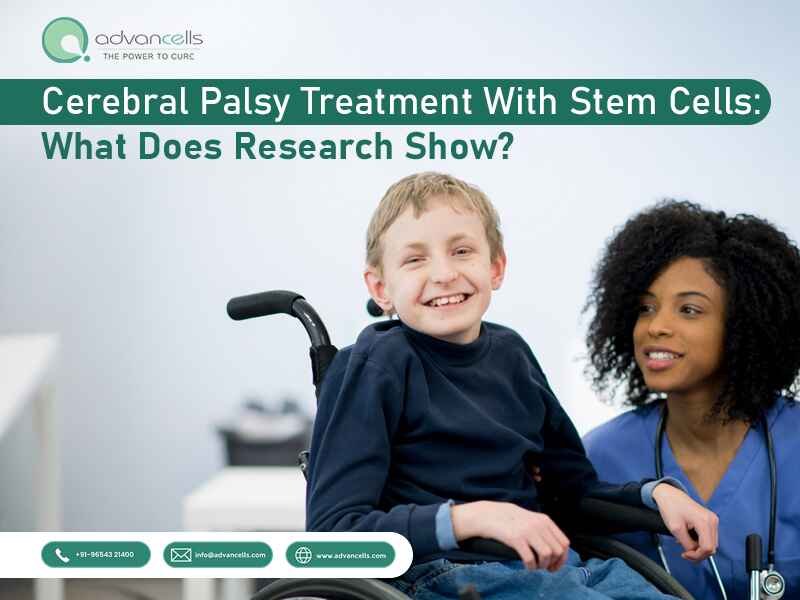
Introduction
The patient surviving with cerebral palsy (CP) can appear in a distinct form. For instance, some individuals experience mild difficulties with movement or coordination, while others require intense support with mobility and everyday activities. Because the condition affects each individual differently, Cerebral Palsy Treatment is usually built around specific functional needs rather than a single approach.
Physiotherapy, occupational therapy, speech support, medicines, orthotic devices and, in selected cases, surgery continues to play an important role. Alongside these established approaches, researchers are now exploring whether regenerative medicine could offer additional possibilities. Among these, Cerebral Palsy Treatment with Stem Cells has attracted growing scientific interest. But what does the research actually show, and how close is this approach to becoming an established treatment?
Understanding Cerebral Palsy and Its Impact
Cerebral palsy refers to a group of conditions that affect movement, posture and muscle coordination because of disturbances in the developing brain. These changes can occur before birth, around the time of birth or during early childhood.
The effects can vary widely. Muscle stiffness, involuntary movements, difficulties with balance and problems with coordination are common features. Some individuals may also experience challenges with communication, feeding, vision or other aspects of development.
This variation is one reason why the treatment of cerebral palsy needs to be individualized. The goal is not simply to address a diagnosis, but to help each person achieve better movement, participation and independence.
What Does Current Cerebral Palsy Treatment Involve?
There is no single treatment that addresses every aspect of cerebral palsy. Instead, care often involves a combination of therapies and supportive interventions.
Physiotherapy can help improve strength, flexibility, balance and movement. Occupational therapy can make everyday activities easier, while speech and communication support may be needed when communication or swallowing is affected.
Medicines can sometimes help manage problems such as muscle spasticity. Orthotic devices may improve positioning and mobility, and surgery may be considered in specific situations.
These approaches remain central to cerebral palsy management. However, they primarily focus on improving function and managing the effects of the condition. This has led researchers to ask a different question: could regenerative approaches influence some of the biological processes associated with neurological injury?
Why Are Stem Cells Being Studied?
Stem cells have attracted attention because certain cell populations can interact with their surrounding biological environment. In particular, mesenchymal stromal/stem cells (MSCs) are being investigated for their immunomodulatory, neuroprotective and paracrine effects.
This does not necessarily mean that the transplanted cells replace damaged brain cells. Current research suggests that their potential effects may involve the release of signalling molecules and interaction with inflammatory and tissue-supportive pathways.
That distinction matters. A promising biological mechanism can provide a reason to conduct clinical research, but it does not automatically mean that a treatment has been proven to work.
Cerebral Palsy Treatment with Stem Cells: What Does Research Show?
Clinical studies have explored different cell-based approaches in people with cerebral palsy, including MSCs and umbilical cord blood-derived cells. Researchers have examined outcomes such as gross motor function, muscle tone and overall functional ability.
- The study compiled more than 30 published reports and 10 registered trials involving 1,292 people with CP reported improvements in Gross Motor Function Measure (GMFM) scores at several follow-up points. At the same time, the researchers noted considerable variation between studies and the lack of published Phase 3 trials at that time.
- Previous studies reported improvements in GMFM following stem/stromal cell transplantation, while emphasizing the need for larger and better-designed studies.
- These findings are encouraging, but they need to be interpreted carefully. Studies differ in the type of cells used, dosage, administration route, patient characteristics and follow-up periods. As a result, the findings cannot yet be translated into one standard stem cell treatment protocol for every person with cerebral palsy.
Which Stem Cells Are Being Investigated?
MSCs are among the most widely studied cell types in this area. Researchers are interested in them partly because of their ability to release signalling molecules and influence inflammatory responses. Other research has examined umbilical cord blood-derived cellular products. However, these products should not all be grouped under the general term "stem cell therapy." Cord blood cells, mononuclear cells and MSC-based products have different biological characteristics and may work through different mechanisms. The source and characteristics of the cells therefore matter. So do the dose, preparation method, administration route and treatment schedule. These differences potentially have a direct impact on how clinical research findings should be interpreted.
Stem Cell Therapy for Cerebral Palsy in India
- Interest in Stem Cell Therapy for Cerebral Palsy in India is growing alongside wider interest in regenerative medicine. For families exploring cerebral palsy stem cell treatment in India, however, understanding the evidence behind a proposed treatment is particularly important.
- A treatment being offered at a clinic does not necessarily mean that its effectiveness has been established through large, well-controlled clinical trials. Families should look closely at the type of cells being used, the scientific basis of the protocol, published clinical evidence, possible risks and the planned follow-up.
- It is also important to understand whether the available evidence actually applies to the individual's age, type of cerebral palsy, functional status and the specific treatment being proposed.

What Should Families Consider?
- Exploring an emerging treatment must involve a clear understanding of the existing clinical picture. The patient must undergo detailed assessment that can help identify current functional challenges and establish realistic treatment goals.
- Stem cell-based approaches should also be considered in the context of established rehabilitation rather than automatically viewed as a replacement for it.
- Questions about the cell source, treatment protocol, clinical evidence, potential risks and long-term follow-up can help families have a more informed discussion with their healthcare team.
- Most importantly, expectations should remain realistic. Improvements reported in research do not guarantee the same outcome for every individual.
Where Is the Research Heading?
Stem cell research is creating new possibilities for studying Cerebral Palsy Treatment, but several important questions remain unanswered. Researchers still need to determine which cell types, doses and treatment protocols are most appropriate and which individuals are most likely to benefit. Larger clinical studies, consistent treatment protocols and longer follow-up will be important for answering these questions. For now, cerebral palsy treatment with stem cells remains an emerging area of research rather than a replacement for established cerebral palsy care. The field is moving forward, but understanding what is scientifically promising—and what has already been clinically established—is essential when considering any regenerative approach.