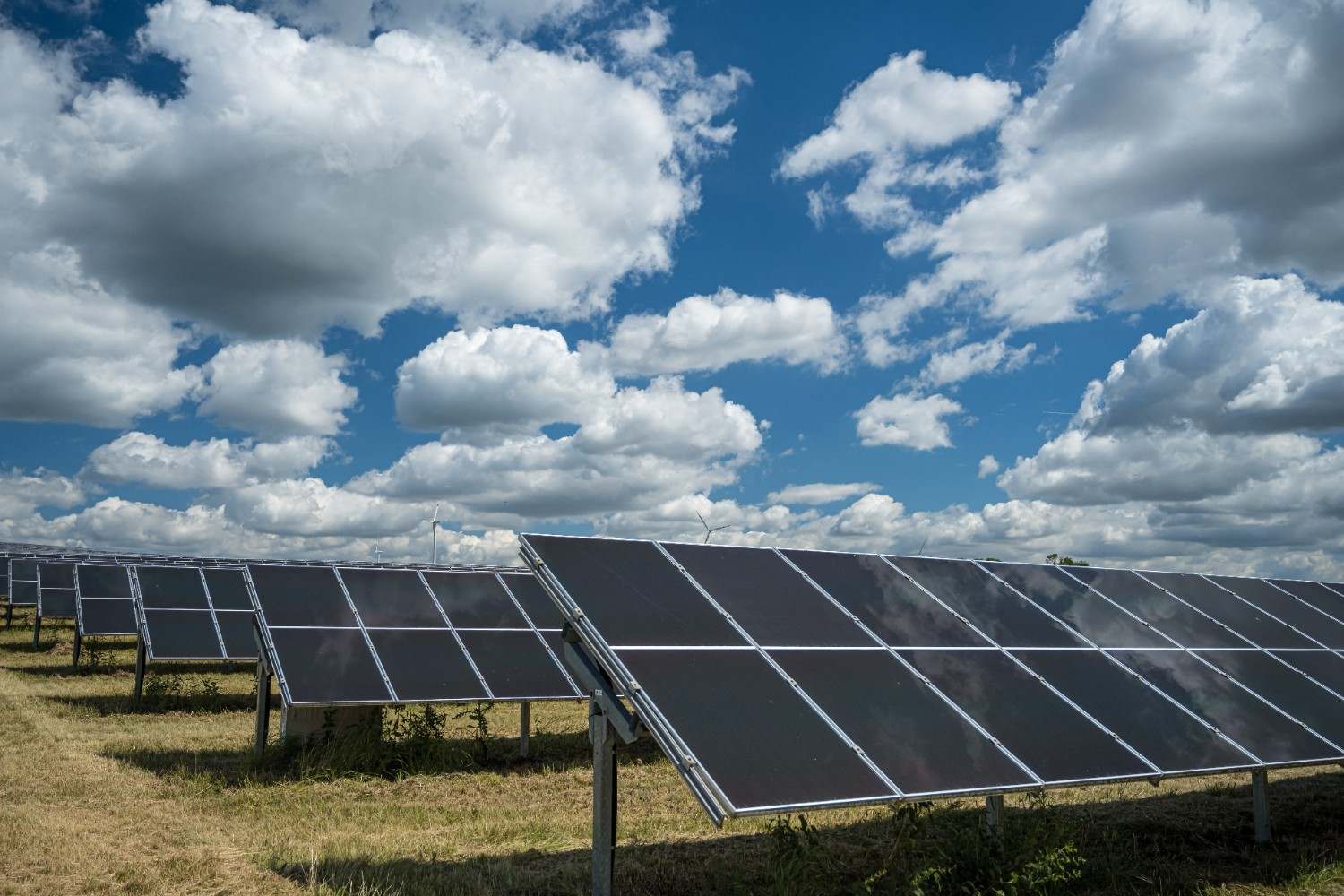
Farming has always depended on things nobody can control. Rain, drought, market prices, and pest attacks can turn a good season into a loss within weeks. For years, farmers have searched for ways to protect themselves from this uncertainty. One idea that is gaining attention today is combining solar panels with farmland. This approach lets a farmer grow crops and generate electricity on the same piece of land at the same time.
What Is AgriPV
Agripv is a system where solar panels are installed above or between crop rows, allowing farming and solar power generation to happen together on the same field. Instead of choosing between growing food or producing energy, a farmer gets both. The panels are usually raised higher than normal solar setups, or spaced with gaps, so tractors can pass through and sunlight can still reach the plants below. This dual use of land is the main reason people are excited about it. Farmers do not need to give up their fields to earn money from solar power. They can keep farming while also selling electricity or leasing land space to a solar company.
Why Reliable Income Matters So Much in Farming
Most farm income comes from one source, the harvest. If a storm damages the crop or prices fall, there is very little backup. This is where a second income stream becomes valuable. When a farm produces electricity alongside food, it creates a second, steadier line of earnings. Solar power does not depend on rainfall patterns or market demand for vegetables. Even during a weak farming season, the panels keep working, and that income keeps arriving. This does not remove all financial risk, but it does soften the blow when farming alone is not enough.
How the System Actually Helps Farmers Earn More
There are a few common ways farmers benefit financially from this setup.
First, many farmers lease part of their land to solar companies and receive steady rental payments for years, sometimes decades. This income is predictable and does not depend on how the crops perform that season.
Second, some crops actually grow better under partial shade from panels, especially in hot regions where too much direct sun can stress plants or dry out soil quickly. This can reduce water use and, for certain crops, even improve yield quality.
Third, farmers who own the panels themselves can sell surplus electricity back to the grid, adding another layer of income beyond farming and land lease payments.
An agri solar pv setup, in simple words, blends two income systems into one piece of land, which is far more efficient than keeping energy production and farming as separate businesses on separate plots.
Case Study 1: Hawaii's Hydroponic Lettuce Trial
At the Hawaiʻi Agrivoltaic Research and Demonstration Center in Mililani, researchers built a hydroponic lettuce operation directly at an existing large-scale solar site instead of only running simulations on paper. Rather than simulating crop yields as much of the earlier research had done, the team ran an actual variety trial to find out which lettuce type would be most profitable when grown within the solar system. This practical, real-world testing gave farmers something simulations cannot, a genuine enterprise budget based on real costs and real harvests, which can be adapted for other locations planning similar projects.
Case Study 2: Shrimp and Solar Together in China
Near the mouth of the Yellow River in Shandong Province, China, a company called Baofeng Group runs a site where aquaculture and solar power exist side by side. Every autumn morning, farmers there package shrimp for customers, working beneath and around the solar infrastructure built into the same site. This example shows that the idea is not limited to crop fields. Fish and shrimp farming can also be paired with solar generation, expanding the concept far beyond traditional row crops and proving the model works across very different types of agriculture.
Challenges Farmers Should Understand First
This approach is not automatically profitable everywhere. Recent research has shown mixed results depending on climate and crop choice. In humid regions, shading from panels can reduce yields for crops like maize and soybean because these plants need full sunlight to grow well. In drier or hotter climates, however, the same shading can protect crops and reduce water stress. This means the decision to adopt such a system should depend heavily on local weather, soil, and crop type, not just on general enthusiasm about solar income. Upfront installation costs are also significant, and farmers should carefully review financing options, government incentives, and long-term lease terms before committing.
Final Thoughts
The idea of combining food and energy production on one field is no longer just a research concept. It is becoming a practical tool that many farmers are testing and adopting in real conditions. While it will not suit every crop or every region, it offers a genuine path toward reducing financial risk and building a second income stream that does not disappear when the harvest fails. As more results come in from research centers and pilot farms around the world, interest continues to grow. Many farmers are now attending an agriculture solar event to learn directly from others who have already tested these systems on their own land, which is often the best way to judge whether this approach fits a particular farm's needs.
Frequently Asked Questions
Q1. Does adding solar panels to farmland reduce crop yield?
This varies according to the crop type and prevailing climatic conditions. Shade-tolerant crops in hot regions can actually benefit, while sun-loving crops in humid areas may see reduced yields.
Q2. How much land is usually needed for this kind of setup?
There is no fixed amount. Many pilot projects use just a portion of a farm, allowing farmers to test results before expanding further.
Q3. Can small farmers afford this kind of installation?
Costs can be high upfront, but leasing land to solar developers, rather than owning the equipment, is a common way small farmers participate without large capital investment.
Q4. Is this approach only useful for crop farming?
No. As shown by aquaculture examples, it can also be applied to fish and shrimp farming, expanding its usefulness beyond traditional fields.
Q5. How long does it take to see financial benefits?
Land lease payments often begin soon after installation, while crop-related benefits may take a few growing seasons to become clear as farmers adjust practices.