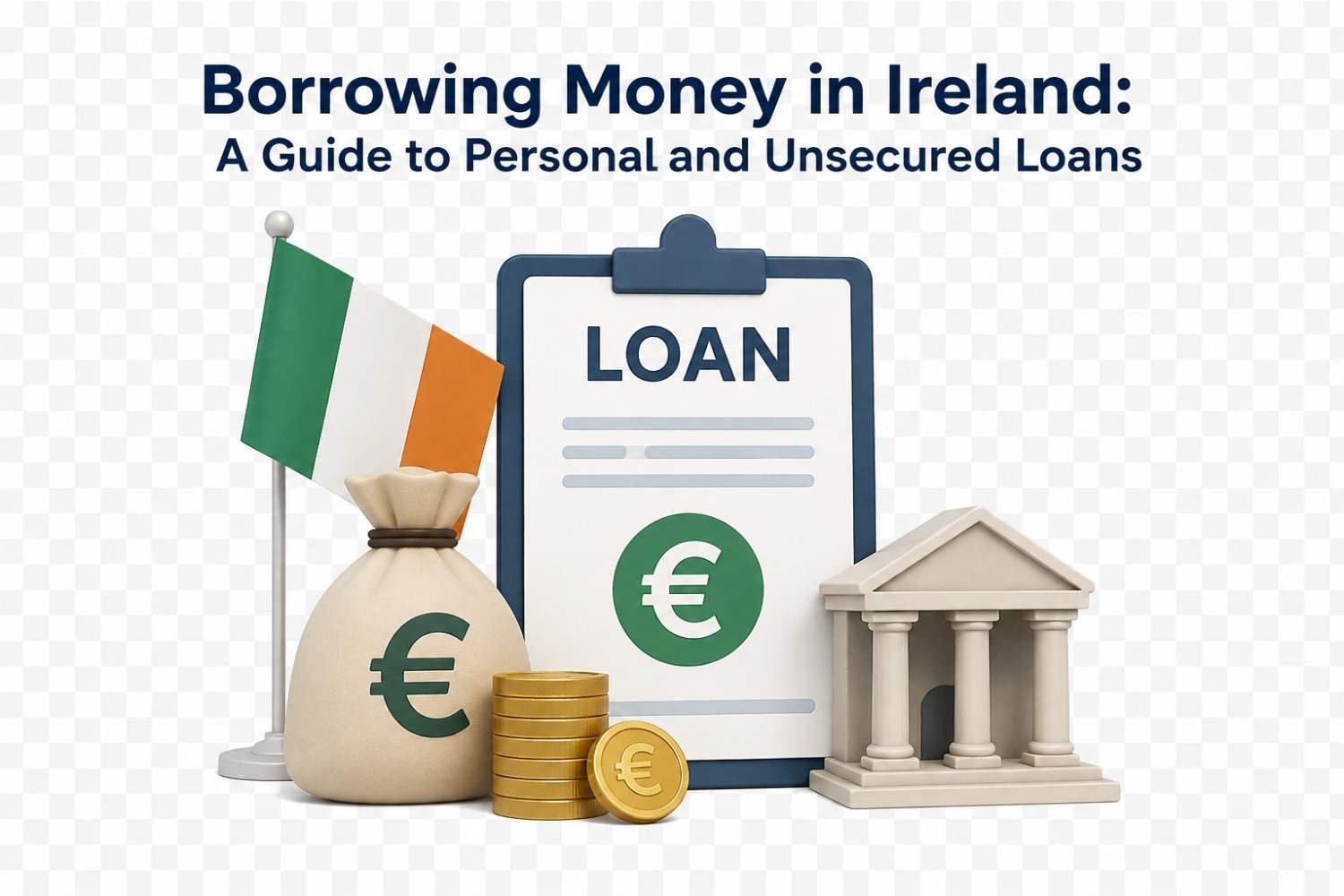
Personal loans are called unsecured loans. They are known for covering small unexpected expenses and large expenses such as weddings and home improvements. Personal loans are widely used among people in Ireland as they are easily accessible, and they are not subject to collateral. However, they come with high interest rates.
What are personal loans?
A personal loan is a fixed sum of money that you borrow from a bank or a direct lender. You can use personal loans for a wide range of expenses, both planned and unexpected. The maximum repayment term of these loans is up to five years. The whole debt is paid back in fixed monthly instalments over a period of time. As personal loans are unsecured, a lender cannot repossess your personal assets in case of default, which is why they come with high interest rates.
The lending decision is made based on your creditworthiness. Your credit history should be stellar in order to qualify for lower interest rates. However, there is no guarantee that a good credit rating will always help you qualify for affordable interest rates.
The repayment term also varies by the loan amount. If the loan amount is small, up to €1,000, you will be required to discharge the debt in one fell swoop, and if the loan amount is above €1,000, the debt will be paid back in fixed instalments. The repayment term for a loan might be a few months, depending on the loan amount.
Where can you obtain these loans from?
Unsecured personal loans in Ireland are available from credit unions, banks and direct lenders. Banks can offer these loans at competitive interest rates, but they require a good credit report. They follow stricter acceptance criteria than credit unions and direct lenders.
If your credit history is not excellent, you can consider applying for these loans from credit unions and online lenders. In order to borrow money from credit unions, you need to be a member. Direct lenders are known for approving these loans faster than credit unions, but credit unions seem to be offering them at the most competitive interest rates.
It is worth noting that banks do not provide small personal loans. The loan size starts at €5,000. If you need money to meet small emergency expenses, banks will not approve your application. In that case, credit unions and direct lenders are the only options.
What do you need to be eligible for personal loans?
Whether you apply for unsecured loans from credit unions or direct lenders, you will need to meet the following eligibility criteria:
• Your credit history should be stellar. Aim for a good credit history in order to improve your chances of approval.
• You must have proof of stable income. You will need to demonstrate your repayment capacity.
• Your debt-to-income ratio should be low. The lower it is, the better.
• You should be a resident of Ireland.
What factors should you check while taking out unsecured loans?
Here are the factors that you must check while taking out personal loans:
• APRs
APR stands for an annual percentage rate. It determines how much a loan will cost you if you take it out for a full one year. APRs vary by lender. To find the best personal loan rates in Ireland, you will have to compare the APR rather than just the interest rate. Bear in mind that the APR will be higher if you are perceived as a borrower with a high default risk. You should always ensure that your credit history is not less than perfect.
The comparison does not have to be limited to one lender. You should compare their APRs with credit unions and banks as well. It is likely that they provide lower interest rates than direct lenders.
• Fees
You should check fees as well. Some lenders charge early repayment fees if you settle the debt before time, while others do not. Late payment charges are levied when you miss a payment. While comparing the cost, you should know the fee structure.
Although it is quite difficult to know the exact fees without formally applying for these loans, you can find the clause on early repayment fees with a little bit of research. You should always try to choose a lender that allows you to repay the debt early without imposing early repayment charges.
• Repayment potential
The next thing you need to check is repayment potential. Falling behind on the debt payment will reduce your potential to borrow money at affordable rates down the line. Late payment fees will be charged, which will accumulate the size of the debt.
You should ensure that your budget has wiggle room to discharge the debt without struggling with other essential expenses. Although it is hard to know the exact cost of the debt beforehand, you can use the representative APR to know the estimated cost of the debt. Online loan calculators will reveal the monthly payment size and the total cost.
Figure out if this fits in your budget. Since actual costs are always higher than the estimated ones, make sure that there is extra room for making additional payments.
Are personal loans risky?
Yes, personal loans are risky if you throw caution to the wind while applying for them. First of all, they charge high interest rates. Even if your credit rating is perfect, you will likely end up with high interest rates. Monthly payments might be large. It could be difficult to keep up with payments. Falling behind on debt can throw you into an abyss of debt.
The final word
If you are looking to apply for a personal loan, it is not impossible. In fact, many lenders can accept your application despite a less than perfect credit history. At the time of using these loans, you should carefully examine your repayment capacity. Borrow money only when it is urgent, and you are confident that you can repay the debt on time.