Boom Barrier Buyer Guide: How to Choose the Right System for Vehicle Access Control
By Houston System 18-09-2026 61
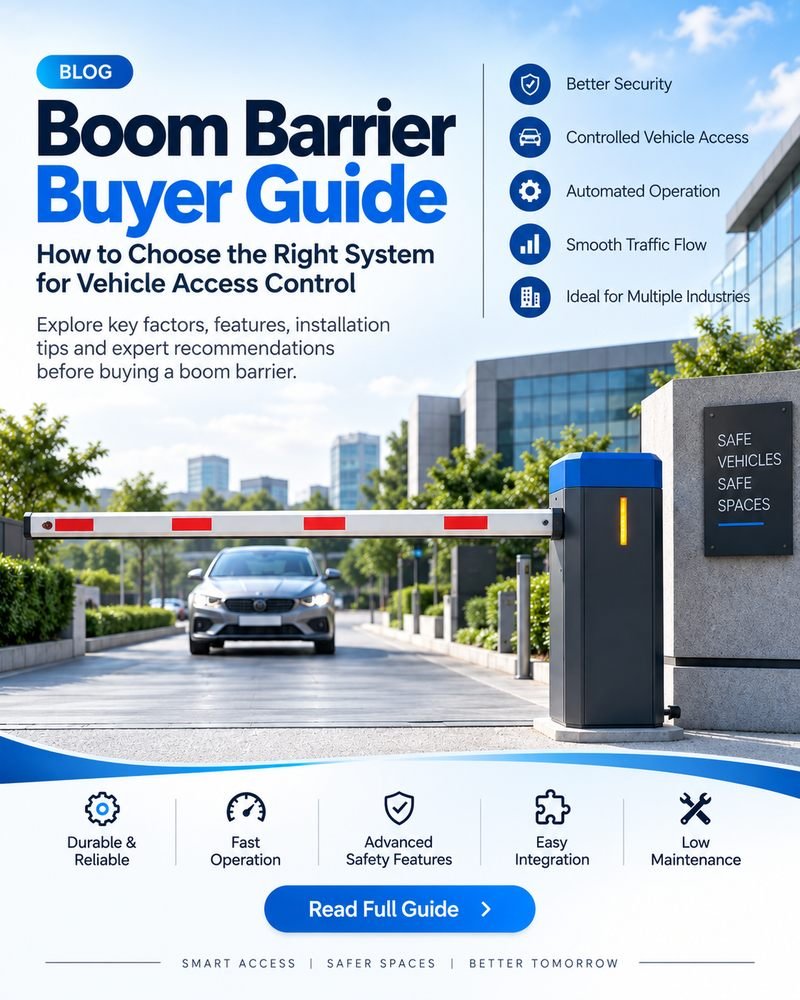
Managing vehicle movement is an important part of security and access control for commercial buildings, parking facilities, residential complexes, industrial sites and other controlled premises. A boom barrier provides an organized way to regulate vehicle entry and exit while supporting automated access-control systems.
However, choosing the right boom barrier requires more than comparing prices. Buyers should consider barrier length, operating speed, traffic volume, safety features, access-control integration, installation requirements and after-sales support.
What Is a Boom Barrier?
A boom barrier is an automated vehicle access-control system used to regulate entry and exit at gates, parking areas and restricted locations.
The barrier arm moves upward to allow an authorized vehicle to pass and returns to its closed position after the vehicle crosses the access point.
Depending on the application, boom barriers can be integrated with technologies such as RFID, ANPR, remote controls and other vehicle access-control systems.
How Does an Automatic Boom Barrier Work?
An automatic boom barrier uses a motorized mechanism to raise and lower the barrier arm.
When an authorized access signal is received, the arm opens to allow the vehicle through. After the vehicle passes, the barrier can close automatically according to the system configuration.
The operating speed and cycle capacity should be selected according to the expected vehicle traffic at the location.
Where Are Boom Barriers Used?
Boom barriers can be used in various vehicle-access environments, including:
- Corporate offices
- Commercial buildings
- Parking facilities
- Residential complexes
- Industrial premises
- Hotels
- Hospitals
- Educational institutions
- Warehouses
- Toll and controlled-access locations
The required system depends on the site's traffic volume, security requirements and available infrastructure.
Key Factors to Consider Before Buying
1. Vehicle Traffic Volume
Consider how many vehicles will pass through the entrance during normal and peak operating hours.
A high-traffic location may require a system designed for frequent operation, while a smaller facility may have different requirements.
2. Barrier Arm Length
The required arm length depends on the width of the vehicle entrance.
Measure the passage carefully before selecting the barrier to ensure that the system is suitable for the available entrance space.
3. Operating Speed
Operating speed can affect vehicle flow, particularly at busy parking entrances and commercial facilities.
Choose a system according to the expected traffic pattern rather than selecting a barrier based only on its maximum speed.
4. Safety Features
Safety is an important consideration for automatic barriers.
Depending on the configuration, buyers should evaluate features such as vehicle detection, obstruction protection, emergency operation and suitable access-control integration.
5. Access-Control Integration
Modern boom barriers can be combined with different vehicle identification and access-control technologies.
These may include:
- RFID
- ANPR cameras
- Remote controls
- Ticketing systems
- Parking management systems
- Vehicle access-control systems
Before purchasing, confirm compatibility with the existing or planned security infrastructure.
Boom Barrier Installation Requirements
Proper installation can help ensure reliable operation.
Before installation, evaluate:
- Entrance width
- Available installation space
- Power supply
- Foundation requirements
- Vehicle approach area
- Barrier mounting position
- Access-control equipment
- Maintenance access
A site assessment can help identify installation requirements before the equipment is ordered.
Boom Barrier Maintenance
Regular maintenance can help maintain consistent barrier operation.
Maintenance may include inspection of the motor, barrier arm, electrical connections, control components and safety features.
The required maintenance frequency depends on usage, environmental conditions and the manufacturer's recommendations.
Automatic Boom Barrier vs Manual Barrier
An automatic boom barrier can provide controlled and organized vehicle access with less manual intervention.
Manual barriers may be suitable for locations with limited traffic or specific operational requirements, while automatic systems are commonly considered where access control and vehicle flow need to be managed electronically.
The appropriate option depends on the facility's operational requirements.
What Affects Boom Barrier Price in India?
The Boom Barrier Price in India can vary depending on the specifications and installation requirements.
Important factors include:
- Barrier arm length
- Motor and operating mechanism
- Operating speed
- Traffic volume
- Safety features
- Access-control integration
- Installation requirements
- Control system
- Quantity
- Warranty
- Technical support
Buyers should compare complete specifications rather than choosing a system based only on the lowest quotation.
How to Choose a Boom Barrier Supplier in India
When selecting a Boom Barrier Supplier in India, buyers should evaluate product specifications, installation support, integration capabilities, warranty and after-sales service.
It is useful to request technical specifications and confirm whether the supplier can support installation, commissioning and future maintenance.
The supplier should understand the facility's traffic and security requirements and recommend a suitable configuration.
Boom Barrier Buyer Checklist
Before purchasing, check:
✔️ Entrance width
✔️ Required barrier arm length
✔️ Vehicle traffic volume
✔️ Operating speed
✔️ Motor and mechanism
✔️ Safety features
✔️ Power requirements
✔️ RFID/ANPR integration
✔️ Installation requirements
✔️ Maintenance support
✔️ Warranty
✔️ Technical assistance
Questions to Ask Before Buying
What type of boom barrier is suitable for my facility?
The appropriate system depends on entrance width, traffic volume, operating frequency, security requirements and access-control integration.
Can a boom barrier integrate with ANPR?
Depending on the configuration, boom barriers can work with ANPR systems to support automated vehicle identification and access control.
Can boom barriers be used with parking management systems?
Yes, depending on system compatibility, boom barriers can be integrated into parking management solutions for controlled vehicle entry and exit.
Does installation require civil work?
Installation requirements depend on the selected system and site conditions. The mounting area, foundation and electrical supply should be evaluated before installation.
Should boom barrier price be the main selection factor?
Price is one consideration, but buyers should also compare specifications, safety, integration, installation, warranty and technical support.
Conclusion
A boom barrier can help facilities manage vehicle entry and exit in a controlled and organized manner.
Before choosing a system, evaluate vehicle traffic, entrance width, barrier arm length, operating speed, safety features, access-control integration, installation requirements and after-sales support.
Selecting the right system according to the actual site requirement can help improve vehicle access management and support a more organized entrance.
About Houston Systems
Houston Systems provides security and access-control solutions for commercial, industrial, institutional and other applications, supporting controlled vehicle movement and automated entrance management.
Looking for a boom barrier solution for your facility? Contact Houston Systems for product details and quotation.