A body massage machine chair has become one of the most popular home wellness investments in India, offering the convenience of a professional-style massage without leaving your house. But with so many models, technologies, and price points on the market, it's easy to feel confused about what actually makes a good chair massage machine. This guide breaks down the types, core features, and mechanics of how these chairs work so you can make an informed decision before buying.
What Is a Body Massage Machine Chair?
At its core, a massager machine chair is an electronically powered recliner built with internal mechanisms, rollers, airbags, motors, and sometimes heating elements designed to replicate the techniques used in a manual massage. Instead of relying on a human therapist, the chair uses programmed movements to knead, tap, roll, and compress different parts of the body, offering a consistent and repeatable massage experience at home.
These chairs range from basic vibration-only models to advanced systems with body scanning and AI-adjusted pressure, which is why understanding the different types matters before you buy.
Types of Massage Chair Machines
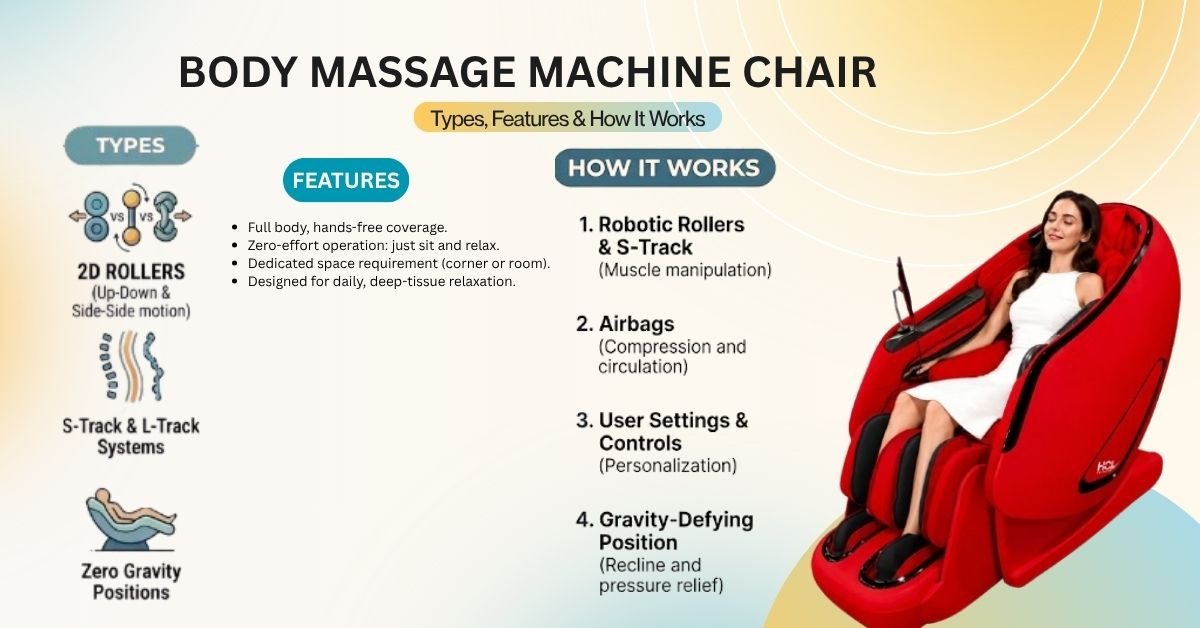
1. Roller-Based Chairs
These use mechanical rollers embedded in the backrest that move along a track, typically mimicking motions like kneading and rolling along the spine. Entry-level and mid-range chairs usually rely primarily on this mechanism.
2. Airbag Compression Chairs
Airbags are strategically placed around the arms, legs, calves, and feet. They inflate and deflate in sequence to create a compression massage, improving circulation and relieving muscle tension especially useful for people who sit for long hours.
3. Shiatsu-Style Chairs
Inspired by traditional Japanese massage technique, these chairs use a combination of pressure-point targeting and kneading to relieve tension in specific muscle groups, often around the shoulders and lower back.
4. Zero Gravity Chairs
While not a massage type on its own, zero gravity recline is often paired with the above mechanisms. It repositions your body to distribute weight evenly, reducing spinal pressure while the massage functions work commonly found in mid-to-premium models.
5. 3D, 4D, and 5D Chairs
These terms describe how precisely the rollers move. 3D rollers move in three directions (up-down, in-out, side-to-side), 4D adds variable speed and intensity for a more human-like rhythm, and 5D models often incorporate body scanning to map your exact spine curvature before starting the massage.
Key Features to Look For
When comparing massage chair machines, a few features consistently separate a good chair from a mediocre one:
- Body scanning technology – Adjusts the massage path based on your height and spine shape rather than a fixed pattern.
- Multiple massage programs – Pre-set combinations (e.g., relaxation, deep tissue, recovery) save you from manually adjusting settings each time.
- Heat therapy – Often built into the lower back or foot area, helps relax muscles further and improve blood flow.
- Adjustable intensity and speed – Since pressure tolerance varies from person to person, customizable settings matter more than most buyers initially realize.
- App or remote control – Simplifies switching between programs, especially useful for elderly users.
How Does a Massage Chair Machine Actually Work?
Most machines operate through a combination of motorized tracks and pneumatic airbag systems. The rollers move along a fixed or adjustable rail inside the backrest, controlled by a motor that changes speed, direction, and pressure based on the selected program. Simultaneously, air pumps inflate the airbags in a specific sequence, creating a squeezing sensation around targeted areas like the calves, thighs, or arms. Higher-end chairs add sensors that detect body position and automatically adjust roller paths in real time, making the massage feel closer to a manual therapist's touch.
Who Should Consider a Massage Chair Machine?
These chairs are particularly useful for people dealing with regular back or shoulder stiffness from desk jobs, individuals recovering from minor muscle strain, older adults seeking regular circulation support, or anyone simply looking to build a consistent relaxation routine at home. Since these chairs represent a long-term investment, it's worth testing a few models in person if a showroom is accessible near you, since comfort preference varies significantly from person to person.
For those exploring options, HCi Massage Chair offers a range of models across these categories, from roller-based entry chairs to advanced 4D systems with zero gravity recline.
Frequently Asked Questions
How do massage chair machines simulate human touch?
They use a combination of motorized rollers, airbag compression, and programmed speed variation to mimic techniques like kneading, tapping, and pressure-point massage used by human therapists.
Are foot massage options available in full-body massage chairs?
Yes, most full-body massage chairs include dedicated airbag or roller mechanisms in the footrest to target the soles, arches, and calves alongside the main body massage.
What's the average lifespan of a massage chair machine?
With regular use and proper maintenance, a quality massage chair typically lasts 7 to 10 years, though this can vary based on build quality and usage frequency.
Which body parts are targeted by a massage chair machine?
Most machines target the back, shoulders, neck, arms, legs, calves, and feet, with premium models offering more precise coverage through additional airbags and sensors.
Do massage chair machines cater to different body types?
Yes, many modern chairs include body scanning technology and adjustable settings that adapt the massage path and intensity based on a user's height and spine curvature.