Beyond the Hype: What Automated Testing Tools Actually Deliver in Real Projects
By Sophie Lane 10-06-2026 187
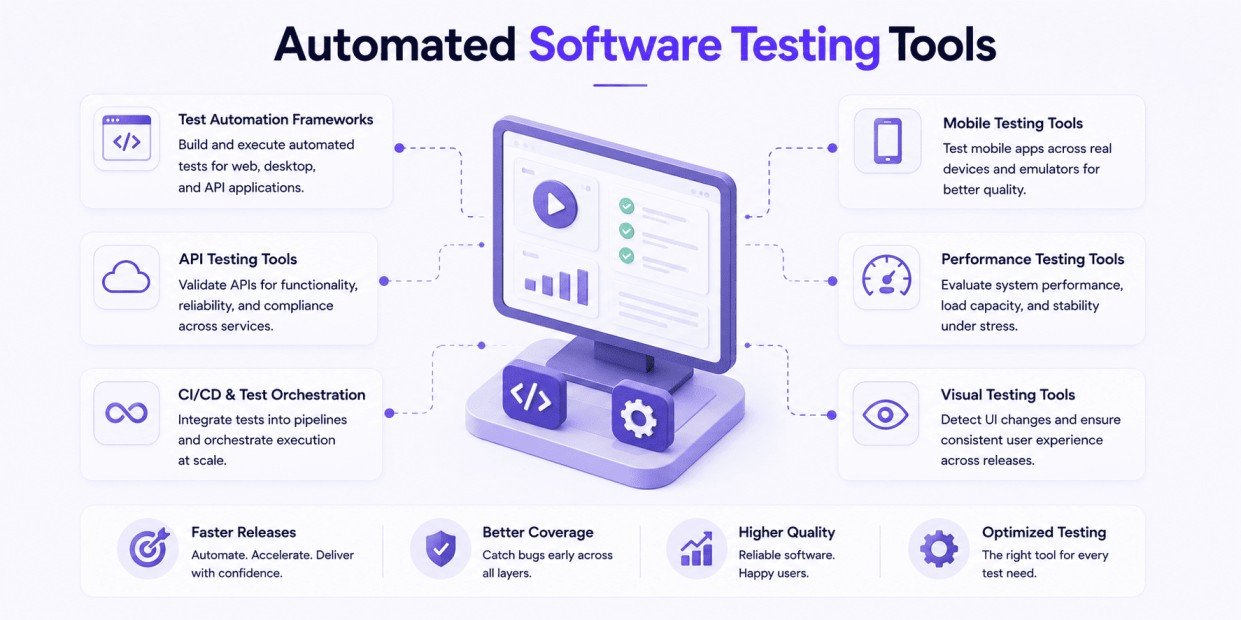
The vendor booth at the conference was impressive. Slick marketing. Demo videos showing tests running perfectly. A sales rep explaining how their automated software testing tools would revolutionize how our team works. Cut testing time in half. Reduce manual effort by seventy percent. Catch bugs before they reach production. Everything sounded amazing.
Six months after we implemented their tool, reality looked different.
Tests took longer to run, not shorter. The tool required constant maintenance. Flaky tests became a nightmare. We spent more time maintaining the test suite than we had before. The vendor's promised benefits did not materialize. What went wrong?
This pattern repeats everywhere. Automated software testing tools get implemented with high expectations. Reality is messier. This is not because the tools are bad. It is because expectations are misaligned with reality. Vendors have incentives to promise transformative impact. Reality is that tools are just tools. They help when used right. They create burden when used wrong.
This article explores that gap. What do automated software testing tools actually deliver in real projects? Not what the marketing says. What actually happens.
The Hype: What Vendors Promise
Go to any vendor website for automated software testing tools and you will see similar claims. Reduce testing time significantly. Decrease manual testing effort. Increase test coverage. Catch bugs earlier. Improve quality. Accelerate time to market. The claims are usually vague but grandiose.
The marketing materials show beautiful demo videos. Tests running cleanly. Results displayed perfectly. No flaky tests. No maintenance burden. Everything working as designed. The implication is clear: implement this tool and these benefits are yours.
Sales conversations add more specificity. The vendor will point to case studies. Company X reduced testing time by sixty percent. Company Y decreased bug escape rate by forty percent. Company Z improved deployment frequency. These numbers sound remarkable. They also omit critical context. What was their starting point? What else changed in their organization? How long did it actually take to see results?
I have watched vendors pitch the same automated software testing tools to different organizations and make completely different claims. To a startup, they position the tool as enabling rapid development. To an enterprise, they position it as enforcing quality discipline. To a DevOps team, they position it as enabling continuous delivery. The tool is the same. The marketing adapts.
The core promise is always similar though: implement our automated software testing tools and your testing will transform. You will test faster. You will catch more bugs. You will ship with more confidence. These promises are not entirely false. But they are incomplete.
What Actually Happens: Real Stories
I worked with a team that implemented a popular automated software testing tool. They followed the implementation guide. They built tests. They integrated with their CI/CD pipeline. They were excited about the possibilities.
Three months in, the team was frustrated. The tool was working, but not delivering the promised benefits. Why?
First, the learning curve was steeper than expected. The tool had its own syntax, its own ways of thinking about tests, its own best practices. The team spent weeks learning how to write tests that actually worked. Tests that looked correct sometimes failed mysteriously. The root causes were subtle. The tool was not intuitive.
Second, maintenance was constant. When code changed, tests broke. When external services behaved slightly differently, tests failed. When timing was slightly different, tests became flaky. The team spent as much time fixing tests as they did writing new ones. The promised time savings did not materialize.
Third, the tool revealed problems it could not solve. Tests ran slowly. Running the full suite took forty-five minutes. Running tests frequently became impractical. The tool could not parallelize effectively on their infrastructure. So tests ran one at a time. Feedback was slow.
Fourth, the tool did not integrate smoothly with their workflow. The tool required specific data to be present. Developers had to set up test data before running tests. The tool required specific environments. Developers had to run tests in the tool's way, not in their way. Integration friction slowed adoption.
After six months, the team had a working test suite using the automated software testing tools. But the benefits were marginal. They had shifted testing burden from manual to automation, but the total effort was similar. The quality improvement was small. The promised transformation did not happen.
I watched a different team implement a different automated software testing tool and get much better results. What was the difference? They were honest about what they wanted the tool to do. They wanted to catch regressions in core workflows. Not comprehensive coverage. Not testing every edge case. Just core workflows. They built tests focused on that goal. They kept the test suite small and fast. They accepted that some testing would remain manual. Because of clear expectations, they got value.
Another team I worked with struggled differently. They implemented automated software testing tools and got the infrastructure working. But they used the tool to test things that did not matter. They achieved high coverage of utility functions. They tested internal implementation details. They wrote tests that validated how the code was written, not what the code did. The tests ran fast and stayed green. But they did not catch bugs. Coverage numbers looked good. Actual quality did not improve.
Why the Gap Exists
The gap between what vendors promise and what teams experience is not random. It has systematic causes.
First, tools are not solutions. Tools are infrastructure. A tool can enable good testing practices. A tool cannot create good testing practices if they do not exist. Many organizations implement automated software testing tools expecting the tool to magically improve quality. The tool requires the organization to already have sound thinking about testing. If the thinking is not sound, the tool does not help.
Second, every context is different. A tool that works beautifully for Company A might work terribly for Company B. The difference is not the tool. The difference is architecture, team size, deployment frequency, risk tolerance, application complexity. A vendor that works with companies in a certain context can make claims that would be false in a different context. They still make the claims to everyone.
Third, measurement is hard. Vendors measure what is easy to measure. Time to run tests. Number of tests. Code coverage. These are easy to quantify. But they do not correlate well with actual quality. A team can have high coverage and terrible quality. A team can have low coverage and excellent quality. Vendors measure the easy things and claim those are what matters.
Fourth, implementation matters far more than the tool. Two teams using the same automated software testing tools can have completely different experiences. One team makes good decisions about what to test and how to structure tests. The other team makes poor decisions. The tool is the same. The outcomes are drastically different. But vendors take credit when teams make good decisions and blame external factors when teams make poor decisions.
Fifth, there is a time component vendors do not discuss. Implementing automated software testing tools correctly takes time. Building a good test suite takes time. Getting teams proficient with the tool takes time. Seeing real benefits can take months or years. Vendors want to sell tools now, so they promise quick benefits. Reality is more measured.
What Automated Software Testing Tools Actually Deliver Well
This is not a screed against automated software testing tools. They do deliver value when expectations are realistic.
Automated software testing tools are excellent at detecting regressions in core workflows. If you build tests that exercise critical paths and run them frequently, the tool will catch when those paths break. This is valuable. It prevents shipping obvious bugs.
Automated software testing tools provide documentation through tests. A well-written test documents what the system is supposed to do. A team can understand behavior by reading tests. This documentation stays synchronized with code because the tests run against the code. Static documentation gets outdated. Test documentation does not.
Automated software testing tools enable faster feedback during development. A developer can run tests locally and know immediately whether their change broke something. This feedback is valuable for preventing obvious mistakes.
Automated software testing tools create data about test execution. Over time, teams can see patterns. Which tests fail frequently? Which tests slow down the suite? Which tests have high maintenance burden? This data can guide improvements.
Automated software testing tools enable continuous integration and continuous deployment. By running tests automatically on every commit, teams can be confident that commits do not break the system. This confidence enables frequent deployment.
These are real, valuable benefits. They are just different from what vendors often promise.
What Automated Software Testing Tools Struggle With
The flipside is what automated software testing tools struggle with.
Automated software testing tools struggle with subtle bugs. Timing issues, race conditions, edge cases that only occur under specific conditions. These require understanding what the system actually does, not just what we predict it should do. Most automated testing tools are based on prediction. You write a test that predicts what should happen. If reality matches your prediction, the test passes. If reality is subtly different, the test passes anyway and the bug hides.
Automated software testing tools struggle with flakiness. Tests that pass sometimes and fail other times are worse than useless. They create noise. Teams stop trusting tests. The more comprehensive the automated software testing tools suite, the more likely flakiness becomes a problem.
Automated software testing tools struggle with maintenance at scale. The more tests you have, the more maintenance burden grows. Every change to the system can require changes to tests. A thousand tests mean a thousand potential places where changes break things.
Automated software testing tools struggle with giving teams the information they actually need. A test passes or fails. But why did it fail? What sequence of events led to the failure? What state was the system in? Most tools cannot answer these questions.
How Realistic Expectations Change the Game
The teams getting the most value from automated software testing tools are the ones with realistic expectations.
They do not expect tests to be a replacement for thinking about quality. They expect tests to be one layer of quality assurance. They also use monitoring, code review, manual testing, and other approaches.
They do not expect comprehensive coverage. They expect coverage of areas that matter most. Core workflows. Critical calculations. Important integrations.
They do not expect tests to stay green forever. They expect tests to require maintenance. They budget time for that maintenance.
They do not expect the tool to be transparent. They expect to need to understand how the tool works and what it actually does.
They do not expect quick transformation. They expect a multi-month journey to building a good test suite.
With these expectations, teams see value. Not transformation. Not revolution. But real, meaningful value.
Building Better Test Validation
One thing I have noticed is that teams get better results when they ground their automated software testing tools in actual behavior rather than predictions. Instead of writing tests that predict what the system should do, some teams are now recording what the system actually does and building tests from that recording.
This shifts the paradigm. Instead of tests being predictions that might be wrong, tests are specifications of actual behavior. If the system behaves differently than it used to, the test catches it. This approach avoids the gap between what we think the system does and what it actually does.
Practical Guidance
If you are implementing or reconsidering automated software testing tools, here is what actually matters.
First, be honest about what you are trying to solve. Not reduce testing time. Not increase coverage. But prevent specific kinds of failures. Catch regressions in critical workflows. Document behavior. Enable continuous deployment. Know exactly what problem the tool should solve.
Second, choose a tool that fits your architecture and workflow. A tool is better if your team understands it and wants to use it. Do not choose a tool because it is popular or powerful. Choose a tool that solves your specific problem.
Third, accept that implementing automated software testing tools takes time and effort. Do not expect quick benefits. Budget for learning curve, test development, and maintenance. The benefits come later.
Fourth, focus on test quality, not test quantity. A hundred good tests are better than a thousand mediocre tests. A test that validates something important is better than a test that validates an implementation detail.
Fifth, integrate tests with your workflow. The tool should make testing easier, not harder. If tests feel like extra work, adoption will suffer.
Conclusion
Automated software testing tools are valuable. But not in the ways vendors promise. They do not transform testing overnight. They do not reduce total effort. They do not replace thinking about quality.
What automated software testing tools actually do is enable certain practices. They enable rapid feedback during development. They enable continuous integration. They enable documentation through executable specifications. They enable detection of regressions in areas where you have coverage.
These are valuable. But they require sound thinking about what to test and how to test it. They require realistic expectations about what is possible. They require investment in building good tests and maintaining them.
The teams that get the most value from automated software testing tools are not the ones that followed the vendor's playbook. They are the ones that asked what they actually wanted to accomplish and chose tools and practices that would accomplish that.
If you are considering automated software testing tools, skip the hype. Ask what specific problem you are trying to solve. Choose tools that address that problem. Build realistic expectations. And then implement with discipline.
The benefits are real. But they come from doing the work right, not from having ‘the perfect’ tool.