Beverage Research and Development: Why R&D Is Often Overlooked in Beverage Formulation
By beverageconsultant 09-06-2026 132
The beverage industry is evolving rapidly as consumers demand healthier, tastier, and more innovative drinks. Beverage research and development plays a crucial role in transforming creative ideas into successful products that meet market expectations. Whether it's a functional beverage, energy drink, herbal formulation, or fruit-based beverage, the foundation of every successful product lies in a strong research and development process. Unfortunately, many brands still underestimate the importance of R&D, leading to product failures, quality issues, and poor customer satisfaction.
What is Beverage Development?
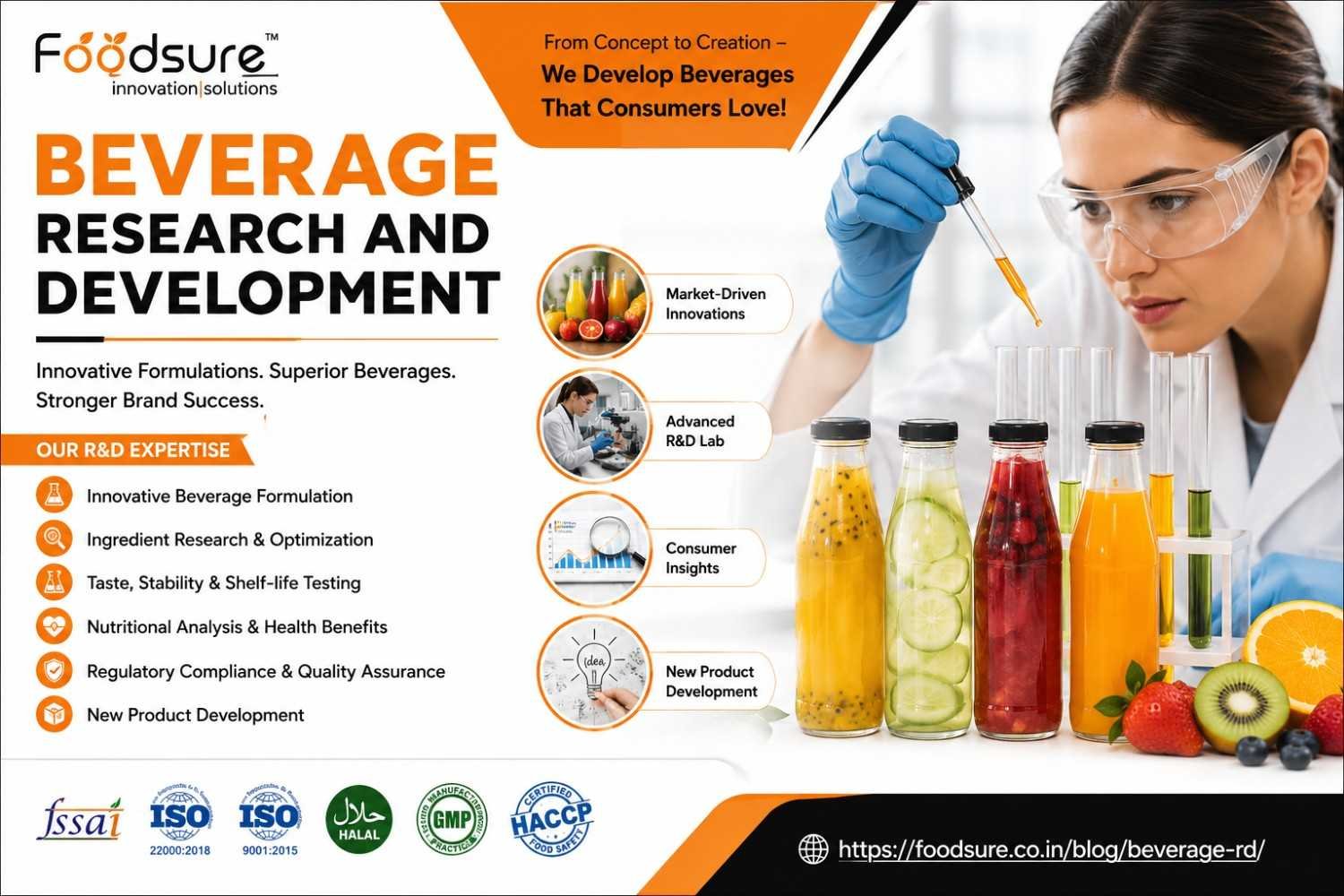
Beverage development is the complete process of creating a beverage product from concept to commercial production. It involves market research, ingredient selection, recipe formulation, sensory evaluation, shelf-life testing, packaging compatibility, regulatory compliance, and production optimization.
A successful beverage is not created by simply mixing ingredients. Every element must work together to deliver the desired taste, appearance, nutrition, stability, and consumer experience.
Why Beverage R&D Matters
Research and development provide the scientific foundation behind every beverage product. It helps businesses reduce risks while improving product quality and market acceptance.
Some key objectives of beverage R&D include:
- Developing unique beverage formulations
- Improving product taste and texture
- Ensuring ingredient compatibility
- Achieving desired shelf life
- Meeting food safety regulations
- Reducing manufacturing costs
- Supporting product innovation
Without proper research, even an attractive beverage idea may struggle to survive in today's competitive marketplace.
Why R&D Is Overlooked in Beverage Formulation
Many startups and beverage manufacturers focus primarily on branding, marketing, and packaging while giving less attention to product research. This is one of the biggest reasons R&D Overlooked in Beverage Formulation continues to affect the industry.
Common reasons include:
1. Budget Constraints
New businesses often try to reduce development costs by skipping detailed research and testing. While this may save money initially, it frequently results in expensive product recalls or reformulation later.
2. Pressure to Launch Quickly
Many companies want to enter the market as fast as possible. Rushing product development often means insufficient testing and incomplete validation.
3. Lack of Technical Expertise
Beverage formulation requires knowledge of food science, ingredient functionality, processing techniques, and regulatory standards. Without experienced professionals, formulation challenges become difficult to solve.
4. Underestimating Consumer Expectations
Today's consumers expect beverages to deliver great taste, clean labels, functional benefits, and consistent quality. Meeting all these expectations requires thorough research and testing.
How Beverage Research Improves Product Success
Strong beverage research and development allows businesses to identify potential issues before commercial production begins. This minimizes risks while improving customer satisfaction and long-term profitability.
Benefits include:
- Better product consistency
- Improved flavor stability
- Enhanced nutritional value
- Longer shelf life
- Regulatory compliance
- Faster manufacturing scalability
- Reduced production waste
Companies that invest in research generally achieve stronger customer trust and higher product acceptance.
R&D Important For Beverage Companies
There are several reasons why R&D Important For Beverage Companies should never be ignored.
Product Innovation
Consumer preferences change continuously. Research helps businesses introduce new flavors, healthier ingredients, functional beverages, and premium products that stay ahead of market trends.
Quality Assurance
Consistent quality is essential for brand reputation. Proper R&D ensures every production batch maintains the same taste, color, aroma, and texture.
Cost Optimization
Research identifies efficient ingredient combinations and manufacturing processes that reduce production costs without compromising quality.
Regulatory Compliance
Every beverage must comply with food safety standards and labeling regulations. R&D teams help ensure products meet all legal requirements before market launch.
The Role of a Food Beverage Consultant
Many beverage brands collaborate with a professional food beverage consultant to simplify product development. Consultants bring technical expertise, market insights, and formulation experience that help businesses avoid common mistakes.
They typically assist with:
- Beverage concept development
- Ingredient sourcing
- Recipe optimization
- Shelf-life studies
- Regulatory documentation
- Production trials
- Commercial manufacturing support
Working with experienced professionals significantly improves the chances of launching a successful beverage.
Essential Steps in Beverage Development
A structured Beverage development process generally includes the following stages:
Market Research
Understanding consumer preferences and industry trends helps identify profitable product opportunities.
Concept Creation
The product vision is defined, including flavor profile, target audience, nutritional goals, and pricing strategy.
Prototype Formulation
Scientists create multiple formulations and evaluate their taste, stability, appearance, and functionality.
Laboratory Testing
Microbiological testing, nutritional analysis, and shelf-life evaluation ensure product safety and quality.
Pilot Production
Small-scale manufacturing verifies that the formulation performs consistently during production.
Commercial Launch
After successful validation, the beverage moves to large-scale production and enters the market.
Common Mistakes Companies Should Avoid
Businesses often encounter avoidable challenges during product development.
Some common mistakes include:
- Skipping stability testing
- Choosing ingredients based only on cost
- Ignoring consumer feedback
- Inadequate packaging evaluation
- Poor documentation
- Lack of regulatory planning
- Rushing commercial production
Avoiding these mistakes significantly improves long-term product performance.
Future Trends in Beverage Research
Innovation continues to reshape the beverage industry. Some emerging trends include:
- Functional beverages with added health benefits
- Plant-based drinks
- Natural sweeteners
- Low-sugar formulations
- Clean-label ingredients
- Sustainable packaging
- Personalized nutrition beverages
Businesses investing in research today will be better prepared for tomorrow's consumer demands.
Conclusion
Building a successful beverage requires much more than a great idea. Scientific research, formulation expertise, quality testing, and continuous innovation are essential for creating products that consumers trust and enjoy. Investing in beverage research and development helps businesses reduce risks, improve product quality, and stay competitive in an increasingly dynamic industry. Companies that prioritize R&D create stronger brands and achieve sustainable growth. Foodsure supports beverage businesses with professional development solutions that help transform innovative concepts into successful commercial products.
FAQs
1. What is beverage research and development?
Beverage research and development is the process of designing, testing, improving, and validating beverage products before they are launched commercially.
2. Why is R&D important for beverage companies?
R&D helps companies create innovative products, maintain quality, meet regulatory requirements, reduce production risks, and improve customer satisfaction.
3. What does beverage development include?
Beverage development includes market research, formulation, ingredient selection, product testing, shelf-life evaluation, packaging, regulatory compliance, and production scaling.
4. Why do many beverage companies overlook R&D?
Many businesses overlook R&D due to limited budgets, lack of technical expertise, pressure for faster product launches, and underestimating the complexity of beverage formulation.
5. How can a food beverage consultant help?
A food beverage consultant provides expertise in formulation, ingredient selection, product testing, regulatory compliance, manufacturing support, and commercial product development.
6. What are the latest trends in beverage development?
Current trends include functional beverages, plant-based drinks, clean-label products, low-sugar formulations, natural ingredients, and sustainable packaging.