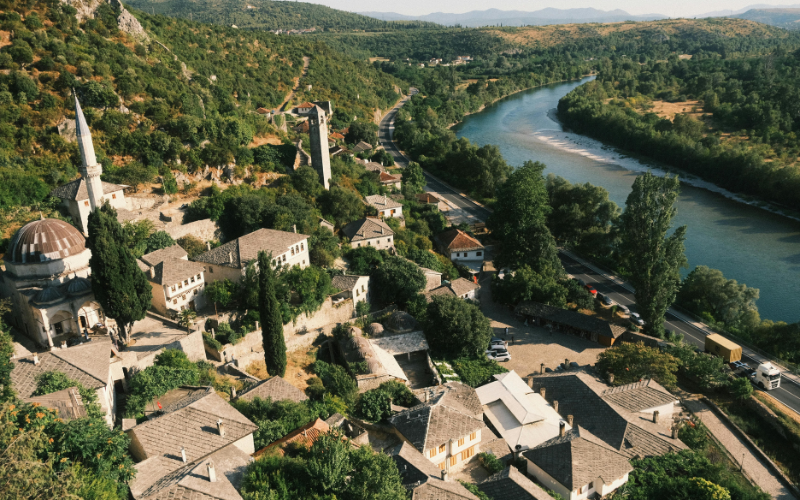
Bosnia and Herzegovina doesn’t announce itself loudly. It waits. And then it surprises you—usually when you weren’t expecting much at all.
Travel here in 2026 feels especially rewarding. Infrastructure has improved quietly. Tourism is growing, but not aggressively. Prices are still reasonable. Most importantly, the country hasn’t polished away its edges. That’s the appeal.
This is a destination for travelers who notice details. Who sit down for coffee without checking the time. Who don’t mind a little contradiction. It also happens to be a place where carefully designed Bosnia luxury holiday experiences work best when they emphasize space, local rhythm, and access—rather than gloss.
Here’s where I’d send a well-traveled friend right now.
Sarajevo
Sarajevo is not an easy city, and that’s why it stays with you.
You can walk from an Ottoman-era bazaar to Austro-Hungarian streets in minutes. Mosques, churches, and synagogues sit closer than feels possible. Coffee is taken seriously. Conversation even more so.
Baščaršija is where most people start—and that’s fine. But Sarajevo opens up when you wander uphill into residential neighborhoods or sit quietly by the river with locals who’ve lived through more than they care to summarize.
Most people miss: The view from the hills at sunset. The city makes more sense from above.
This is where trips often go wrong: Treating Sarajevo as a quick stop between destinations. Give it time.
Mostar
Mostar is visually striking, but it’s also fragile in ways travelers don’t always notice.
The Old Bridge is iconic for a reason. Watching divers leap into the river below never gets old. But Mostar works best when you move beyond the central strip.
Cross the bridge and keep walking. Sit somewhere small. Let the pace slow.
I once spent an afternoon doing nothing but watching light change on stone. That was the highlight.
Small warning: Midday crowds can flatten the experience. Early morning or evening is better.
Blagaj Tekke
Blagaj feels like a pause.
The monastery sits at the base of a cliff, beside water that emerges impossibly clear and cold. It’s calm in a way that feels intentional.
You don’t need long here. But you do need quiet.
Most people miss: Sitting by the water instead of rushing inside.
Jajce
Jajce is compact and confident.
A waterfall crashes right through the center of town. Medieval walls wrap around everyday life. It feels layered without feeling heavy.
Jajce works well as a stop between Sarajevo and the northwest, but it deserves more than a photo stop.
Good moment: Early evening, when day visitors leave and the town settles.
Una National Park
Una National Park is one of Bosnia’s quiet triumphs.
Emerald rivers. Wooden bridges. Waterfalls that don’t come with crowds or barriers. It feels protected but not overmanaged.
Rafting here is gentle enough for beginners but still exciting. Hiking trails are underused.
This is where trips often go wrong: Underestimating how much time you’ll want. One night is rarely enough.
Bihać
Bihać is practical, not pretty—and that’s fine.
It’s a good base for exploring Una. Cafés are lively. People are curious but not pushy.
Stay here if you want access without isolation.
Trebinje
Trebinje feels like Bosnia leaning toward the Mediterranean.
Sunlight lasts longer. Wine is better than expected. Streets feel relaxed.
It’s close to the Croatian border, but culturally distinct. Less rushed. Less performative.
Most people miss: Evening walks through the old town when locals come out.
Kravica Waterfalls
Kravica is popular—and for good reason.
Wide cascades. Swimming in summer. Easy access.
The trick is timing. Visit early or late. Midday can feel like a picnic ground.
Honest note: It’s fun, but not wild. Adjust expectations.
Lukomir
Lukomir sits high, remote, and stubbornly traditional.
Stone houses. Wind. Silence. It doesn’t cater to you—and that’s the appeal.
Reaching it takes effort. Weather can change quickly.
Most people miss: That this is a living village, not a museum.
How Bosnia Feels in 2026
Bosnia and Herzegovina is still affordable, still welcoming, and still underexplored compared to its neighbors.
Tourism is growing, but not uniformly. Some places are busy. Others feel untouched.
Roads are improving. Accommodations range from simple guesthouses to thoughtfully designed boutique stays—especially for travelers seeking comfort without losing authenticity, which is where well-planned Bosnia luxury holiday experiences actually make sense.
Practical Observations (That Matter)
Distances look short but take time.
English is widely understood, but patience goes a long way.
Cash is still useful in smaller towns.
Coffee culture is slow. Embrace it.
Rushing Bosnia is the fastest way to misunderstand it.
Final Thoughts
The best places to visit in Bosnia and Herzegovina in 2026 aren’t defined by superlatives. They’re defined by moments.
A quiet conversation in Sarajevo. Light on stone in Mostar. Cold river water at Una. Evening wine in Trebinje.
Choose fewer places. Stay longer. Let the country meet you halfway.
Bosnia doesn’t perform. It reveals. And if you give it space—whether traveling simply or through carefully paced Bosnia luxury holiday experiences—it rewards attention more than ambition.
FAQs
1. Is Bosnia and Herzegovina safe to visit in 2026?
Yes. Use normal travel awareness, especially in rural areas.
2. How many days do I need?
At least 7–10 days for a meaningful experience.
3. Do I need a car?
Highly recommended for flexibility, especially outside cities.
4. Is English widely spoken?
Yes, particularly among younger people and in tourism areas.
5. When is the best time to visit?
Late spring and early autumn are ideal.
6. Is Bosnia expensive?
Still very affordable compared to Western Europe.
7. What do travelers often misunderstand?
The pace. Bosnia moves slower—and that’s intentional.