Best Event Planner in Karachi: What Changes Once an Event Grows in Scale
By Ayesha Rao 19-08-2026 36
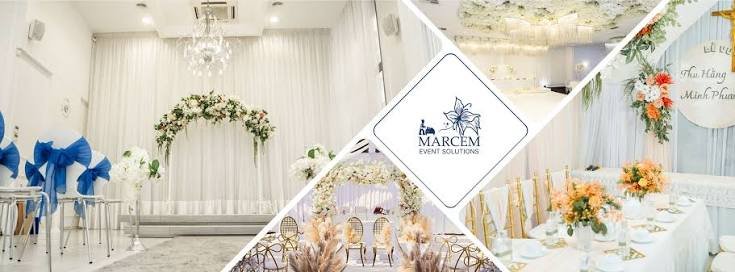
Karachi's event planning market has shifted noticeably over the past few years. Brand launches, dealer conferences, and large weddings now routinely involve guest counts that would have been unusual a decade ago. Finding the best event planner in Karachi for an event at this scale takes different scrutiny than a smaller booking would.
A planner who handles a hundred guests well does not automatically handle a thousand the same way. Scale changes staffing needs, vendor coordination, and contingency planning. It also shrinks the room for something to go visibly wrong.
How Karachi's Event Planning Industry Has Scaled Up
Corporate and brand clients have pushed standards higher across the city. A product launch backed by a national brand carries different expectations than a private family function. Stage production, lighting, and audiovisual quality now get scrutinized the way décor once was. Planners who came up handling smaller social events sometimes struggle to meet this bar. Meeting it often requires real retooling of their execution process, not just hiring extra staff for one event.
Venue Capacity Has Become a Genuine Constraint
Karachi's larger venues book out months in advance during peak season. That season runs roughly October through February. Spaces that can hold conferences or activations for several hundred guests are limited. Many companies now compete for the same handful of dates. A planner with strong relationships across multiple large venues gives clients more flexibility. This matters most when a first-choice date is unavailable.
Venues like Bahria Auditorium in Karachi get booked heavily for both corporate and large private functions. Planners without prior access there often face longer lead times just to confirm availability. That gap can force a client into a less suitable venue simply because timing ran out. Backup venue options, agreed in advance rather than scrambled together at the last minute, tend to separate planners who genuinely operate at scale from those managing their first large booking.
Production Requirements Have Gotten More Technical
Audiovisual and staging needs have grown more complex. Brand clients now expect broadcast-quality lighting as a baseline. Multi-camera coverage and live streaming often get built into standard event packages, not treated as add-ons. This shifts what "in-house capability" actually means for a planner. A team needs real technical crew, not just decorators and coordinators, to deliver reliably at this level.
Companies that have not invested in technical production tend to subcontract it entirely. That choice reintroduces the exact coordination risk that in-house teams are meant to reduce. A technical failure during a live stream or a lighting cue miss during a keynote reflects on the planner, even when a third-party vendor caused it.
Insurance and liability coverage tend to get overlooked in these conversations, but they matter more at scale. A large gathering carries real risk, from structural load on temporary staging to crowd safety during entry and exit. A planner working on brand-level events should carry appropriate liability coverage and be able to explain it clearly if asked. Companies that avoid this question, or seem unfamiliar with the concept, are usually operating below the scale they claim to handle.
What Full Service Event Planning Actually Requires at Scale
A genuinely full-service planner covers weddings, corporate events, exhibitions, brand activations, and institutional bookings. None of these should feel like a side offering bolted onto the main business. This range matters more at scale. Operational skills built in one category often solve problems in another. A team that has run large exhibitions understands crowd flow and staffing density. That knowledge translates directly to a large conference, even though the two events look nothing alike on the surface.
Cross-Category Experience Changes How Problems Get Solved
Vendor coordination under pressure is one transferable skill. Timeline compression, when a booking window shifts unexpectedly, is another. Contingency planning for weather or last-minute cancellations rounds out the list. A planner who has only run weddings often lacks the reflexes that corporate or institutional work demands. The reverse holds true just as often. Teams with experience across categories tend to solve unexpected problems faster. They have simply seen a wider range of failure points before.
Government and institutional events add a layer many planners never encounter. These often involve security coordination and formal documentation. Protocol requirements here go beyond what private events typically carry. A planner without this specific experience will not know to build in extra lead time. That gap tends to surface only once it is too late to fix easily, usually a week or two before the event date.
Budget structures also shift at this scale. Institutional and large corporate clients often require formal, staged invoicing tied to procurement processes, rather than the simpler deposit and balance structure common in private events. A planner unfamiliar with this can slow down approval internally, sometimes by weeks, simply by submitting documentation in the wrong format.
Multi-day events add another layer of complexity that single-evening functions rarely face. A three-day exhibition or conference needs staffing that holds up across consecutive days, not just one high-energy evening. Fatigue becomes a real operational factor. Planners who have run multi-day events know to rotate staff and build recovery time into the schedule. Those without this experience often see visible quality drop off by the second or third day, exactly when brand clients are paying the closest attention.
How to Choose the Best Event Planner in Karachi for a Large-Scale Event
For anything beyond a mid-sized private function, the evaluation process should look different. Start by asking for examples of the largest event a planner has actually executed. Do not accept a vague range as an answer. A company that lists "up to 2,000 guests" as a capability should name a specific event where they hit that number. They should also name the venue and rough staffing level involved.
Questions That Reveal Real Operational Capacity
Ask how staffing scales with guest count. A planner should have a clear ratio in mind: coordinators, registration staff, and floor managers. A vague answer about "enough people" is not a real answer. Ask what technical production gets handled in-house versus subcontracted. This affects both cost and quality control on the day itself. Ask for a reference from an event close in scale to yours. A flagship project reference tells you less, since flagship work often gets disproportionate internal resources that a standard booking will not receive.
Budget breakdowns matter more as scale increases. A small error in per-guest costing compounds quickly across a large guest list. A transparent, itemized proposal should cover venue, catering, staffing, production, and contingency without resistance. Vague, bundled pricing becomes riskier at scale, not less risky. The margin for a hidden cost to derail a budget grows along with the event itself.
Karachi has no shortage of planners willing to take on a large booking. Fewer of them have built the operational depth that real scale requires. That depth includes staffing systems, technical crew, multi-venue relationships, and cross-category experience. This kind of depth only comes from having actually managed large, complex events before, not from claiming the capability on a website. Asking specific, verifiable questions before committing a budget remains the most reliable way to tell which category a given planner actually falls into.
What This Looks Like in Practice
Most searches for the best event planner in Karachi return a long list of similar-looking companies. Nearly all of them claim large-scale experience somewhere on their website. Few provide specifics without being asked directly. A short conversation, five or six pointed questions about staffing ratios, venue access, and technical crew, usually separates the companies that can execute at scale from those that would be learning on the client's budget.
That conversation costs nothing and takes very little time. It tends to save far more time and money than it costs, particularly once a booking is large enough that a mistake becomes visible to hundreds or thousands of guests rather than a handful. For anyone comparing options for a large-scale event, that short list of direct questions is worth working through before any contract gets signed.
Scale does not just mean more guests or a bigger tent. It means more staff, more vendors, more technical dependencies, and more ways for something small to become visible. A planner who has genuinely done this before will talk about these details without prompting. One who has not will usually need to be asked.
Tags : .....