Automatic Makhana Making Machine High-Capacity Lotus Seed Processing Plant for Commercial Use
By Foodsure Machines 20-02-2026 217
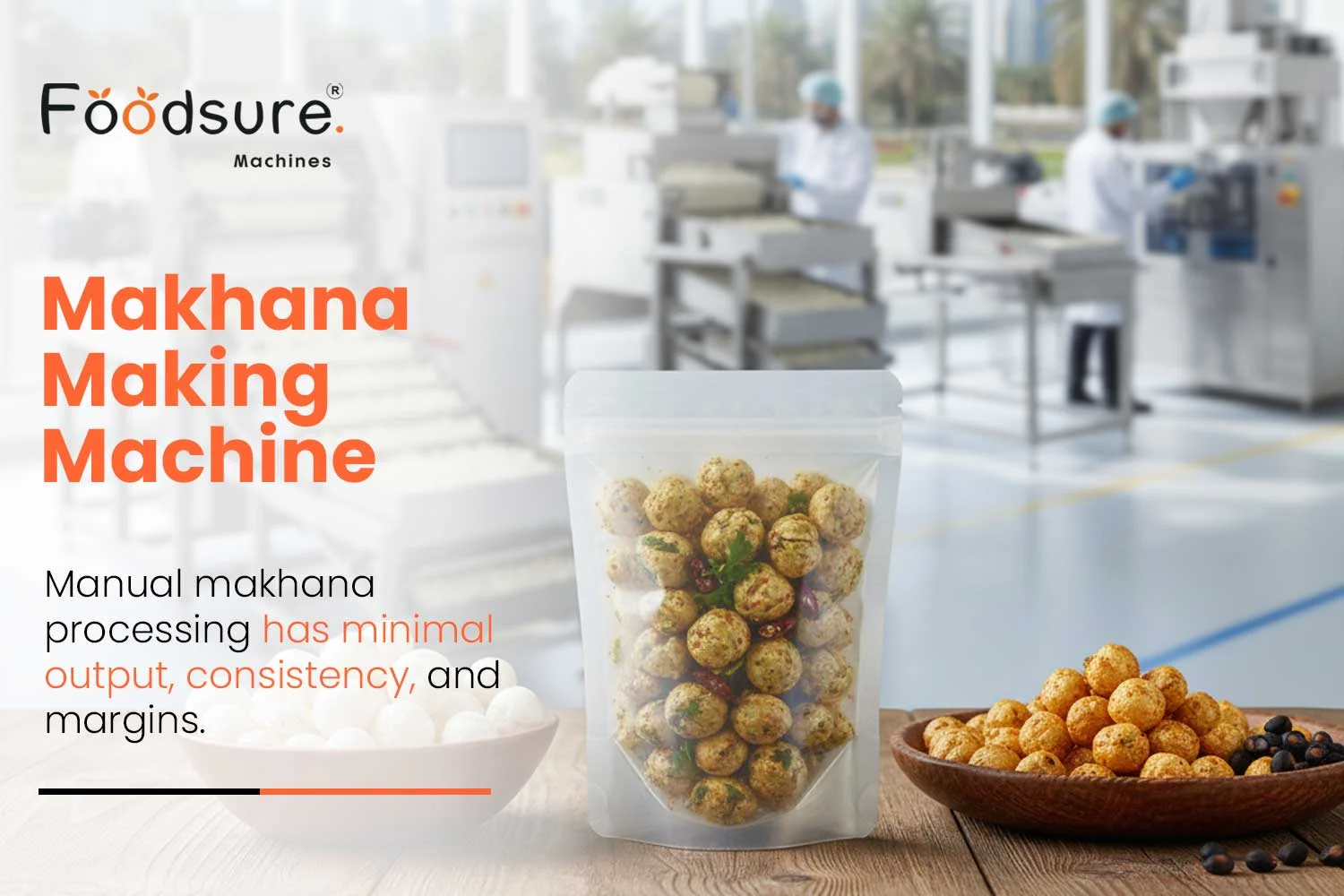
Makhana, commonly known as fox nuts or lotus seeds, has taken the health food world by storm. Once considered a regional delicacy in Bihar, India, makhana is now a globally recognized superfood packed with protein, antioxidants, and essential minerals. As demand skyrockets across domestic and international markets, manufacturers and entrepreneurs are turning to automatic makhana making machines to meet production targets without compromising on quality.
If you are planning to enter the makhana processing business or scale up your existing unit, understanding how a high-capacity lotus seed processing plant works can make all the difference.
What Is an Automatic Makhana Making Machine?
An automatic makhana making machine is an industrial-grade processing unit designed to transform raw lotus seeds into the puffy, roasted makhana you find on store shelves. The entire process from grading and roasting to popping and sorting — is handled mechanically, reducing human error and labor costs significantly.
Traditional makhana processing was entirely manual. Skilled workers would roast seeds in sand, pop them by striking with a wooden mallet, and hand-sort the results. While the craft carried cultural significance, it was slow, inconsistent, and nearly impossible to scale. Modern automatic machines have changed this reality entirely.
Key Stages in the Lotus Seed Processing Plant
A commercial makhana processing plant typically operates through several interconnected stages:
1. Cleaning and Grading Raw lotus seeds arrive with dust, debris, and natural variations in size. The first stage involves mechanical cleaning and grading, where seeds are sorted by size to ensure uniform processing. Consistent sizing leads to even roasting and a more appealing final product.
2. Roasting The graded seeds are fed into a high-temperature roasting drum. Precise temperature control is critical at this stage. Under-roasting leads to incomplete popping, while over-roasting ruins the texture and taste. Automatic machines maintain consistent heat levels throughout, producing a uniform batch every time.
3. Popping This is the heart of makhana production. Once properly roasted, the seeds are subjected to mechanical impact that causes them to pop and expand—similar to popcorn. In automated systems, this is achieved through rotating drums or mechanical strikers that apply consistent force across every seed. The result is a perfectly puffed lotus seed with minimal waste.
4. Sorting and Grading of Finished Product After popping, the makhana passes through a vibrating sieve or optical sorter that separates fully popped seeds from unpopped ones, broken pieces, and fine powder. Only premium-grade makhana moves forward for packaging.
5. Cooling and Packaging The finished product is cooled to room temperature before packaging to preserve texture and prevent moisture buildup. Automatic packaging machines then seal the makhana in airtight pouches, extending shelf life and maintaining freshness.
Why Choose a High-Capacity Processing Plant?
For commercial producers, output volume directly impacts profitability. A high-capacity makhana processing plant can produce several hundred kilograms per day, depending on the configuration. This level of output is simply unachievable with manual methods.
Beyond volume, automatic machines deliver consistency. Every batch meets the same quality standard, which is essential for building brand trust and meeting export requirements. Many markets, including Europe and North America, have strict food safety regulations that demand traceable, hygienic processing environments—something automated plants handle far better than manual setups.
Energy efficiency is another advantage. Modern machines are engineered to minimize power consumption while maximizing throughput, helping producers keep operating costs under control.
Investment and Returns
The cost of an automatic makhana making machine varies based on capacity, features, and the manufacturer. Entry-level commercial machines start at a few lakhs, while full processing plant setups can go higher depending on automation level and add-ons like optical sorters and automatic packaging lines.
Given the strong market demand and premium pricing makhana commands—both domestically and in export markets—the return on investment is typically favorable for well-managed operations. Many processors recover their equipment costs within one to two production seasons.
FAQ
Q1. How much makhana can an automatic machine process per day?
Ans: Depending on the machine's capacity, output can range from 100 kg to over 500 kg per day. Large industrial plants with multiple processing lines can exceed this significantly.
Q2. Is the makhana making machine suitable for small businesses?
Ans: Yes. Semi-automatic and compact automatic models are available for small and medium enterprises. These offer lower initial investment while still improving output and consistency over manual processing.
Q3. What raw material is used in makhana production?
Ans: The primary raw material is the seed of the Euryale ferox plant, a type of water lily commonly grown in the wetlands of Bihar, Manipur, and parts of Rajasthan.
Q4. How much electricity does a commercial makhana processing plant consume? Ans: Power consumption depends on machine size and configuration. A mid-range processing unit typically requires between 5 to 15 kW of power per hour of operation.
Q5. Can the machine process different grades of lotus seeds?
Ans: Yes. Most commercial machines come with adjustable grading settings that allow operators to process different seed sizes and produce multiple product grades in a single plant setup.