Applications of Access Control Systems in Parking, Toll, and Commercial Facilities
By flap barrier 14-05-2026 328
Why Modern Facilities Need Smarter Vehicle Access Management
Managing vehicle movement has become increasingly complex across modern infrastructure environments. Parking facilities, toll operations, and commercial complexes now handle continuous traffic flow throughout the day, often across multiple access points simultaneously.
In these environments, even small delays in vehicle processing can quickly create congestion, operational disruption, and coordination challenges.
This is why organizations are moving away from traditional entry methods and adopting automated access control systems designed to improve visibility, coordination, and long-term operational efficiency.
The Operational Challenges of High-Volume Vehicle Movement
Facilities handling large vehicle volumes face more than just traffic congestion. They must also coordinate multiple types of vehicle movement while maintaining smooth operations.
Common challenges include:
- Congestion during peak traffic periods
- Delays caused by manual verification
- Difficulty coordinating visitor, employee, and delivery access
- Inconsistent traffic flow across multiple entry points
As facilities expand, these operational pressures become increasingly difficult to manage manually.
Access Control in Parking Facilities
Parking environments experience constant vehicle turnover, especially in commercial and mixed-use facilities. During peak hours, even a few seconds of additional processing time per vehicle can significantly impact traffic flow.
Automated access control systems help parking operators:
- Process vehicles faster and more consistently
- Reduce queue buildup at entry and exit points
- Improve overall space utilization
- Maintain organized traffic movement throughout the facility
By improving vehicle coordination, parking facilities can create a more efficient and predictable user experience.
Why Toll Operations Depend on Automation
Toll infrastructure requires rapid and continuous vehicle processing to prevent traffic bottlenecks. In multi-lane toll environments, manual processes can quickly reduce throughput and create long waiting times.
Automation improves toll management by:
- Accelerating vehicle authentication and processing
- Maintaining continuous traffic movement
- Reducing delays during high-volume periods
- Improving lane coordination and operational consistency
This allows toll facilities to handle larger traffic volumes without increasing congestion pressure.
Commercial Facilities and Multi-Access Coordination
Commercial environments such as logistics hubs, industrial campuses, and business parks often manage different categories of vehicle access simultaneously.
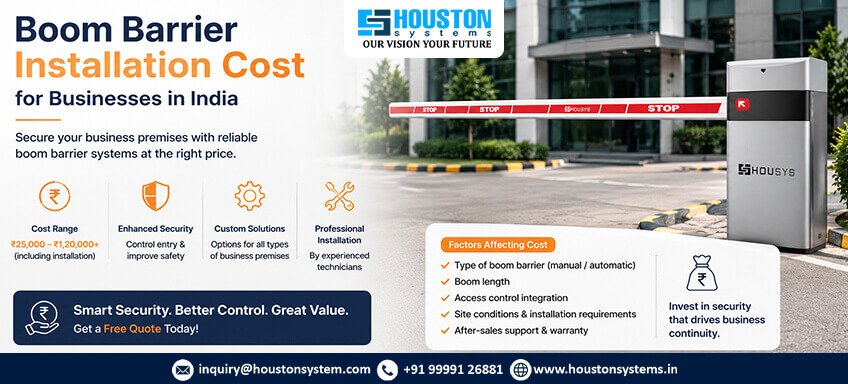
A key component in these environments is the use of boom barrier systems for parking and commercial access control, which help regulate movement while maintaining structured and coordinated entry operations.
These systems support:
- Visitor and employee access management
- Delivery vehicle coordination
- Controlled movement across multiple access points
- Improved operational visibility throughout the facility
As commercial operations become more complex, centralized and automated vehicle coordination becomes increasingly important.
Real-World Scenario: Managing Vehicle Flow Across a Large Commercial Complex
Consider a commercial complex handling parking traffic, delivery operations, and visitor access through several entry points.
Before automation:
- Traffic congestion during peak business hours
- Delays caused by manual verification processes
- Difficulty coordinating delivery vehicle movement
- Limited visibility into vehicle activity across the facility
After implementing an automated access control system integrated with boom barriers:
- Vehicle flow became more predictable and organized
- Processing times improved significantly
- Delivery coordination became easier to manage
- Operational visibility improved across all access points
The result was a more efficient and scalable infrastructure environment.
Features Modern Facilities Should Prioritize
Organizations looking to improve access management should prioritize systems with:
- Automated vehicle authentication
- Centralized monitoring and analytics
- Real-time traffic visibility
- Reliable high-speed barrier operation
- Scalable infrastructure support for future growth
These capabilities help facilities maintain efficient operations even as traffic demands increase.
Why Access Control Systems Are Becoming Core Infrastructure
Access control systems are no longer limited to basic entry restriction. They now play an essential role in how facilities coordinate movement, maintain operational flow, and manage growing infrastructure demands.
Facilities with efficient vehicle coordination benefit from:
- Reduced congestion and processing delays
- Better management of multiple access points
- Improved operational stability
- More scalable infrastructure performance
Organizations increasingly view intelligent access systems as foundational infrastructure investments rather than optional operational tools.
Conclusion
Parking facilities, toll environments, and commercial infrastructures all require reliable systems capable of managing growing vehicle movement efficiently.
Manual access management methods are becoming increasingly difficult to scale in modern high-traffic environments.
Automated access control systems supported by boom barrier technology provide a more structured, scalable, and operationally efficient approach to managing vehicle access.
For organizations aiming to improve coordination, reduce congestion, and support long-term infrastructure growth, intelligent access management systems are becoming a strategic necessity.