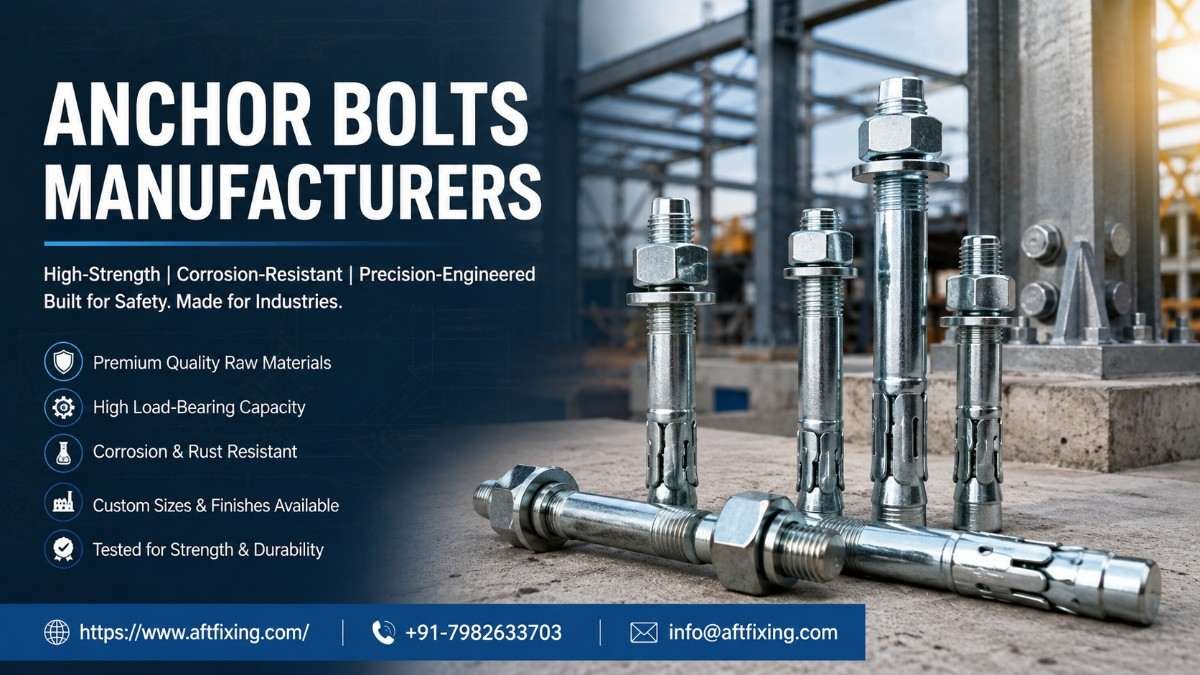
A base plate is drilled, the crew is ready, and someone asks, “What grade are these bolts?” If the answer is “the usual one,” stop the purchase. Anchor Bolts are not interchangeable because diameter matches. ASTM F1554 covers Grades 36, 55 and 105 ksi yield strength for structural anchoring to concrete foundations.
Anchor Bolts Specification
Grade 36
Grade 36 suits designs that do not require higher yield strength.
Grade 55
Grade 55 offers higher yield strength and has supplementary provisions for weldable steel.
Grade 105
Grade 105 provides 105 ksi specified yield strength. It is not automatically better; it is correct only when the design requires it.
Here's the detail buyers often skip: grade is only one purchase-order line. Diameter, length, thread, coating, nuts, washers and identification must also match. ASTM F1554-20 covers chemical, mechanical and dimensional requirements plus zinc-coating provisions.
For metric fasteners, do not casually substitute ISO classes 8.8 or 10.9 for an ASTM anchor-bolt grade. ISO 898-1 covers carbon- and alloy-steel bolts, screws and studs, but does not cover every characteristic needed for an anchor-bolt application.
Objective
Use these five checks before approving any Anchor Bolts Manufacturers.
1. Grade Traceability
Good: grade and test documents are identifiable. Bad: “It is our standard material.” That is not traceability.
2. Dimensional Control
Good: drawing and tolerances match the PO. Bad: “A few millimetres will not matter.” Alignment can prove otherwise.
3. Material Records
Good: certificate scope is stated before dispatch. Bad: paperwork appears only after a dispute.
4. Coating Specification
Good: coating requirement is written before production. Bad: “We will zinc plate it.” That says too little.
5. Supply Discipline
Good: quantity, packing, identification and dispatch timing are confirmed. Bad: stock is promised first and checked later.
ASTM F1554 also identifies recommended nut and washer arrangements by grade.
Benefits
Correct grade protects margin and structural performance.
Protects Load Performance
Matching grade to design reduces under-specification risk.
Reduces Rejection
Clear records give inspection an objective acceptance basis.
Protects Margins
A cheap substitution becomes expensive when material is returned or installation stops.
Supports Repeat Orders
Documented grade, coating and size make recurring SKU purchases easier.
Reduces Site Surprises
Correct length, thread and accessories prevent avoidable installation delays.
Controls Corrosion Risk
Where coating is specified, document it at order stage; ASTM F1554 includes zinc-coating requirements.
Availability
For Indian buyers, supply geography affects freight, lead time and repeat-order reliability. AFT’s market data lists 91 locations across India, including Delhi, Sonipat, Noida, Mumbai, Pune and Chennai.
That matters when comparing an Anchor Bolt Manufacturer in India and Anchor Bolts Suppliers In India. Ask where production and stock are located.
Ask Anchor Bolts Dealers and Anchor Bolts Wholesalers whether stock is identified or sourced after your PO.
About Us
We manufacture fastening products with a practical view of post-dispatch requirements. We are ISO-certified and export to 31 countries. AFT Fixing has operated since 2017 in Sonipat, Haryana; our site states that our in-house production follows IS and DIN standards.
We work with buyers who need repeatable specifications. One factory-floor reality we take seriously: a bolt can meet strength requirements and still stop installation if the delivered length or thread detail is wrong.
Send us your drawing or specification, grade, diameter, length, coating, quantity and delivery location. We aim to respond within one business day, with MOQ confirmed against size and production route.
For bulk enquiries, contact us at +91-7982633703 or info@aftfixing.com. If comparing Anchor Bolts Suppliers, Anchor Bolts Dealers in India or Anchor Bolts Wholesalers in India, include project-wise consumption.
Conclusion
The right Anchor Bolts grade is a design and procurement decision, not simply a price decision. Match the grade to the engineering requirement, then verify dimensions, coating, accessories and documentation. Buyers comparing Anchor Bolts Manufacturers should value traceability before a small unit-price saving. Before the next order, verify four essentials so nobody at receiving has to guess.
FAQs
1. Which Anchor Bolts grade should I choose?
Start with the engineer’s specified strength and governing standard. ASTM F1554 covers Grades 36, 55 and 105; choice depends on loads and connection design.
2. Can Anchor Bolts Manufacturers supply Grades 36, 55 and 105?
A supplier should discuss grade and documentation. The caveat is that size, production route and certificate availability can vary.
3. How do I check an Anchor Bolt Manufacturer in India?
Ask for standard, grade, dimensions, material documents, coating and inspection. Then check whether the supplier can reproduce the same specification.
4. What should I ask Anchor Bolts Suppliers In India?
Confirm grade, diameter, length, thread, documents, coating, nuts, washers, quantity and delivery date. If key items remain unclear, the purchase is not fully specified.
5. How do I compare Anchor Bolts Dealers in India and Anchor Bolts Wholesalers in India?
Compare traceability, stock control, delivery performance and technical understanding.