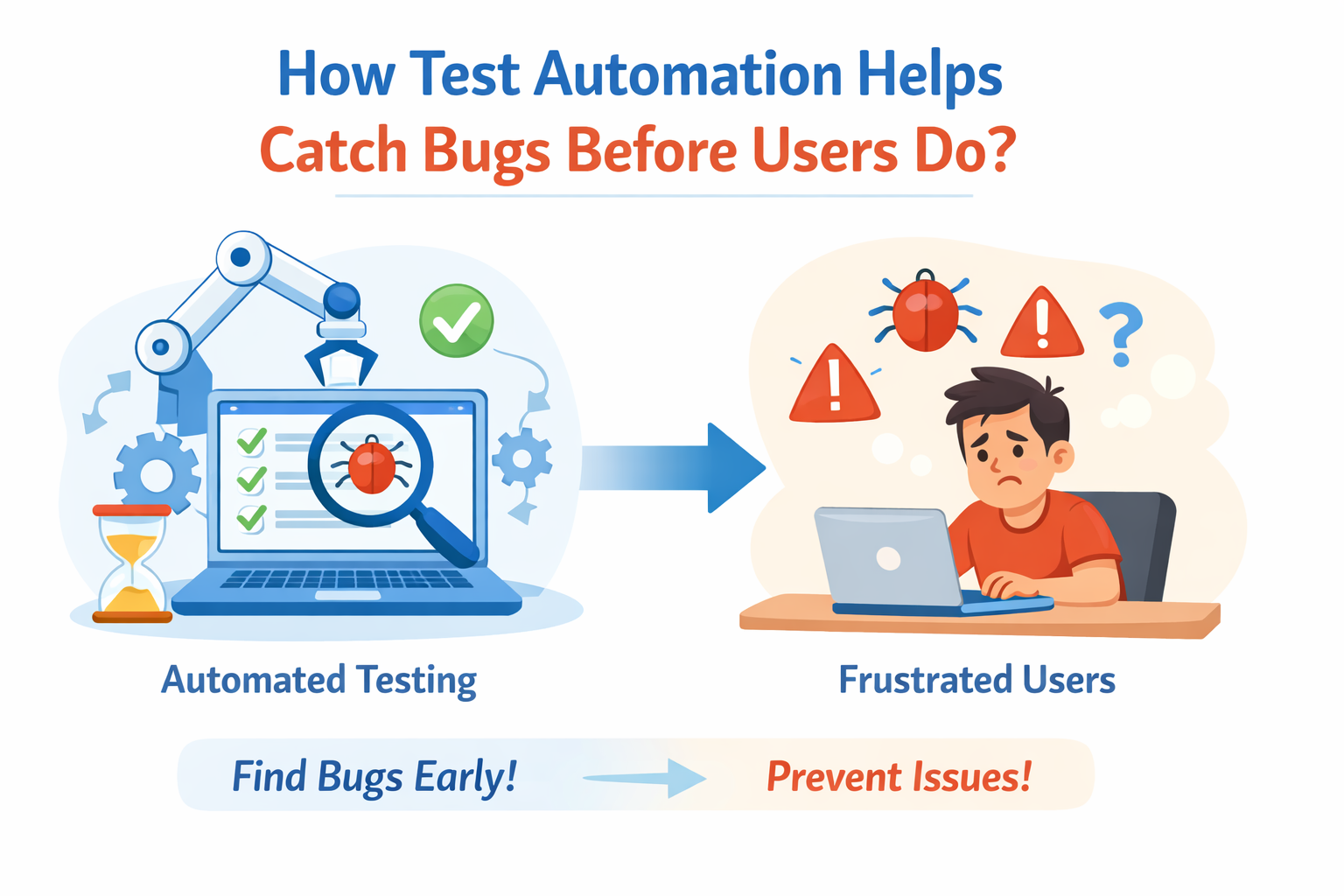
In modern software development, test automation is a critical enabler of speed, quality, and efficiency. Yet, not all automated tests provide equal value. Without strategic alignment, teams can spend significant time and resources running tests that offer minimal insight, while critical areas remain under-tested. This is where risk-based QA strategies come into play.
Aligning test automation with risk-based quality assurance ensures that testing efforts focus on the areas that matter most—protecting core functionality, reducing regression risk, and maintaining user trust.
Understanding Risk-Based QA
Risk-based QA is a testing approach that prioritizes activities based on potential impact and likelihood of failure. Instead of treating all tests as equal, teams assess:
Business impact: How critical is a feature or workflow to users or revenue?
Likelihood of defects: Which areas of the code are most error-prone or historically buggy?
Complexity and change frequency: Which modules are complex or frequently updated, increasing the risk of regressions?
By combining these factors, teams can allocate testing resources where they will prevent the most harm and deliver the highest confidence in releases.
The Role of Test Automation in Risk-Based QA
Test automation is particularly effective in risk-based QA because it allows teams to continuously validate critical paths without excessive manual effort. Key advantages include:
Rapid feedback: Automated tests can run on every build, quickly highlighting regressions in high-risk areas.
Consistency: Tests execute identically every time, reducing human error.
Scalability: Automation can cover complex workflows or large data sets that would be impractical manually.
However, test automation should be strategically focused. Running thousands of low-value tests adds overhead without improving confidence. Risk-based alignment ensures that automation resources target the most impactful areas.
Prioritizing Tests Based on Risk
1. Identify High-Risk Features
Start by mapping critical user flows and business processes. Features like authentication, payment processing, or data integrity carry higher risk and demand robust automated testing.
2. Analyze Historical Defects
Review past bug reports and test results. Components with frequent defects or complex logic often require more thorough automation coverage.
3. Assess Change Frequency
Modules that are updated frequently are more susceptible to regressions. Prioritize automated tests for these areas to catch issues early.
4. Consider External Dependencies
Systems that rely on third-party integrations, APIs, or external services introduce additional risk. Automation can help validate these interactions consistently and reliably.
Designing Risk-Aligned Test Suites
A risk-aligned test suite balances breadth and depth:
High-risk areas: Comprehensive automated tests covering multiple scenarios, edge cases, and integration points.
Medium-risk areas: Moderate test coverage focusing on typical usage patterns and major workflows.
Low-risk areas: Minimal automation, supplemented with exploratory testing or periodic manual checks.
This structured approach ensures that automation delivers maximum value while avoiding unnecessary overhead.
Integrating Risk Analysis Into CI/CD Pipelines
Continuous Integration and Continuous Deployment pipelines are ideal for risk-based automation:
Trigger high-risk tests on every commit or merge to detect regressions early.
Run medium-risk tests on nightly builds to balance feedback speed and efficiency.
Schedule low-risk tests periodically to verify stability without impacting pipeline performance.
This tiered strategy ensures that critical paths receive immediate attention while less impactful areas are still monitored effectively.
Leveraging Tools to Support Risk-Based Test Automation
Automation tools and frameworks can enhance risk alignment:
Test management systems help map test cases to risk categories and visualize coverage.
Analytics tools track test execution trends, failures, and historical defect patterns.
Behavioral recording tools like Keploy can capture real user interactions and convert them into automated tests, ensuring that automation validates the workflows that matter most.
By integrating these tools, teams can make data-driven decisions and continuously optimize their test suites.
Continuous Review and Optimization
Risk landscapes evolve. New features, changing user behavior, and shifting business priorities all affect where automation provides the most value. Teams should regularly:
Review risk assessments for relevance
Adjust automation coverage to reflect updated priorities
Retire or refactor low-value tests
Incorporate lessons from recent defects or production incidents
This iterative approach ensures that risk-based test automation remains effective and aligned with real-world impact.
Common Pitfalls to Avoid
Automating without risk context: Randomly automating tests without prioritization can waste time and obscure critical issues.
Over-relying on historical data: Past defects may not predict future risks if the system evolves significantly.
Neglecting exploratory testing: Risk-based automation complements, but does not replace, human exploratory testing.
Ignoring test maintenance: Poorly maintained automated tests can introduce false positives and reduce confidence.
Awareness of these pitfalls helps teams maximize the benefits of automation while maintaining quality and trust.
Conclusion
Aligning test automation with risk-based QA strategies ensures that teams focus on what matters most. By prioritizing high-risk areas, integrating automation into CI/CD pipelines, leveraging tools like Keploy for real usage validation, and continuously reviewing coverage, organizations can maximize test effectiveness, reduce regression risk, and deliver high-quality software efficiently.
Risk-aligned test automation transforms testing from a repetitive task into a strategic tool that protects users, supports business objectives, and fosters confidence in rapid, reliable releases.