AI Tools for Hardware Design: Transforming Innovation, Speed and Efficiency.
By Avantari 17-09-2025 71
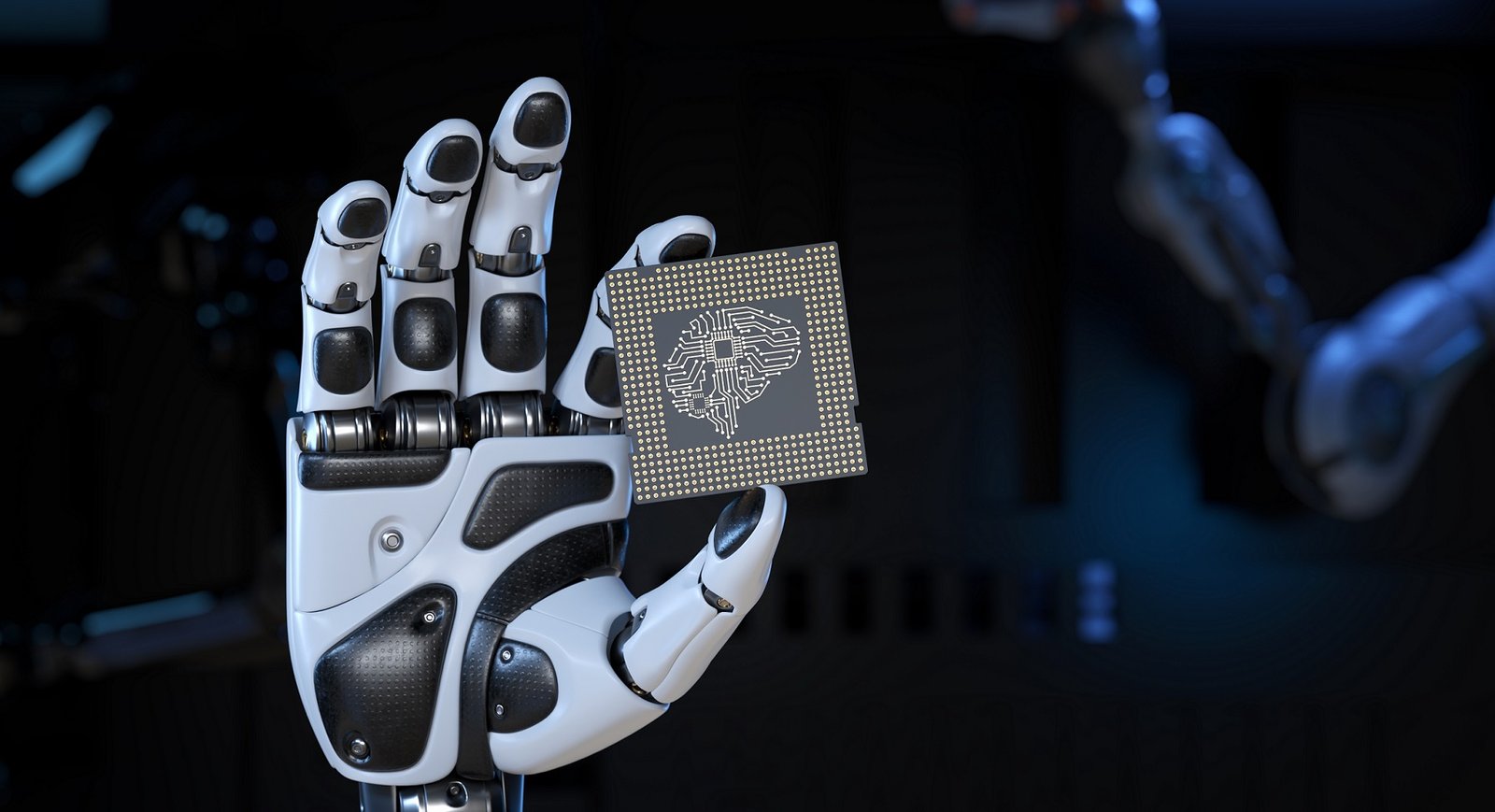
Hardware design has never been behind in as far as technological innovation is concerned. As design demands and product cycle complexity increase, and existing hardware is under mounting pressure to be more efficient, reliable, and economical, designers and engineers face more and more challenges in creating a more efficient, reliable, and cost-effective hardware. Use ai tools for hardware design A radically new method to improve all phases of a hardware design cycle, using artificial intelligence.
AI tools are transforming the hardware product conceptualization, design, and production processes, beginning with automated schematic generation up to predictive maintenance and failure analysis. This paper will discuss how these tools are enabling engineers, cutting down design time, enhancing accuracy, and opening up new frontiers in electronics, embedded systems, and the Internet of Things and so on.
What are AI Tools in Hardware Design?
Hardware design AI tools are software and platforms that utilize artificial intelligence algorithms, machine learning models, and data-driven methods to aid and optimize hardware-related processes. These systems have the ability to process large data sets, can forecast design flaws, generate layouts and even automate component selection. They come in handy especially in applications where iteration testing, optimization and performance tuning is needed.
It has been necessary to integrate AI into hardware design because of the following factors:
Complex architectures - the current circuits and systems are in exponential complexity with prior ones.
Necessity to optimize power consumption, heat generation, and component interplay AI assists in harmonizing the three.
Time and financial limitation- by automating routine activities, teams can concentrate on innovation.
Scalability- AI tools are capable of handling bigger datasets, and therefore designs are flexible to various needs.
Applications of AI tools in Hardware Design Key.
1. Layout and Design Schematic.
AI-based tools could be used to support engineers, including proposing component positions, routing routes, and circuit patterns. The recommendations rely on past data, simulations and best design practices.
Using AI-based PCB (Printed Circuit Board) layout tools as an example, trace routing errors can be corrected automatically, interference is minimized, and signal paths are optimized, greatly decreasing the amount of manual effort.
2. Predictive Analysis
AI models would be able to model performance of hardware in varying conditions and anticipate possible failures to occur otherwise. These tools assist in the prevention of recalls that are costly and enhancing safety by examining the stress points, power surges and environmental variables.
3. Components Selection and Compatibility Tests.
AI systems take specifications, compatibility, and parts availability information to recommend the best parts to use in a design. This will particularly be useful in a vast project where hundreds of parts are to be taken into consideration.
4. Optimization of Thermal and Power.
Power efficiency and heat dissipation in compact designs such as smartphones, drones and embedded systems is important. Artificial intelligence interprets thermal data and optimizes the location of the components to provide maximum cooling and minimum energy use.
5. Generative Design
There are more sophisticated AI platforms that can design a series of versions according to the functional requirements and constraints. The engineers can then select the most efficient design without having to spend hours adjusting the settings manually.
6. Fault Diagnosis and Maintenance.
When deployed, AI tools keep assisting hardware systems to monitor real-time data in order to anticipate failures, schedule maintenance, and suggest upgrades.
Advantages of AI Tools to Hardware Design.
Improved Efficiency
Benefits of automation Routine tasks are automated to reduce the time of schematic generation, layout adjustments, and verification.
Higher Accuracy
The AI algorithms are able to detect the possible design, misalignment or performance bottlenecks which might have been missed during manual design process.
Cost Reduction
AI tools allow reducing the development costs and avoiding costly reworks by optimizing designs at the beginning, falling to a minimum error rate, and avoiding the need to repeat testing several times.
Scalability and Adaptability.
AI systems are able to rapidly provide analysis on a variety of design situations, which enables hardware teams to modify to new project needs or add novel technologies, without creating an entire system.
Enhanced Innovation
Having done the repetitive tasks by AI, the engineers will be able to concentrate on the creative problem-solving and experimenting with new design paradigms.
Complexities and Concerns.
Although AI tools are highly beneficial in the process of hardware design, certain challenges must be mentioned:
Data Quality AI models demand huge data volumes to be trained. The inaccuracy in recommendation may be caused by poor or incomplete data.
Learning Curve - The engineers should be educated to learn to use AI tools efficiently in their activities.
Price to Implementation- Intensive AI tools and systems can be quite costly and can be associated with huge investments in infrastructure.
Security Risks - The idea of sensitive design data being stored on cloud-based AI systems creates the risk of the loss of intellectual property.
Nonetheless, the benefits of introducing AI in hardware design are more than the obstacles in the long run.
Real-Life Products that use AI in Hardware Design.
The AI-assisted Chip Design of NVIDIA.
NVIDIA uses AI algorithms to optimize its GPUs and SoCs (System on Chip), in terms of power usage and processing power.
Siemens PCB Layouts with AI.
The machine learning tools are applied by Siemens to help optimize PCB layouts, enabling them to route faster and with less interference.
Tensor Processing Units (TPUs) of Google.
TPUs in Google are AI-driven hardware accelerators or hardware optimized to meet the needs of large-scale machine learning applications with the highest possible energy efficiency.
AI Tools Future in Hardware Design.
AI cannot be done without the future of hardware development. As the field of quantum computing, neuromorphic engineering, and autonomous systems progress, AI tools are likely to:
Empower hardware systems to be self-optimizing.
Connect to the IoT networks to make performance predictions.
Encourage sustainable designs through waste reduction and increased energy efficiency.
Open-source hardware, enabling smaller companies to compete with the leaders of the industry.
The paradigm shift in hardware design will happen as AI models grow stronger and more available and will encourage the innovation on a scale never seen before.
FAQs
Q1. What are hardware design AI tools?
Hardware design AI software applications Hardware design AI software applications are computer programs based on artificial intelligence algorithms and machine learning that can be used to help engineers design, analyze, and optimize hardware systems, including PCBs, embedded systems, and chips.
Q2. What is the benefit of AI in hardware design?
The tools enhance accuracy in the design, errors, minimize power usage, anticipate failures, and speed up the process of design through routine tasks and recommendations based on data.
Q3. Is implementing AI costly?
Other cutting-edge AI platforms involve a large initial cost of software, hardware, and training. But the long term advantages of the reduced development time and cost saving are usually better than the upfront cost.
Q4. Is AI looking to substitute hardware engineers?
The use of AI is not aimed at displeasing engineers but to support them. It automates routine tasks, improves decision making and enables engineers to concentrate on solving complicated problems and innovations.
Q5. What are the industries that can use AI-driven hardware design?
Electronics, automotive, healthcare devices, aerospace, and telecommunications AI applications, robotics, and IoT industries needed efficient, reliable, and scalable hardware.
Q6. Is the hardware design powered by AI safe?
A properly applied AI-based hardware design is secure and can even promote reliability of the systems because potential problems are detected at an early stage of the design process.
Conclusion
To think of hardware design as a role of AIs is more than mere trend, it is the future of the process of creating, testing, and optimizing products. Through the adoption of AI-based approaches, engineers are able to address complexity and accelerate ai hardware development and deploy more intelligent and efficient hardware solutions to the market. No matter your type of business, start up or old one, the implementation of these tools in the present will be the way to the needs of tomorrow in the technological world.
Tags : AI Tools for Hardware Design