Agricultural Robots Are Redefining Precision Farming for the Next Generation of Food Production
By Adam Williamson 17-07-2026 178
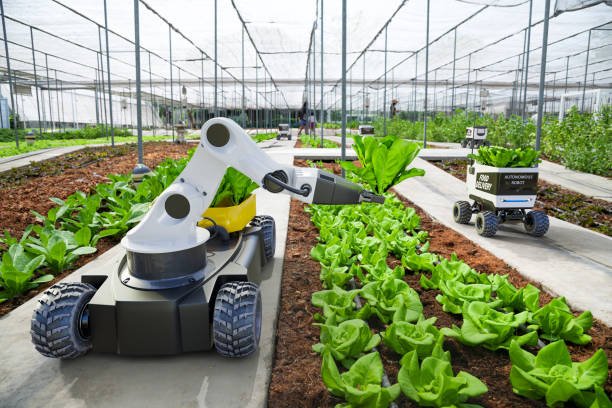
Agriculture is undergoing a technological transformation as farmers seek practical solutions to improve productivity while addressing labor shortages, resource constraints, and changing environmental conditions. Robotics has emerged as a critical component of modern farming, enabling producers to automate repetitive operations, optimize field management, and make more informed decisions through data-driven technologies. From autonomous tractors to robotic harvesting systems, agricultural robots are becoming an integral part of precision agriculture across diverse farming environments.
According to a study published by Vyansa Intelligence, the Agricultural Robots Market was valued at USD 18 Billion in 2025 and is projected to reach USD 64 Billion by 2032, expanding at a CAGR of 19.87% during 2026-2032.
Product Explanation
Agricultural robots are intelligent machines designed to perform farming activities with minimal human intervention. These systems combine robotics, artificial intelligence, computer vision, sensors, and navigation technologies to execute tasks such as planting, harvesting, spraying, crop monitoring, livestock management, and field inspection. By automating labor-intensive operations, agricultural robots help improve consistency, operational efficiency, and resource utilization.
Modern robotic platforms are capable of collecting and analyzing real-time field data, enabling farmers to make timely agronomic decisions. Their ability to perform repetitive tasks with precision also contributes to reducing operational errors while supporting sustainable farming practices.
Demand Drivers
Growing pressure to increase agricultural productivity while managing limited natural resources continues to encourage investment in robotic technologies. Farmers are increasingly adopting automation to improve operational efficiency, reduce dependence on manual labor, and enhance crop management throughout the growing season.
The expansion of precision agriculture is another important factor supporting robotic adoption. Advanced sensing technologies, GPS guidance, and data analytics enable robotic systems to perform targeted field operations, improving accuracy while minimizing unnecessary use of water, fertilizers, and crop protection products. The Food and Agriculture Organization of the United Nations (FAO) continues to emphasize innovation and digital agriculture as important components of sustainable food production.
Industry Developments
Agricultural robotics continues to evolve through advances in automation, intelligent software, and integrated farm management solutions. Equipment manufacturers are expanding the capabilities of robotic platforms by incorporating artificial intelligence, cloud connectivity, and machine learning to improve operational performance across diverse agricultural applications.
Development efforts are increasingly focused on creating flexible robotic systems that can adapt to different crops, field conditions, and farm sizes. Improved interoperability with precision farming software and digital management platforms is also enabling farmers to integrate robotic technologies into broader agricultural workflows.
Technology
Artificial intelligence, computer vision, machine learning, LiDAR, GPS positioning, and advanced sensor technologies form the technological foundation of agricultural robots. These technologies allow robotic systems to identify crops, detect weeds, monitor plant health, navigate fields autonomously, and execute precise farming operations with limited human supervision.
Connectivity technologies also play an important role in supporting remote monitoring and operational management. Cloud computing, wireless communication, and edge computing enable continuous data collection and analysis, helping farmers respond more effectively to changing field conditions. The International Organization for Standardization (ISO) continues to develop standards that support automation, safety, and interoperability across industrial and agricultural technologies.
Consumer Trends
Agricultural producers are increasingly evaluating robotic solutions based on operational reliability, ease of integration, long-term maintenance requirements, and compatibility with existing farm equipment. Interest is growing in technologies capable of reducing repetitive manual work while improving productivity and supporting sustainable farming objectives.
Younger generations of farm operators are also demonstrating greater willingness to adopt digital technologies that combine robotics with precision agriculture platforms. The increasing availability of connected equipment and farm management software is encouraging broader acceptance of automation across commercial agricultural operations.
Future Direction
The future of agricultural robotics is expected to be shaped by continued advances in artificial intelligence, autonomous navigation, machine vision, and precision farming technologies. As digital agriculture becomes more sophisticated, robotic systems are likely to perform increasingly complex agricultural activities while operating collaboratively with other connected farm technologies.
Future innovation is also expected to focus on improving adaptability across different farming environments, enhancing real-time decision-making capabilities, and supporting more sustainable agricultural production through efficient resource utilization. Continued research and technological development are likely to strengthen the role of robotics in addressing future food production challenges.
Conclusion
Agricultural robots are transforming modern farming by introducing higher levels of automation, precision, and operational efficiency. As agricultural producers continue adopting advanced technologies to improve productivity and sustainability, robotic systems are expected to become an increasingly important part of farm operations. Their ability to combine intelligent automation with real-time decision support positions agricultural robotics as a significant technological advancement in the ongoing evolution of global agriculture.