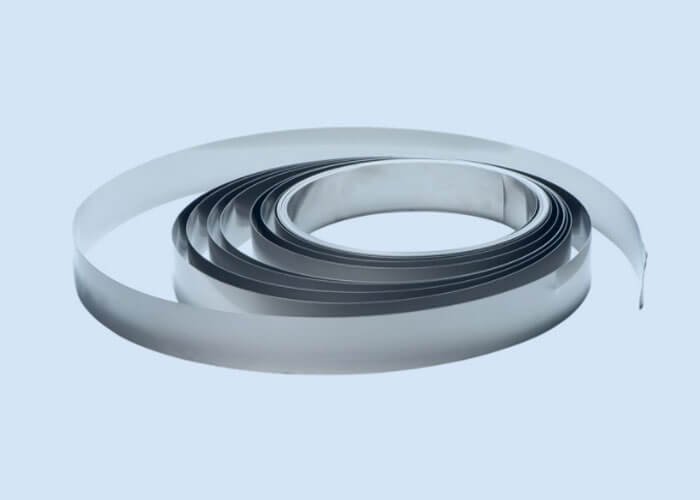
Industrial components often face severe corrosion, moisture, harsh chemicals, mechanical stress, and demanding operating conditions. Monel 400 Strips are nickel-copper alloy products recognised for good corrosion resistance, strength, toughness, and performance in marine and chemical environments. The strip form is highly useful for fabricating specific components, liners, clamps, seals, brackets, shims, and other precision parts. Choosing durable nickel-copper alloy strips helps engineers manage these environmental challenges. This guide outlines the key properties, advantages, applications, and selection factors for this material.
What Are Monel Alloy 400 Strips?
Monel 400 is a solid-solution nickel-copper alloy defined by the UNS N04400 classification. Monel Alloy 400 Strips have a high level of nickel and copper. These elements directly support their corrosion-resistant performance in various severe settings. Strip goods are particularly beneficial for manufacturing components that require carefully controlled thickness, precise breadth, and tight dimensional precision. The mechanical and chemical qualities of the material depend significantly on the precise manufacturing specification, material condition, strip thickness, and the production technique used. Engineers rely on these strips for precise fabrication tasks. Jainex Steel & Impex provides these materials for various industrial applications.
Key Properties of Alloy 400 Strips
The performance of Alloy 400 Strips depends on specific material characteristics. These properties dictate how the material responds to different industrial environments.
Excellent Corrosion Resistance
This material offers resistance to seawater, marine atmospheres, and various chemical environments. It is highly suitable for components exposed continuously to corrosive media. The heavy nickel content prevents rapid surface degradation.
Good Mechanical Strength
Monel 400 provides useful strength without sacrificing corrosion resistance. Such a balance is necessary for industrial components subjected to mechanical loads during operation. The material is not readily fractured under pressure.
Good Toughness
This alloy has the ability to perform under impact, heavy vibration, and regular mechanical stresses. Toughness is valuable in industrial hardware because it prevents sudden failure in load-bearing applications.
Resistance to Chloride Environments
Chlorides cause severe pitting and crevice corrosion problems in conventional materials. Monel 400 is very suitable for selected chloride-rich applications. It withstands these conditions better than many standard stainless steels.
Resistance to Stress-Corrosion Cracking
The metal provides useful resistance to stress-corrosion cracking in appropriate environments. Actual performance always depends on operating temperature, mechanical stress, fluid chemistry, and specific component design.
Good Fabrication Characteristics
Workers have the ability to cut, form, machine, and fabricate these strips into different industrial components. Appropriate fabrication procedures are required to maintain material integrity. Standard machining tools work well for this metal.
Advantages of Using Monel 400 Strips for Industrial Components
Using these strips brings specific functional benefits to component manufacturing. The material characteristics align well with harsh industrial demands.
Excellent Resistance to Corrosive Environments
Corrosion resistance is important for components exposed to water, harsh chemicals, salts, and humid conditions. Monel 400 helps maintain component integrity in suitable environments over time. It limits structural deterioration.
Strong Performance in Marine Conditions
The alloy shows strong resistance to flowing seawater and stagnant marine atmospheres. This relevance to marine hardware, pumps, valves, and offshore components makes it a standard choice for naval engineering.
Good Combination of Strength and Toughness
Industrial components require both strength and toughness to function safely. These properties support reliable performance under mechanical loading and sudden impacts. Parts hold their shape under operational strain.
Resistance to Chloride-Induced Damage
Chloride-containing environments create major challenges for standard metals. Monel 400 is often considered for selected chemical and marine applications due to its stability in these specific halogen-rich conditions.
Suitable for Precision Industrial Components
The thin strip form is useful for manufacturing washers, shims, clamps, brackets, gaskets, liners, and spring-like components where required properties are met. It allows for highly accurate fabricated hardware.
Good Resistance to Chemical Exposure
The material exhibits resistance to selected acids, alkalis, and complex industrial chemicals. Chemical compatibility depends strictly on fluid concentration, operating temperature, and overall exposure conditions in the plant.
Long-Term Durability in Suitable Service
Corrosion and wear resistance reduce premature degradation of parts. Proper material selection minimises early failure rates in industrial settings. Service duration varies based on exact operating conditions.
Industrial Applications of Monel 400 Strips
UNS N04400 Strips are applied across multiple heavy sectors. The material meets specific hardware needs in demanding processing environments.
Marine and Offshore Components
The marine sector uses this material for marine hardware, clamps, liners, and brackets. Pump components and valve components exposed to seawater also rely on this alloy for sustained performance.
Chemical Processing Equipment
Chemical handling components require stable materials. Plants utilise these strips for protective liners, durable gaskets, fabricated parts, and general equipment hardware operating in reactive environments.
Pumps and Valves
Fluid handling systems use this metal for inner valve components and pump components. Sealing-related hardware and corrosion-resistant strips for fabricated parts help maintain pressure and prevent fluid leaks.
Heat Exchangers and Process Equipment
Thermal processing requires stable component strips and internal liners. Structural supports and fabricated hardware inside heat exchangers utilise this alloy to handle temperature shifts and aggressive fluids.
Oil & Gas Equipment
The extraction industry needs corrosion-resistant hardware for harsh offshore environments. Process equipment components and offshore components are manufactured from this alloy to handle sour gas and brine exposure.
Common Mistakes When Selecting Monel 400 Strips
Many engineers make errors by choosing a material solely on basic corrosion resistance while ignoring exact temperature and chemical concentration limits. Failing to consider actual mechanical loading often leads to part failure. Selecting the wrong thickness or ignoring the required material condition compromises the final fabrication. Not checking galvanic compatibility with surrounding metals causes rapid localised corrosion. Never assume Monel 400 resists every single chemical environment. Buying material without proper metallurgical certification is a major risk for critical applications.
Conclusion
The main advantages of Monel 400 Strips for industrial components include robust corrosion resistance, marine performance, mechanical strength, toughness, chemical resistance, and fabrication versatility. The flat strip form is highly useful for precision and fabricated components. The correct strip must be selected based on the specific environment, temperature, mechanical requirements, dimensions, material condition, and applicable standards. Always verify material certification before using the product in critical industrial applications.
Tags : Monel 400 Strips