ADA signs in Louisville help businesses, offices, healthcare facilities, schools, and public spaces provide clear, accessible identification for rooms and facilities. Properly designed ADA signs can incorporate tactile lettering, Braille, appropriate contrast, and compliant installation details. For Louisville, KY properties, working with an experienced sign company can help businesses plan signage around accessibility requirements and local regulations.
What Are ADA Signs?
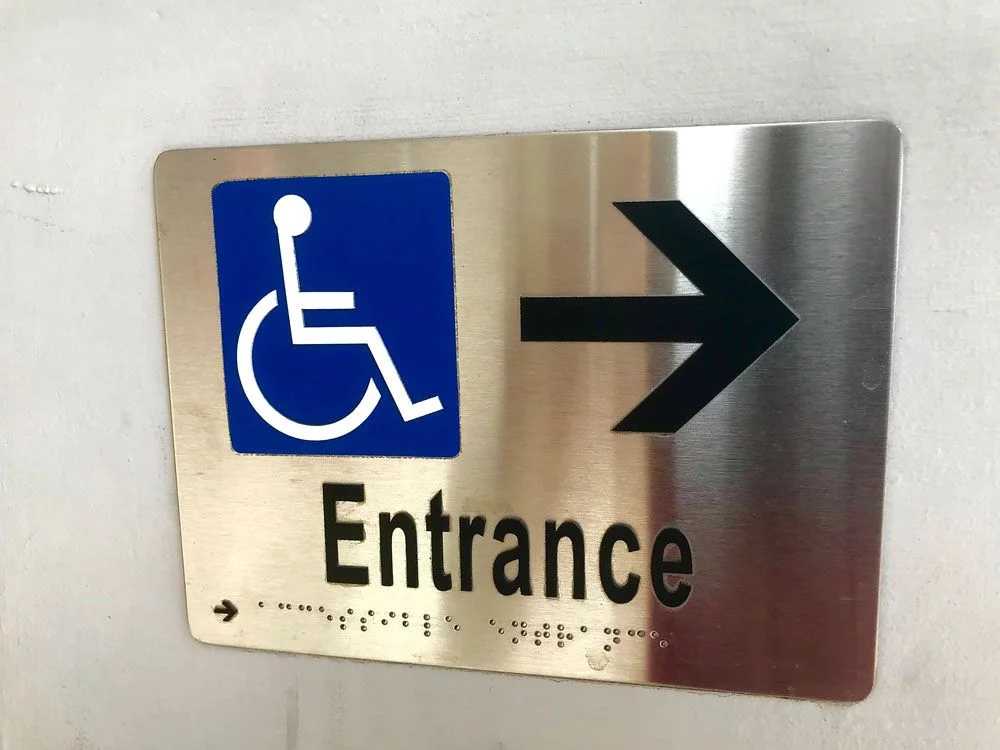
ADA signs are accessibility-focused signs designed to help people identify rooms, facilities, exits, and other important areas within a building. Unlike ordinary identification signs, accessible signage may use tactile characters and Braille so information can be understood through touch as well as sight.
The federal 2010 ADA Standards include requirements for tactile characters, Braille, contrast, character proportions, and sign installation. For example, tactile characters on applicable signs must generally be positioned between 48 and 60 inches above the finished floor or ground, measured according to the standard's specified points.
For businesses throughout Louisville, accessible signage is therefore both a practical wayfinding tool and an important part of an inclusive environment.
Why ADA Signs Matter for Louisville Businesses
A well-designed sign does more than label a doorway. It helps visitors navigate a building confidently and find essential spaces without relying entirely on assistance.
ADA signage can be useful in:
- Medical offices and healthcare facilities
- Schools and educational buildings
- Hotels and hospitality properties
- Office buildings
- Retail stores
- Restaurants
- Government facilities
- Apartment and commercial properties
- Public gathering spaces
In Louisville, businesses operate across a wide range of environments, from downtown offices and healthcare corridors to retail properties in areas such as St. Matthews, Highlands, NuLu, and the surrounding Jefferson County communities. Clear interior identification can make these spaces easier for visitors to navigate.
Accessibility and Building Requirements
Louisville Metro currently observes and enforces several construction-related codes, including the Kentucky Building Code and accessibility-related standards listed by the city's Construction Review department.
Because requirements can depend on the building, occupancy, location, and project scope, businesses should verify the standards applicable to their particular property rather than assuming that one sign specification works for every project.
Key Features of Compliant ADA Signs
Not every sign that says "ADA" is automatically compliant. The design needs to address the applicable technical requirements.
Tactile Characters
Tactile characters are raised characters that can be identified by touch. The ADA Standards establish requirements for tactile character height, finish, proportions, spacing, and other characteristics.
Braille
Braille provides another method of identifying spaces for people who are blind or have low vision. The ADA Standards specify requirements for Grade 2 Braille and its placement in relation to corresponding raised characters.
Visual Contrast
Accessible signs also use visual characteristics that help make characters easier to distinguish from their background. A strong contrast between the sign background and characters can improve visual readability.
Proper Installation
Even a properly fabricated sign can create compliance issues if it is installed incorrectly. Sign placement and mounting height matter, particularly for tactile signage.
For applicable tactile signs, the federal standards specify a mounting range of 48 to 60 inches above the finished floor or ground, measured according to the locations defined in the standard.
Custom ADA Signs vs. Standard Signs
Businesses often have different signage needs depending on their building layout and brand identity. This is where custom ADA signs can provide flexibility while still addressing applicable accessibility requirements.
| Feature | Standard Signs | Custom ADA Signs |
|---|---|---|
| Basic identification | Yes | Yes |
| Tactile information | May not include it | Can be incorporated |
| Braille | Not always included | Can be included where required |
| Branding | Limited options | More design flexibility |
| Materials | Standard selections | Multiple material options |
| Room-specific layouts | Limited | Designed around the space |
Custom signage can help businesses maintain a consistent visual identity across an entire facility while incorporating accessibility features into individual room signs.
Where ADA Signs Are Commonly Used
The best location for an ADA sign depends on the function of the space and the applicable accessibility requirements.
Restrooms
Restroom identification is one of the most recognizable applications for accessible signage. Clear room identification helps visitors locate facilities without unnecessary confusion.
Offices and Conference Rooms
Large office buildings can contain dozens of rooms. Consistent room identification makes navigation easier for employees, clients, and visitors.
Stairways and Exit Areas
Certain accessible routes and building elements may require specific identification. Signage should be planned as part of the overall wayfinding system rather than added as an afterthought.
Elevators
Elevator identification and floor designations can involve specific tactile and Braille requirements. The federal standards include requirements for tactile and Braille floor designations at elevator hoistway entrances.
Choosing Materials for ADA Signs in Louisville
The material selected for ADA signs in Louisville should balance durability, appearance, readability, and the environment where the sign will be installed.
Common options can include:
- Acrylic
- PVC
- Aluminum
- Photopolymer
- Laminate materials
- Other purpose-built sign substrates
Interior office environments may call for a refined appearance that coordinates with existing décor, while healthcare or high-traffic facilities may prioritize durability and easy maintenance.
The right material also depends on whether the sign will be installed in a dry interior hallway, a high-traffic commercial facility, or another environment with different maintenance requirements.
ADA Signs and Louisville Sign Regulations
Federal accessibility requirements are only one part of planning signage. Local regulations can also affect signage projects.
Louisville Metro states that permanent signs generally require approval through a sign permit, except for specific exemptions in the Land Development Code. Requirements can vary according to sign type and location.
The city also notes that properties in local preservation districts, design overlay districts, or rights-of-way may be subject to additional requirements.
For this reason, businesses should consider both accessibility requirements and applicable local rules when planning a signage project.
What to Confirm Before Installation
Before ordering ADA signage, consider:
- Which rooms or facilities require identification?
- What accessibility standards apply to the project?
- Where should each sign be mounted?
- Which tactile and Braille specifications apply?
- What materials will work best for the building?
- Does the project require local sign approval or permits?
Addressing these questions early can help reduce installation problems and unnecessary replacement costs.
How Louisville Custom Signs Can Help
Creating effective accessible signage involves more than adding raised lettering and Braille. Each sign should be considered as part of the building's overall wayfinding system.
A professional signage process can include:
- Reviewing the building's signage needs
- Planning room and facility identification
- Selecting appropriate materials
- Incorporating tactile characters and Braille where required
- Coordinating colors and visual contrast
- Preparing sign layouts
- Planning installation locations
- Considering applicable Louisville requirements
For businesses throughout Louisville, this approach can produce signage that is functional, professional, and visually consistent.
Frequently Asked Questions About ADA Signs
What are ADA signs used for?
ADA signs are used to identify and provide information about applicable rooms, facilities, and building features in an accessible format. Depending on the application, they may include raised tactile characters and Braille. Properly designed signage can help people with visual disabilities navigate commercial, institutional, and public environments more independently.
Are ADA signs required in Louisville, KY?
Accessibility signage requirements can apply to certain building elements and facilities under federal accessibility standards, while local construction and sign regulations may also apply. Louisville Metro identifies accessibility-related standards among its construction requirements. Businesses should evaluate their specific building and project to determine which requirements apply.
What makes custom ADA signs different from regular signs?
Custom ADA signs can be designed around the specific room, building, branding, and accessibility requirements of a project. Depending on the application, they may incorporate raised lettering, Braille, appropriate contrast, and other required features while maintaining a consistent appearance throughout the facility.
Do ADA signs need Braille?
Braille is required on certain signs covered by the ADA Standards. The applicable requirements specify the type and placement of Braille in relation to tactile characters. However, not every sign in a building is automatically subject to identical requirements, so the sign's function and location should be evaluated.
What materials are commonly used for ADA signs?
ADA signs can be manufactured from materials such as acrylic, PVC, aluminum, photopolymer, and other specialty substrates. Material selection depends on the location, expected traffic, appearance, durability requirements, and the specific fabrication method needed for tactile and Braille elements.
Create Accessible, Professional Signage With Louisville Custom Signs
Effective ADA signs combine accessibility, durability, readability, and professional design. From restroom and office identification to elevator and facility signage, the right solution can help create a more navigable environment for everyone.
For businesses searching for ADA signs in Louisville, custom ADA signs, and professionally designed accessibility signage, Louisville Custom Signs can help develop signage solutions suited to commercial and institutional environments throughout Louisville, KY. Thoughtful planning ensures your signs do more than identify spaces—they help people find their way with greater confidence.