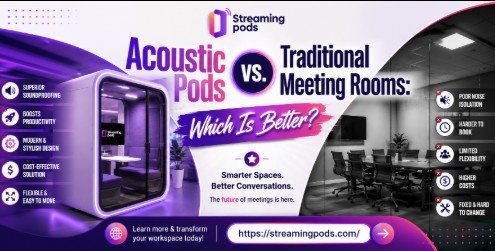
Modern workplaces continue to evolve as businesses seek smarter ways to improve productivity, privacy, and employee satisfaction. Open-plan offices have become common, but challenges such as noise distractions, lack of privacy, and limited collaboration spaces remain significant concerns. As a result, many organizations are exploring alternatives to conventional meeting spaces. One solution gaining popularity is acoustic pods.
The debate between acoustic pods and traditional meeting rooms is becoming increasingly relevant for businesses of all sizes. Both options offer unique advantages, but understanding the differences can help organizations make informed decisions. This article explores the benefits, limitations, and practical applications of each solution to determine which option delivers the greatest value for modern workplaces.
Understanding Acoustic Pods
Acoustic pods are self-contained, sound-insulated spaces designed to provide privacy and minimize distractions within an office environment. Available in various sizes, these innovative workspaces support individual focus, private calls, video conferences, and team discussions.
Many businesses choose acoustic pods because installation is quick and flexible. Unlike permanent construction projects, pods can be relocated or reconfigured as workplace needs change.
Companies such as StreamingPods offer advanced acoustic solutions designed to meet the demands of modern offices while enhancing functionality and aesthetics.
What Are Traditional Meeting Rooms?
Traditional meeting rooms are dedicated spaces constructed within an office building. These rooms typically feature permanent walls, conference tables, presentation equipment, and seating arrangements for group discussions.
Meeting rooms have long been the standard solution for collaboration, client presentations, strategic planning sessions, and team meetings. While effective in many situations, traditional meeting rooms often require significant office space and construction investment.
Privacy Comparison
Privacy is one of the most important factors when evaluating workspace solutions.
Acoustic Pods
Acoustic pods are specifically engineered to reduce sound transmission. High-quality insulation materials and acoustic panels create an environment where conversations remain confidential. This makes pods ideal for sensitive discussions, virtual meetings, and focused work.
Employees can enter a pod and immediately gain access to a quiet environment without disrupting surrounding coworkers.
Traditional Meeting Rooms
Traditional meeting rooms also provide privacy when properly constructed. However, many offices use glass walls or lightweight partitions that may allow sound leakage. In busy office settings, external noise can still impact meeting quality.
For businesses prioritizing sound control and confidentiality, acoustic pods often deliver a more consistent solution.
Space Efficiency
Office space is a valuable resource, particularly in urban environments where real estate costs continue to rise.
Acoustic Pods
One of the biggest advantages of acoustic pods is efficient space utilization. Pods occupy a relatively small footprint while providing functional meeting or focus areas.
Businesses can install pods in unused corners, open-plan layouts, or underutilized sections of the office. This allows organizations to maximize available space without major renovations.
Traditional Meeting Rooms
Traditional meeting rooms require dedicated floor space and permanent construction. Large conference rooms may remain vacant for significant portions of the day, reducing overall office efficiency.
For organizations looking to optimize workplace utilization, acoustic pods frequently offer a more flexible alternative.
Flexibility and Adaptability
Workplace needs change over time. Office designs must accommodate growth, restructuring, and evolving work styles.
Acoustic Pods
Flexibility is one of the strongest benefits of acoustic pods. Most units are modular and can be relocated if office layouts change. Businesses can add new pods as teams expand or reposition existing units to support different workflows.
This adaptability makes acoustic pods particularly attractive for growing companies and dynamic work environments.
Traditional Meeting Rooms
Traditional meeting rooms are fixed structures. Modifying room sizes or locations often requires construction work, permits, and additional expenses.
For businesses anticipating future changes, permanent meeting rooms may lack the adaptability required in modern workplaces.
Cost Considerations
Budget plays an important role in workplace planning decisions.
Acoustic Pods
Although acoustic pods require an initial investment, installation costs are generally lower than constructing new meeting rooms. Most pods arrive preassembled or require minimal setup.
Organizations can avoid extensive renovation costs, contractor fees, and workplace disruptions.
Traditional Meeting Rooms
Building a meeting room often involves architectural planning, construction labor, electrical work, HVAC modifications, and furnishing expenses. These costs can accumulate quickly, especially in larger offices.
Over time, acoustic pods may offer a more cost-effective solution for many businesses.
Employee Productivity
Productivity is directly influenced by workplace design.
Acoustic Pods
Noise remains one of the most common workplace distractions. Acoustic pods create focused environments where employees can work without interruptions.
Private spaces support concentration, reduce stress, and improve communication quality during calls and meetings. Many organizations report increased employee satisfaction after introducing office pods into the workplace.
Traditional Meeting Rooms
Meeting rooms provide dedicated collaboration spaces but may not always be available when needed. Scheduling conflicts can delay discussions and impact productivity.
Additionally, employees may hesitate to reserve large conference rooms for brief calls or individual work sessions.
Aesthetic Appeal
Modern workplace design influences employee experience and company image.
Acoustic Pods
Today's modern office pods feature sleek designs, premium finishes, integrated lighting, and advanced ventilation systems. These stylish structures contribute to a contemporary office atmosphere while providing practical functionality.
Many businesses use acoustic pods as visual focal points that enhance workplace aesthetics.
Traditional Meeting Rooms
Traditional meeting rooms can also be attractive, but redesigning or updating them often requires additional investment. Fixed layouts may become outdated as workplace trends evolve.
Collaboration and Teamwork
Collaboration remains essential for business success.
Acoustic Pods
Larger acoustic pods support small team meetings, brainstorming sessions, and hybrid collaboration. Integrated technology often includes power outlets, video conferencing equipment, and connectivity features.
These compact environments encourage productive discussions without requiring large meeting spaces.
Traditional Meeting Rooms
Traditional meeting rooms remain beneficial for larger gatherings, presentations, and company-wide discussions. Organizations hosting frequent large meetings may still require dedicated conference rooms.
The ideal workplace often combines meeting rooms with acoustic pods to support diverse collaboration needs.
Which Option Is Better?
The answer depends on organizational requirements.
Businesses seeking flexibility, privacy, space efficiency, and cost savings often find acoustic pods to be the superior choice. Modern workplaces increasingly favor agile solutions that adapt to changing needs, making acoustic pods an attractive investment.
Traditional meeting rooms continue to serve an important purpose for large-scale meetings and formal presentations. However, many organizations discover that smaller meetings, private calls, and focused work can be handled more effectively with acoustic pods.
For companies aiming to create productive and future-ready work environments, solutions offered by StreamingPods provide an excellent balance of functionality, comfort, and modern design.
Conclusion
The comparison between acoustic pods and traditional meeting rooms highlights a clear shift in workplace preferences. As businesses embrace flexible work models and open-plan office designs, the demand for adaptable, private, and efficient spaces continues to grow.
Acoustic pods provide exceptional privacy, improved productivity, reduced construction costs, and outstanding flexibility. While traditional meeting rooms remain valuable for larger gatherings, many organizations are discovering that acoustic pods better address the everyday needs of modern employees.
Investing in innovative workspace solutions such as office pods and modern office pods can help businesses create environments that support collaboration, focus, and long-term success.
FAQs
1. What are acoustic pods used for?
Acoustic pods are used for private meetings, phone calls, video conferences, focused work, and small team collaborations within office environments.
2. Are acoustic pods better than traditional meeting rooms?
Acoustic pods often provide greater flexibility, better space efficiency, and lower installation costs compared to traditional meeting rooms.
3. Do acoustic pods reduce office noise?
Yes. Acoustic pods are designed with sound-insulating materials that significantly reduce external noise and improve privacy.
4. Can acoustic pods be moved after installation?
Most acoustic pods feature modular designs that allow relocation and reconfiguration as workplace requirements change.
5. Why are modern office pods becoming popular?
Modern office pods offer privacy, flexibility, attractive design, and efficient use of office space, making them ideal for contemporary workplaces.
Tags : acoustic pods office pods