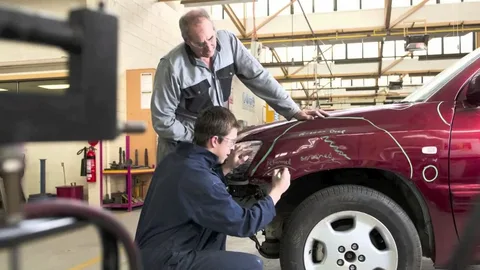
Regardless of the severity of the collision, car owners frequently have to make the difficult choice of whether to replace the entire vehicle or only repair the damaged portions. Making the correct decision has an impact on performance over the long term, including cost, safety, and vehicle value. Drivers can make better selections if they are aware of the distinctions between replacement and accident repairs and when each is suitable. The important considerations to take into account while choosing between accident repairs and replacement are explained in this professional guidance. After an incident with another vehicle, a professional Car Body Shop offers skilled repairs and refinishing that improve your car's intrinsic value, safety, and appearance.
Comprehending Accident Repairs
Accident repairs entail employing specific methods to return damaged car parts to their original state. Panel beating, dent elimination, welding, paint correction, and structural alignment are a few examples of this. To safely and successfully repair components, skilled technicians follow manufacturer standards and use cutting-edge tools. Accident repairs are frequently employed for superficial impact destruction, minor structural problems, and cosmetic damage.
Cost-effectiveness is one of the key benefits of repairs. Particularly when the harm caused is little, repairing an area or component is frequently less expensive than replacing it completely. The vehicle's individuality is also preserved via modern maintenance methods, which may be crucial for its resale value.
Comprehending Replacement
In order to update damaged elements, new or reconditioned components ought to be set up. When parts are critically broken, structurally compromised, or beyond secure restoration, this method is usually recommended. Bumpers, doorways, bonnets, and protection, important elements like airbags, and give way zones are regularly changed.
Replacement ensures structural integrity and adherence to protection guidelines, even though it could be more steeply priced. In order to comply with insurance policies or manufacturer pointers, alternative components will also be required, especially in more recent cars with state-of-the-art protection features.
Important Things to Think About
A wide variety of full-size factors influence the selection between replacement and twist of fate repairs. These may consist of the age of the automobile, the degree of damage, the value of repairs, safety worries, and coverage. While creating a very last preference, a professional evaluation by an authorized auto frame specialist is essential.
Location and Amount of Damage
Paint harm, minor imperfections, and scratches are commonly repairable. However, harm to the suspension, protection structures, or the structural additives of the auto frequently necessitates a replacement. A meticulous examination is crucial for the reason that hidden harm beneath the floor won't be conveniently apparent.
Pillars and fall-down zones are examples of excessive-stress places that must in no way be undermined. Replacement in these situations guarantees that the car retains its intended protection against impacts.
Integrity of Structure and Safety
The first priority should always be safety. Inadequately fixed structural elements can jeopardise crash safety and endanger people. Because modern cars are built with exact specifications, improper repairs could compromise the stability of the vehicle and the deployment of the airbags.
When damage affects areas that are crucial to safety, replacement is frequently the safer course of action. To guarantee that repairs or replacements adhere to stringent safety standards, certified technicians follow manufacturer instructions.
Cost Comparison and the Effect of Insurance
When making decisions, cost is a major factor. Although considerable labor expenses can occasionally surpass replacement costs, repairs are often less expensive. Insurance groups frequently examine whether the fee of upkeep exceeds a particular proportion of the automobile's market price.
Insurance agencies may declare an automobile a complete loss and advise a substitute if repair charges are near or greater than the automobile's worth. Vehicle owners can deal with this procedure extra skillfully if they are privy to insurance regulations and insurance.
Age and Value of the Automobile
Expensive replacements might not be justified for older vehicles with decreased marketplace values. Repairs are probably the most sensible course of action in some conditions. In order to hold value and cling to manufacturer standards, newer cars—in particular the ones still under guarantee—regularly benefit from substitutes. Replacing authentic manufactured parts can assist in maintaining the performance, in addition to the resale fee of newer models.
Workmanship Quality
The caliber of the maintenance is essential. Rust, mismatched paint, misalignment, and decreased durability would possibly result from bad maintenance. Selecting a trustworthy car frame restoration expert guarantees that repairs adhere to professional standards.
Final words
Safety, cost, vehicle value, and long-term performance must all be carefully considered when deciding between replacements and accident repairs. Replacement is necessary when the safety or the integrity of the framework is in jeopardy, even while repairs provide a workable and affordable remedy for minor damage. Making the appropriate choice and safeguarding the car and its occupants is ensured by speaking with a trained auto body specialist. After an accident, motorists can safely and confidently repair their cars with professional advice and high-quality service.
Tags : Car Body Shop