A2 Cultured Butter and Ghee: What Makes Them Different from Regular Dairy?
By Highlandfarms 11-04-2026 534
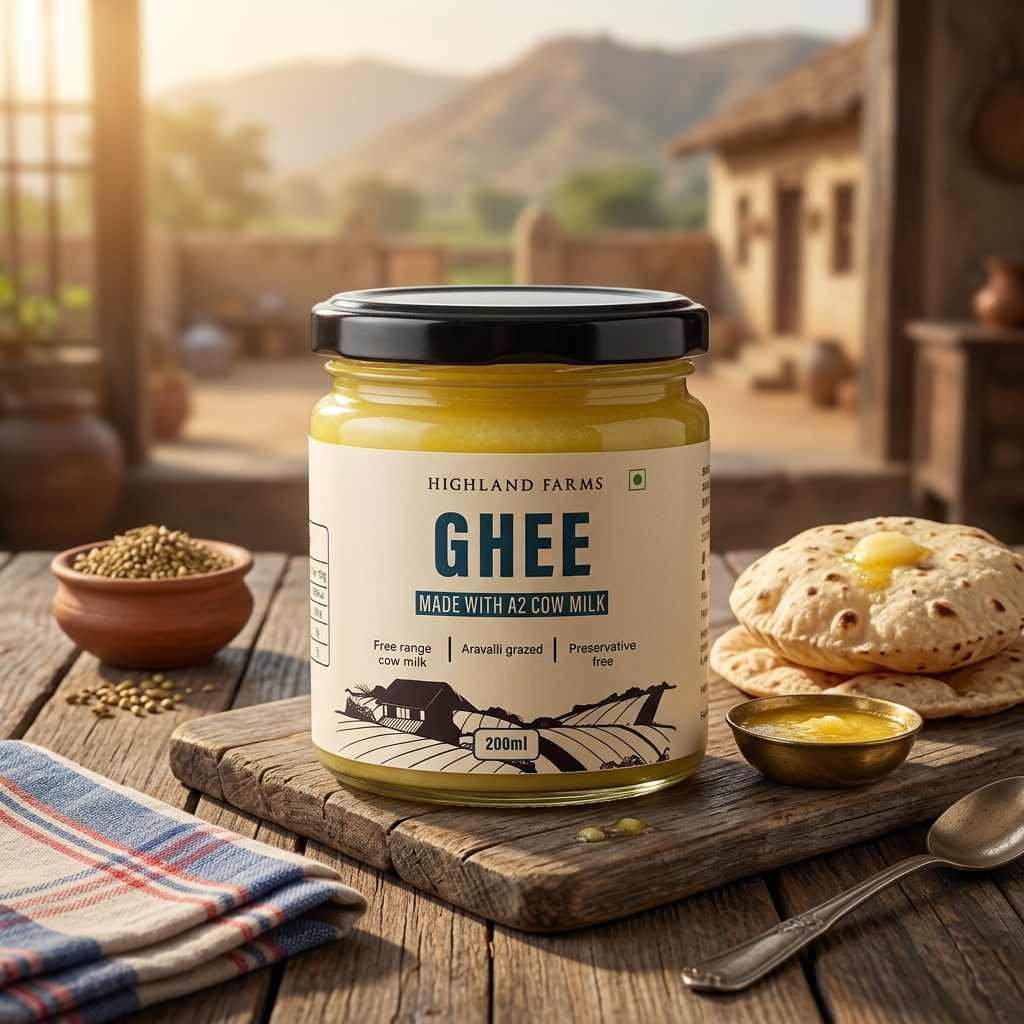
Over the last few years, customers have begun to change their food purchasing habits the the specific types of foods they buy. There has been a marked interest in traditional and less-processed foods in the dairy category. Words like A2 Cow Milk Ghee, A2 milk, and cultured butter have entered customer vocabularies as they seek out higher quality, less processed foods. What these terms mean and their actual definitions can be a challenge to navigate. This article seeks to clarify these terms in a simple and understandable way.
A2 milk, What is it and What Makes it Different?
Milk is a complex liquid and contains many types of proteins. One of the most important proteins is called beta-casein. There are two primary types of beta-casein, which are called A1 and A2.
Milk coming from crossbred or hybrid cows contains A1 protein. This is particularly prevalent in large-scale commercial dairy farming. A2 proteins can be found in milk produced by indigenous Indian cows such as the Gir and Sahiwal.
The evangelical fervor of A2 milk can be attributed to perceived digestibility. Many people experience gastrointestinal issues when they consume dairy. A2 milk has been promoted as being more digestible and therefore 'lighter' on the stomach. Although, more research does need to be conducted. This milk was the standard way of life in India before the popularization of large-scale hybridization.
What Makes Cultured Butter Special?
Unlike standard butter, which is made by churning fresh cream, Cultured Butter is made by first fermenting the cream using natural cultures. This alters the flavor as well as the textures butter can provide.
The fermentation process is what provides cultured butter with a flavor that is, richer, more complex, a bit, and a smooth consistency. Of course, Cultured butter does retain a slight tang as well.
Making cultured butter using fermentation is similar to methods used in Indian households where they would extract churn butter from curded milk.
Some manufacturers today have begun to use these techniques to replicate the taste of homemade butter more closely. Highland Farms, for example, is a small-batch farm that prioritizes traditional methods in her butter-making.
What is Bilona Ghee?
Bilona ghee is produced using a multi-step traditional method that is started with milk, as opposed to cream. This process requires the conversion from milk to curd, which is then churned to from butter, and processed by slowly heating the butter to form ghee.
With this method, there is a significant contrast to the mass production of ghee where the process is initiated with cream and employs high speed industrial techniques.
Although the bilona method is labor-intensive, produces ghee with a distinct aroma, and a granular texture, as well as deeper flavor. This ghee is reminiscent of that which is made at home in the past generations.
Another attribute that is commonly highlighted with bilona ghee is its relevance to traditional dietary practices. In Ayurveda, ghee made from curd is said to have greater therapeutic value than ghee made from cream.
A2 Ghee versus Regular Ghee
There are differences in both the source of the milk and the processing of the milk that distinguish A2 ghee from regular ghee.
A2 ghee is made from milk of desi cows that produce A2 beta-casein protein. This combined with the bilona method results in a ghee that exhibits both traditional ethical sourcing and traditional processing.
In contrast, regular ghee is made from a mix of hybrid cow milk and usually produced on an industrial scale.
A2 bilona ghee typically has a richer flavor and a stronger aroma which is commonly associated with higher quality. Regular ghee is more bland with a more consistent and mild flavor.
Furthermore, the digestibility of ghee is usually lightly discussed. While ghee is a low protein food, some consumers prefer A2 ghee variants and this is usually down to the perception and the experience regarding the A2 production process.
In terms of cost, A2 bilona ghee represents the greatest leap in price. This, in comparison to regular ghee, is due to a more expensive production method, an input of more labor, and a determination to produce low volume ghee.
Influence of Traditional Methods on Contemporary Diets
A reason beyond the interest and attraction to bilona ghee and cultured butter is the interest in systems of traditional food that have recently gained traction.
The modern food system has a trade-off: the longer a product can last on a store shelf, the poorer the product's original flavor. These trade-offs do allow for greater accessibility to the world's food supply, but less creativity in the food itself.
Contrast this to the traditional food methods, which focus on time and the hand-crafted nature of the food in front of them. While these methods may not be wildly efficient, they are celebrated for creating a product that has substance and a less industrial background.
The demand for this substance in the product does not only come from rural areas, but also from the cities. This demand has given rise to a more modern distribution system of a product made from traditional methods.
Rise In Popularity: Flavored Butters
Along with traditional dairy items like cheeses and milk, another popular product has been the introduction of flavored butters. These butters can be infused with herbs, garlic, and even black-truffles.
The flavored butters are extremely palatable to the average buyer because they allow for a fine-tuning of ones' meal, done with no additional effort. In fact, there is a void of effort necessitated by the selective application that one may have with butters and the profound impact they can have on a dish.
The demand from the household which features the busiest of body's, the individual's burdened with the time trying to populate the home with children, are the most concerned with either time or taste, and these butters do not convenience them on one front and mar them on the other.
Flavored butters are a recent addition to Highland Farms' product line in addition to traditional flavored butters, and are a prime example of the pivot in the tastes of the average consumer.
Dairy Product Quality and Freshness
The freshness of dairy products can be a big factor in their quality. Dairy products that are delivered from a batch from the farm are always better in taste and texture.
On the other hand, large scale production dairy products undergo extensive storage and transportation which really does worsen the quality of production.
The greatest advancement has been in the farm to home type of delivery. The rapid production to delivery, and thereby consumption, creates a zero-day freshness which greatly benefits the end consumer.
This was one of the greatest advancements in large urban environments, where local produce was unaccessible. People are essentially able to enjoy the same products without the large-scale production industrialization of dairy.
Justifying Price of A2 Cultured Butter and Ghee
The purchasing of A2 cultured butter and bilona ghee primarily depends on prioritization. These butter and ghee products have better taste due to the lengthy traditional methods and minimal processing.
The focused and distinct aroma is what many ghee consumers are looking to achieve.
In many cases A2 products are not ghee or butter alternatives, especially in every day cooking, where price is heavily weighted butter and ghee products are highly functional and sufficiently available.
Much more so than the traditional ghee or butter alternatives marketed, A2 ghee and butter are seen as more healthy products. While many claimed they are more healthy, A2 and traditional methods of production are not more healthy than their alternatives.
Final Thoughts
A2 cultured butter and bilona ghee showcase older methods of food preparation that focus on the quality of the ingredients and the craftsmanship of the preparation. The taste and the process of these products contrast the highly commercialized dairy products.
While these products allow you to reconnect with traditional food practices and provide a richer taste, they may, in some cases, be too costly.
As people continue to focus on these products for their advantages, it is evident that people are looking for these products for the experience they provide to daily meals.