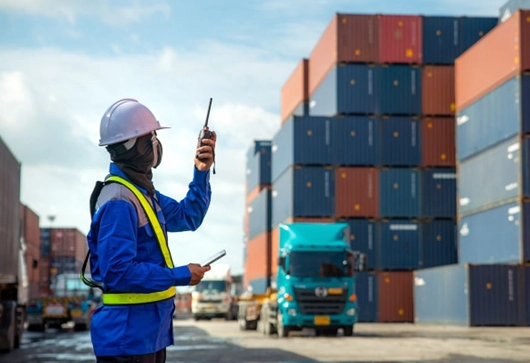
If you happen to have a manufacturing business or an e-commerce business, then customs clearance is something you can’t skip. You can’t do the customs clearance process yourself because it involves a lengthy bill of entry, document verifications, duty assessment, etc. And then, customs clearance services India help you.
But often, businesses say, "Anybody who has not walked a mile in my shoes can’t understand the stress," but a logistics expert can understand because they help you with customs clearance and handling of import/export goods entering or exiting any country.
So, here we will talk about what customs clearance is and how a logistics company can help businesses with customs clearance services.
What is Customs Clearance?
Customs clearance is the procedure or process of obtaining official government permission to bring goods into and out of the country. This is handled by the Central Board of Indirect Taxes and Customs (CBIC) in India, which falls under the purview of the Customs Act of 1962.
All exports and imports to/from India must pass through this process. A customs official inspects the documents and, if necessary, inspects the goods and decides to allow the shipment to be released. When you have obligations to pay, you pay them. Your products are then cleared.
It sounds simple. In reality, however, it requires several departments, paperwork, and compliance testing. Hence, most businesses prefer to avail themselves of customs clearance services in India.
The importance of Customs Clearance
A missing document or wrong HS code can result in:
- Transportation delays from the port/airport
- Fines and penalties
- Additional demurrage fees (storage fees for goods awaiting shipment)
- In serious cases, goods may be confiscated.
A day late is a day on the expensive side for companies with just-in-time supply chains. This is the reason why you should use the professional customs clearance services India, particularly if you are new to international trade.
The Customs Clearance Process in India
Let's take a look at the entire process of goods entering India in detail.
Step 1: Filing the Bill of Entry
A Bill of Entry is submitted to the customs office by the importer or customs broker. This is a legal document that states the type of goods, their value, and quantity.
ICS (Indian Customs Electronic Data Interchange System) is used for this in India. All records are electronic.
Step 2: Document Verification
The papers submitted are checked by customs officers. They seek correctness and uniformity. Delays can be caused by any mismatch.
These are typical documents that might be needed:
- Commercial Invoice
- Bill of Lading or Airway Bill
- Packing List
- Import License (if applicable)
- Certificate of Origin
- Insurance Certificate
Step 3: Duty Assessment
Documents are verified, and then the duty amount is calculated. This will depend on the harmonized system (HS) code of the goods. Attractiveness is different for various products.
Importers typically pay the following:
- Basic Customs Duty (BCD)
- Integrated GST (IGST)
- Surcharges for social welfare as applicable.
Step 4: Physical inspection (if necessary)
Not all shipments require physical inspection. India has a risk-based approach. Detailed inspection of high-risk shipments. Others, however, are eliminated more quickly.
This is being implemented in the major customs ports such as Mumbai, Delhi, Bengaluru, and Chennai. This has aided the process and has minimized bias.
Step 5: Payment and release
The customs authority will issue an out-of-charge order after duty payment. Your products are then let go and can be picked up or delivered.
What a Customs Clearance agent does
A customs clearance agent (also called a customs broker or CHA—Customs House Agent) is a licensed professional who handles the clearance process on your behalf.
They:
- File the Bill of Entry
- Classify goods under the correct HS code
- Communicate with customs officers
- Arrange payment of duties
- Handle inspections
- Provide real-time updates on your shipment status
In India, customs agents must be licensed by the CBIC. Always verify this before hiring one.
Choosing the Right Customs Clearance Services India
Not all of the customs clearance companies are equal. The following is a list of what to expect:
Experience in your product category—Some agents work with a certain type of product, such as food, electronics, or chemicals. Get an insider's perspective.
Licenses and certifications—Must be a certified and licensed CHA. Other certificates, such as AEO (Authorized Economic Operator) certification, are a benefit.
Technology capabilities—A provider will have the ability to access digital documents, monitor status, and calculate duties. This speeds up and minimizes errors.
Clear pricing — Inquire about the breakdown of fees before entering into any agreements. It is a common complaint that they have hidden fees.
Relationships and networks — Agents who have established a good relationship with the port and customs agents will be able to solve problems faster.
End-to-end services—The best providers will also provide you with freight forwarding, cargo insurance, and EXIM compliance services. It is much simpler to have all things under one roof.
Conclusion
Understanding the customs clearance process in India makes this process not as complicated as it seems. The main thing is getting prepared—with the proper documents, codes, and a professional with you.
Working with professional customs clearance services in India is not only convenient for a business engaged in international trade but is also crucial to it. It's necessary. The rules are changing, the responsibilities are evolving, and the compliance requirements are increasing. You need someone who's on top of all that.
From importing machinery to consumer goods and raw materials, the right customs partner can save you time and money. Make the time to make the right decision – and your supply chain will thank you for it.
Tags : .....