Left Ventricular Assist Devices (LVADs) are advanced mechanical circulatory support systems used in patients with end-stage heart failure to improve cardiac output and overall quality of life. While the implantable pump performs the primary circulatory function, daily living with an LVAD depends heavily on external accessories that manage power supply, controller protection, and driveline stability. For family members and caregivers, understanding how to select and correctly use these accessories is essential to patient safety, comfort, and long-term device reliability.
This guide provides an expert-level, fact-driven overview of LVAD accessories with a specific focus on two critical apparel-based solutions: the lvad battery vest and the heartware lvad shirt. It explains their clinical relevance, real-world application, selection criteria, and caregiver best practices using medically accepted terminology and industry-aligned standards. The content is designed for caregivers seeking reliable, professional-grade guidance grounded in real-world patient support environments.
Understanding LVAD Systems and Accessory Dependence
An LVAD consists of an implanted pump that assists the left ventricle, an external controller that regulates pump speed and alarms, two continuous power sources worn by the patient, and a driveline that connects the internal pump to the external controller. Because the controller and batteries must remain connected at all times, patients depend on wearable accessories to secure these components during daily activities. Improper handling or poorly fitted accessories can increase the risk of driveline trauma, battery disconnection, and skin irritation, concerns that are well documented in clinical follow-up research by institutions such as the National Institutes of Health and summarized in authoritative resources like Wikipedia’s LVAD overview.
The Clinical Role of an LVAD Battery Vest
Functional Purpose in Daily Care
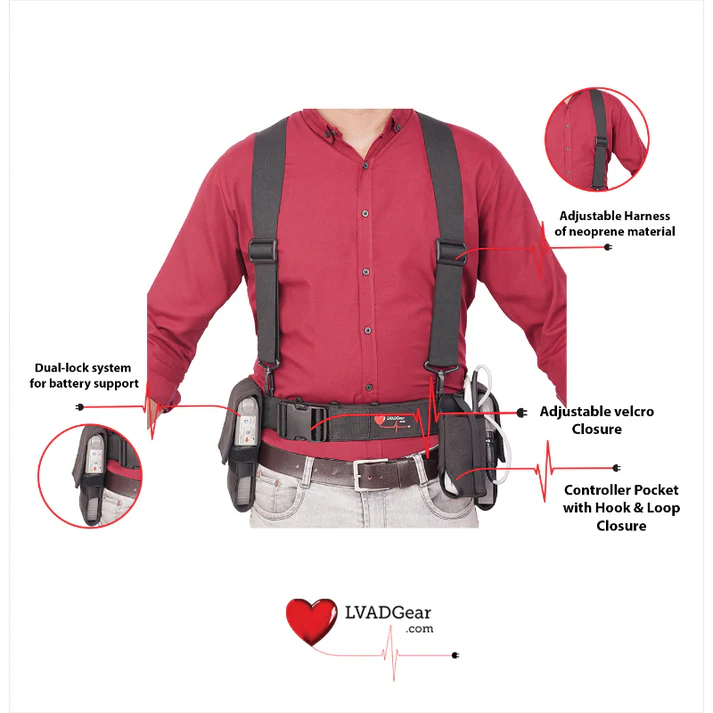
An lvad battery vest is a structured garment engineered to distribute the weight of LVAD batteries evenly across the torso while maintaining secure positioning of power sources and controller hardware. From a caregiving standpoint, the vest serves several critical functions:
- Reduces strain on the driveline exit site
- Minimizes accidental battery dislodgement
- Improves patient mobility and posture
- Supports adherence to manufacturer safety guidelines
Clinical teams often recommend vest-style battery carriers because symmetrical weight distribution reduces localized pressure points, particularly in older patients or those with limited upper-body strength.
Design Characteristics Caregivers Should Evaluate
Professionally designed LVAD battery vests typically include:
- Reinforced battery pockets with medical-grade stitching
- Breathable, antimicrobial fabrics to reduce skin breakdown
- Adjustable shoulder and torso straps for individualized fit
- Internal routing channels to protect driveline positioning
When caregivers assist with dressing or daily transitions, these features help maintain device integrity while preserving patient independence. A clinically appropriate lvad battery vest can be reviewed at lvad battery vest where purpose-built designs are aligned with real-world LVAD use scenarios.
The Role of a HeartWare LVAD Shirt in Patient Support
Garment-Based Protection and Stability
A heartware lvad shirt is a specialized compression-style garment developed to stabilize LVAD components closer to the body. Unlike external carriers, these shirts integrate pockets and support panels directly into wearable apparel, which can be particularly beneficial for patients who prefer discreet, low-profile solutions.
From a caregiver’s perspective, these shirts:
- Reduce external swinging of batteries and controller
- Improve driveline stabilization during sleep or light activity
- Decrease clothing friction around sensitive exit sites
HeartWare-compatible shirts are often recommended during early recovery phases or for patients transitioning back to work or social routines.
Material and Construction Standards
High-quality LVAD shirts are typically manufactured using:
- Moisture-wicking technical textiles
- Flatlock seams to reduce pressure injuries
- Stretch-engineered panels for controlled compression
- Clearly marked internal pockets to prevent misrouting
A medically appropriate heartware lvad shirt designed for daily clinical use can be evaluated at heartware lvad shirt where designs reflect practical caregiving and patient-handling requirements.
Practical Use Cases for Caregivers and Families
Daily Dressing and Device Checks
Caregivers routinely assist with morning device inspections and battery changes, ensuring proper seating of the batteries and controller within designated garments, and performing visual checks of driveline routing and surrounding skin condition. The use of structured LVAD accessories simplifies these routines by standardizing component placement and reducing the likelihood of handling errors.
Mobility, Sleep, and Travel Scenarios
In real-world caregiving environments:
- Battery vests support longer ambulation and outdoor activity
- LVAD shirts reduce nighttime tangling during sleep
- Both garments help maintain compliance with “two power sources at all times” safety protocols
Such practices align with guidance issued by major cardiac centers and LVAD manufacturers.
Expert Best Practices in LVAD Accessory Management
Healthcare professionals commonly recommend rotating LVAD garments to allow for regular laundering, inspecting seams and pockets weekly for signs of wear, and ensuring batteries remain evenly balanced from left to right to maintain proper weight distribution. They also advise avoiding non-medical apparel adaptations or improvised carriers that lack structural support. Following these practices helps reduce infection risk and mechanical stress, which are recognized contributors to LVAD-related complications.
Common Mistakes and Misconceptions
Assuming all shirts or vests are device-compatible is a common mistake, as LVAD systems require garments specifically designed for battery and controller support. Many caregivers also prioritize appearance over functional stability, which can compromise safety and comfort. Ignoring manufacturer-specific battery size requirements may lead to poor fit and uneven weight distribution. Over time, allowing accessories to loosen reduces driveline support and increases handling risks. These issues highlight that LVAD accessories are medical-support garments, not standard clothing items.
Conclusion
LVAD accessories play a foundational role in the safe, effective, and sustainable management of mechanical circulatory support therapy. For caregivers and families, understanding the functional purpose and correct application of garments such as an LVAD battery vest and a HeartWare LVAD shirt directly contributes to patient safety, comfort, and long-term outcomes. By selecting clinically appropriate accessories, following professional best practices, and avoiding common misconceptions, caregivers can provide structured, reliable support that aligns with modern LVAD care standards and real-world clinical expectations.
FAQs
1. Why are LVAD-specific garments necessary?
LVAD garments are engineered to meet medical safety requirements, including weight distribution, driveline protection, and secure battery placement.
2. Can regular clothing replace an LVAD battery vest?
No. Regular clothing lacks reinforced pockets, routing channels, and structural support required for safe LVAD use.
3. How often should LVAD garments be washed?
Most manufacturers recommend daily or every-other-day washing, following fabric-specific care instructions.
4. Are LVAD shirts suitable for all patients?
Suitability depends on body type, recovery stage, and device model. Clinical teams typically advise on appropriate use.
5. What materials are safest for LVAD apparel?
Breathable, antimicrobial, moisture-wicking textiles are considered best practice in clinical environments.
6. How do caregivers check proper battery placement?
Batteries should sit flat, balanced, and fully seated in designated pockets without pulling on the driveline.
7. Can accessories reduce driveline infection risk?
Indirectly, yes. Proper stabilization minimizes skin trauma, a known risk factor for infection.
8. Are these garments approved medical devices?
Most are classified as medical support accessories rather than implantable devices, but they are designed to meet clinical-use standards.
9. When should accessories be replaced?
Replacement is recommended when elasticity degrades, seams loosen, or pockets no longer secure components.
10. Should caregivers consult clinicians before changing accessories?
Yes. Any significant change in accessory type should be reviewed by the LVAD care team.