10 Tips for Developing a Successful Food Delivery App in 2025
By Comfygen Technologies 11-11-2025 407
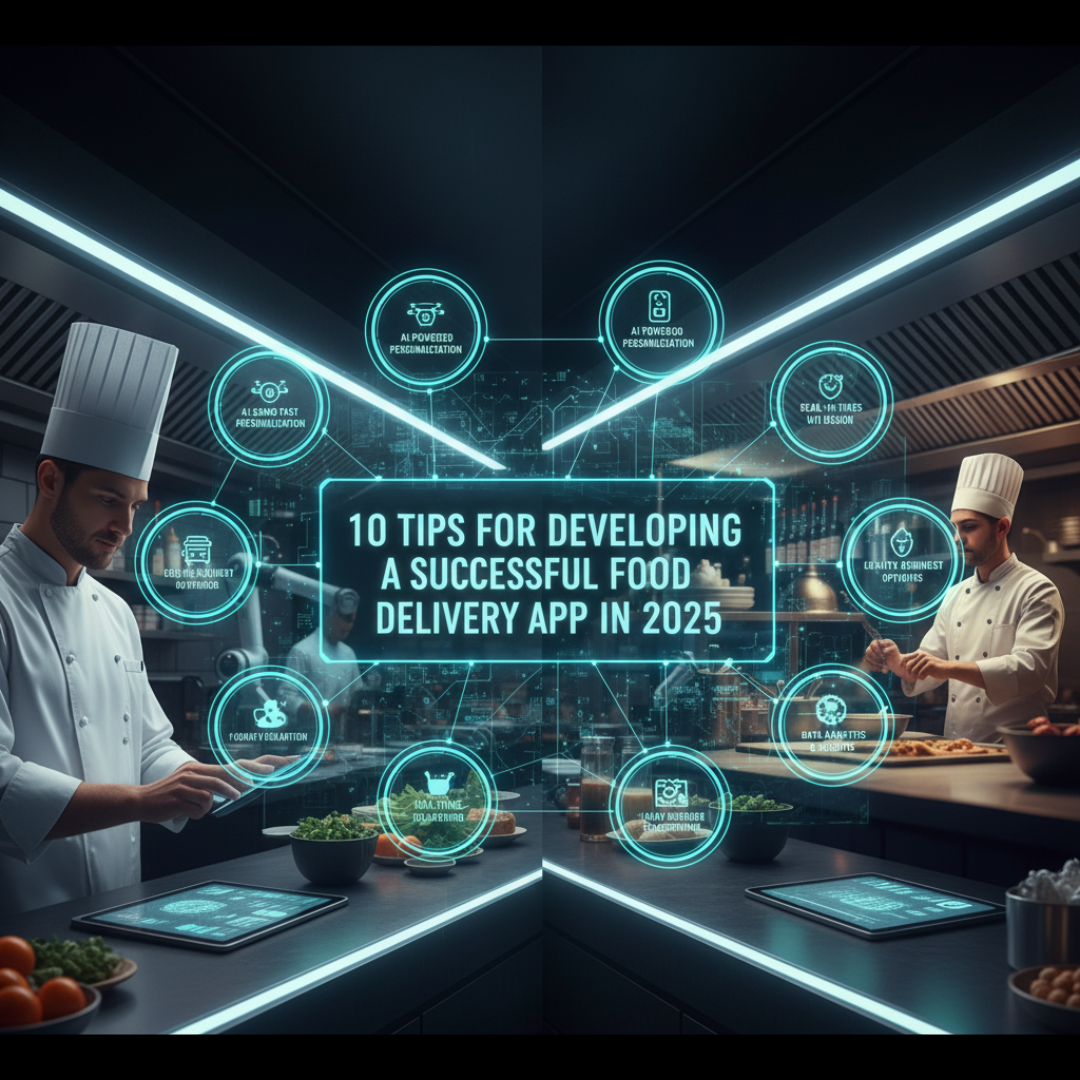
The food delivery industry has seen an explosive growth in recent years, driven by increasing smartphone penetration, changing lifestyles, and the rise of on-demand services. From local restaurants to large chains, businesses are now looking to tap into the food delivery app market to reach more customers, improve convenience, and boost revenue.
Developing a successful food delivery app requires more than just basic functionality. A well-designed app must combine user-friendly interfaces, seamless payment options, real-time tracking, and advanced technologies like AI and analytics. Whether you’re a startup or an established restaurant, following a strategic approach is key to standing out in this highly competitive market.
This article explores 10 essential tips to guide you in creating a food delivery app that is not only functional but also user-centric, efficient, and profitable.
1. Understand Your Target Audience
Before starting food delivery mobile app development, it is crucial to understand your target audience. A deep knowledge of user preferences, behaviors, and needs helps you design an app that resonates with your customers.
Identifying Customer Needs and Preferences
- Determine whether your audience prioritizes fast delivery, variety, affordability, or premium service.
- Analyze user demographics like age, location, lifestyle, and ordering habits.
- Gather feedback from surveys, interviews, and focus groups to understand expectations.
Market Research and Competitor Analysis
- Study existing food delivery apps like UberEats, Zomato, Swiggy, and DoorDash.
- Identify their strengths and weaknesses.
- Focus on unique features that can give your app a competitive advantage.
2. Choose the Right App Model
The structure of your food delivery app depends on your business goals. Choosing the right app model make sure operational efficiency and scalability.
Single-Restaurant vs. Multi-Restaurant Apps
- Single-Restaurant Apps: Ideal for individual restaurants aiming to serve their own customers. Easier to manage inventory and menu updates.
- Multi-Restaurant Apps: Aggregators connecting multiple restaurants to customers. More complex but with higher revenue potential.
On-Demand vs. Subscription-Based Models
- On-Demand: Users order food as needed. Popular for apps like Swiggy or UberEats.
- Subscription-Based: Users pay a recurring fee for benefits like free delivery or exclusive discounts. Encourages loyalty and recurring revenue.
3. Focus on User-Friendly UI/UX Design
The success of a food delivery app heavily depends on user experience. A complicated or confusing interface can lead to abandoned orders.
Simplifying Navigation and Ordering Process
Keep menus and categories easy to browse.
Enable quick search for restaurants, cuisines, and dishes.
Minimize the number of steps required to place an order.
Designing an Intuitive and Attractive Interface
Use clean layouts, readable fonts, and visually appealing graphics.
Highlight promotions, new dishes, and popular items.
Ensure the app is responsive across devices, including smartphones and tablets.
A smooth and visually appealing design enhances user satisfaction, engagement, and retention, making your app stand out.
4. Include Essential Features
A successful food delivery app must include features that address both customer and business needs.
Key Customer Features
Menu browsing and detailed item descriptions
Easy order placement and checkout
Real-time order tracking
Multiple payment options (cards, wallets, UPI, COD)
Ratings, reviews, and feedback system
Customer support (chat or call)
Key Restaurant/Admin Features
Menu and inventory management
Order acceptance and status updates
Analytics dashboard for sales and performance
Notifications for new orders or changes
5. Integrate Secure Payment Gateways
A reliable and secure payment system is essential to gain user trust and ensure smooth transactions.
Multiple Payment Options
Provide a mix of payment methods: credit/debit cards, digital wallets, UPI, and cash on delivery.
Allow one-click payment for returning users to improve convenience.
Ensuring Data Security and Fraud Prevention
Implement SSL encryption, PCI DSS compliance, and tokenization to protect sensitive data.
Integrate secure third-party payment gateways for safe transactions.
6. Leverage Technology and Automation
Using advanced technologies in your food delivery app can improve efficiency, personalization, and user satisfaction.
AI for Personalized Recommendations
Recommend dishes based on previous orders, dietary preferences, and popular trends.
Enhance customer engagement and encourage repeat purchases.
Route Optimization and Real-Time Delivery Tracking
AI and GPS technology help delivery personnel take the fastest and most efficient routes.
Real-time tracking enhances transparency and improves the customer experience.
7. Ensure Scalability and Performance
A food delivery app must be capable of handling high traffic and growing user base without compromising performance.
Cloud Infrastructure and Backend Optimization
Use cloud services like AWS, Google Cloud, or Azure for reliable and scalable backend support.
Implement microservices architecture for faster updates and improved app performance.
Handling High Traffic and Peak-Time Demand
Optimize database queries and server load balancing.
Use caching strategies to improve response time during peak hours.
8. Implement Marketing and Customer Engagement Strategies
Marketing and engagement are crucial for attracting and retaining users.
Push Notifications and Loyalty Programs
Send personalized notifications for new dishes, discounts, and offers.
Introduce loyalty programs to reward repeat customers.
Social Media Integration and Promotions
Encourage users to share orders or promotions on social media.
Collaborate with influencers or local food bloggers to increase visibility.
Engaging marketing strategies help your app gain traction quickly and build a loyal customer base.
10. Analyze Performance and Use Data Insights
Data analytics plays a crucial role in decision-making and business growth.
Monitoring App Metrics and User Behavior
Track KPIs like daily active users, order frequency, average order value, and customer retention.
Analyze peak ordering times and popular items.
Making Data-Driven Decisions for Growth
Optimize menu offerings and promotions based on insights.
Refine marketing campaigns and loyalty programs.
Predict future trends and plan inventory or staffing accordingly.
Conclusion
Developing a successful food delivery app requires careful planning, user-focused design, and strategic integration of technology. From understanding your audience and choosing the right app model to implementing AI, secure payments, and marketing strategies, every step plays a vital role in the app’s success.
By following these 10 essential tips, businesses can create a food delivery app that is efficient, scalable, and user-friendly, leading to increased customer satisfaction, higher retention rates, and sustained growth.
The food delivery industry is highly competitive, but with the right combination of innovation, technology, and customer engagement, your app can stand out and thrive in 2025 and beyond.
Invest in a feature-rich, secure, and scalable food delivery app development solution to connect with customers, streamline operations, and build a profitable on-demand food business.