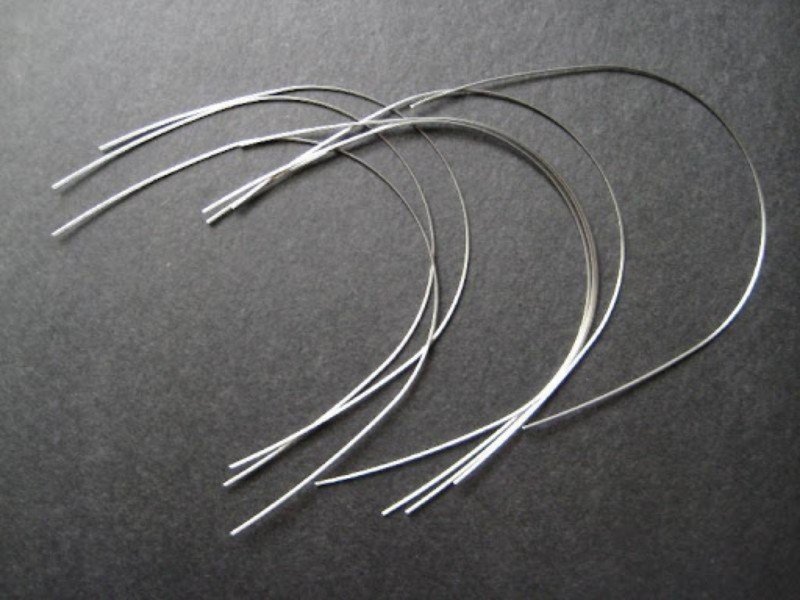
Nitinol wires are used in advanced engineering because they combine shape memory, superelasticity, strength, and corrosion resistance in a thin, compact form. Nitinol is a nickel titanium alloy with two unusual behaviors. It recovers a set shape after heating, and it springs back after large bending. Once a steel or copper wire passes a small elastic limit, it bends permanently. Nitinol does not. That difference suits designs that need flexibility, recovery, strength, and controlled movement. Medical tools, robotics, and aerospace mechanisms already apply these traits.
What Are Nitinol Wires?
Nitinol wires are drawn from an alloy of roughly 55 percent nickel and 45 percent titanium by weight. Two behaviors define them. When the wire is heated above its transformation temperature, it returns to a programmed shape. That is the shape memory effect. When the wire carries load above that temperature, it stretches and recovers on release. That is superelasticity. Alloy composition, processing, heat treatment, and transformation temperatures set the exact properties. A 0.1 percent shift in nickel content can move the transformation temperature by about 10 °C. Suppliers offer diameters from below 0.1 mm to a few millimeters, with oxide, etched, or polished surfaces, in straight annealed, cold worked, or shape set conditions. Thinner wire heats and cools faster, which matters for actuator speed.
Key Properties of Nitinol Alloy Wires
Nitinol alloy wires deliver eight properties that engineers evaluate first.
Shape Memory Effect
Heating the wire above its transformation temperature restores a preset shape.
Superelasticity
Under load above that temperature, the wire stretches and returns on release.
High Recoverable Strain
Nitinol recovers strains up to about 8 percent. Stainless steel recovers under 1 percent.
Good Strength to Weight Ratio
At 6.45 g/cm3, the alloy weighs roughly 18 percent less than stainless steel. High Strength Nitinol Wires therefore carry load in lighter assemblies.
Fatigue Resistance
When designers limit strain amplitude, the wire survives millions of bending cycles in suitable designs.
Corrosion Resistance
Corrosion Resistant Nitinol Wires form a stable titanium oxide layer that protects the surface in body fluids and mild process media.
Good Flexibility
The wire bends around small radii without kinking when diameter and condition match the design.
Biocompatibility
When producers apply medical grade material and controlled surface treatment, the wire meets biocompatibility needs.
Why Are Nitinol Wires Used in Advanced Engineering?
Four advantages explain the demand. Each one removes a limit that conventional wire imposes.
Shape Memory Capability
When an actuator wire heats through its transformation range, it contracts and moves a load. Cooling lets it relax. Designers use this behavior in compact actuators and mechanisms that replace motors, gears, and springs.
Superelastic Behavior
When a superelastic wire bends far beyond a steel wire's limit, it still returns toward its original shape under suitable conditions. Nitinol alloy wires therefore handle repeated flexing and controlled movement in catheters, clips, and flexible couplings.
High Strength and Flexibility
High Strength Nitinol Wires reach tensile strengths of 1,000 to 1,500 MPa in cold worked condition and stay flexible. Spring steel at similar strength bends permanently at much lower strain. Nitinol keeps both qualities, which helps compact load bearing parts.
Corrosion Resistant Performance
Where surface condition, alloy quality, processing, and environment align, Corrosion Resistant Nitinol Wires protect themselves with a clean, uniform oxide layer. Chlorides, crevices, or surface damage weaken that layer, so each environment needs testing.
Applications of Nickel Titanium Wires
Nickel titanium wires serve any design that needs motion, recovery, or force from a small cross section.
Medical Devices and Minimally Invasive Components
Guidewires, clips, and catheter parts bend through narrow vessels and recover shape afterward.
Actuators and Micro Actuation Systems
Electrical current heats the wire, which contracts and moves small loads without motors. Cooling returns it to rest, so the cycle repeats.
Robotics
Bundled wires act as artificial muscles in grippers and soft robots, moving quietly at low weight.
Aerospace Mechanisms
Where weight and space are limited, high strength Nitinol wires drive hinge, latch, and deployment mechanisms.
Precision Engineering, Sensors, and Control Systems
Thermal sensors and control valves use the predictable response to temperature change for accurate switching.
Flexible Assemblies, Automotive, and Specialty Systems
Flexible couplings, vent actuators, and specialty fixtures use the wire where springs and motors add bulk.
Nitinol Wires in Medical and Biomedical Engineering
Guidewires, braided stents, orthodontic archwires, and embolic filters rely on nickel titanium wires. Superelasticity lets them pass through tight anatomy, and shape recovery lets them open at the target site.
A medical device needs more than the right alloy. Composition, surface treatment, cleanliness, and fatigue performance must meet device requirements, and regulatory compliance must be verified. Not every grade suits implantation, and corrosion resistant Nitinol wires still need medical grade processing before body contact.
How to Select the Right Nitinol Wire
When you match Nitinol alloy wires to a design, start with the service conditions. Check these points before ordering:
- Nickel titanium composition and nickel content
- Transformation temperatures against the operating range
- Shape memory or superelastic requirement
- Wire diameter and tolerance
- Tensile strength for the expected load
- Flexibility and bend radius
- Fatigue cycles expected in service
- Surface finish: oxide, etched, or polished
- Corrosion environment and exposure
- Heat treatment condition
- Application specific standards and certifications
- Medical grade requirements where applicable
Conclusion
Nitinol wires earn their place in advanced engineering through one combination: shape memory, superelasticity, strength, flexibility, and corrosion resistance. Medical devices, robotics, aerospace systems, actuators, and precision assemblies all use it. When engineers select wire by transformation temperature, dimensions, mechanical requirements, surface condition, and application specific standards, they get dependable results.
Tags : Nitinol Wires


















