What Should Businesses Know Before Choosing a Personal Care Products Manufacturer?
By NEL Lifecare 20-10-2026 1
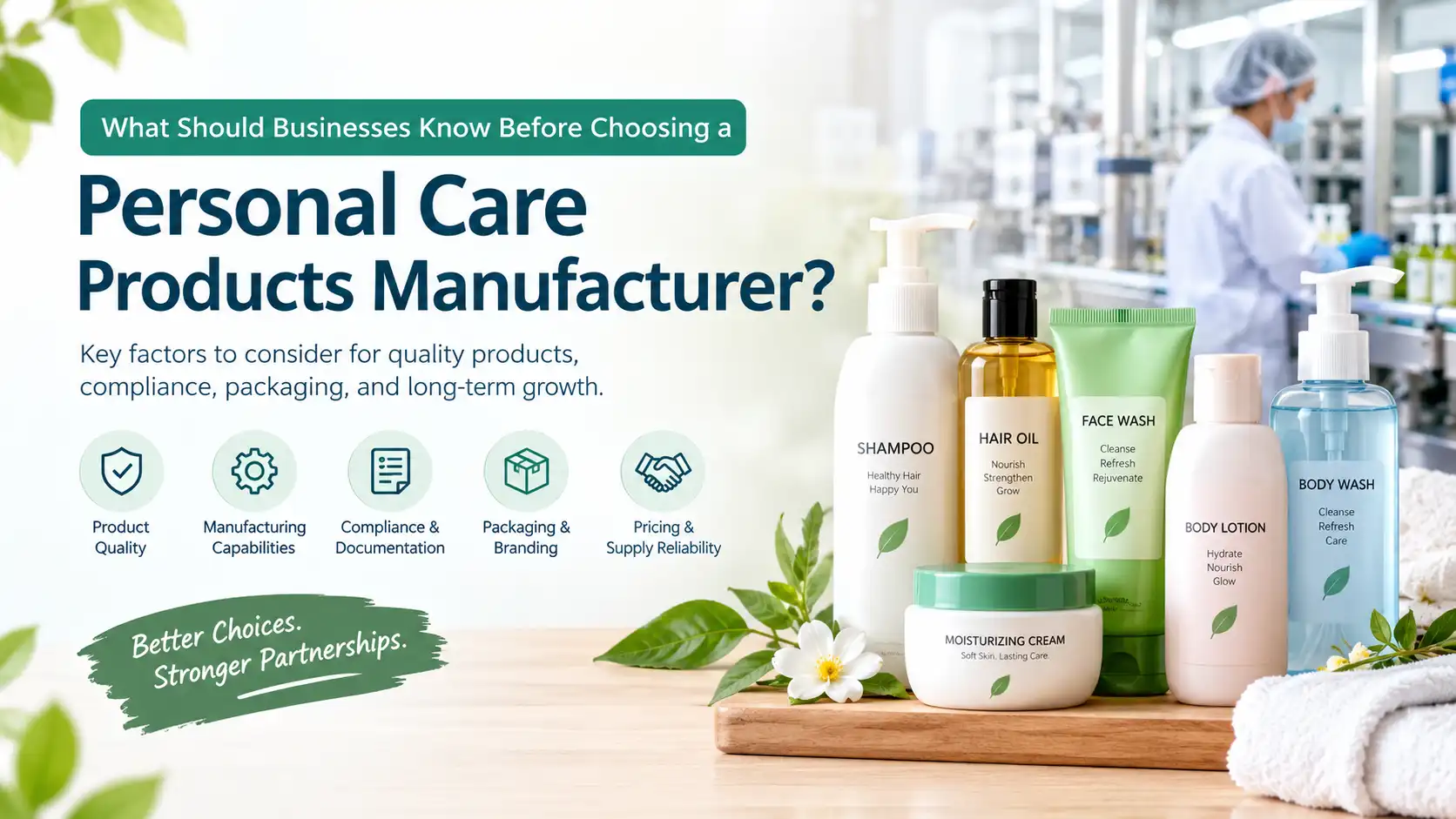
The personal care industry includes a wide range of products that support daily hygiene, grooming, and skin and hair care. From face washes and creams to shampoos, hair oils, body washes, and lotions, these products serve diverse consumer needs. As demand for personal care solutions evolves, retailers, wholesalers, distributors, and private-label brands must make informed decisions when selecting products and sourcing partners.
Choosing the right manufacturer is an important part of this process. Product quality, manufacturing capabilities, packaging, documentation, and supply reliability can influence customer satisfaction and long-term business performance. Understanding these factors helps buyers evaluate suppliers more effectively and build a product portfolio suited to their target market.
Understanding the Personal Care Products Market
Personal care products cover several categories, each designed for particular grooming, cleansing, or skin care requirements. Consumers may select products according to their skin type, hair condition, preferences, budget, and daily routines.
Common categories include:
Skin care: Face washes, creams, lotions, and serums.
Hair care: Shampoos and hair oils.
Bath and body care: Body washes and moisturizing lotions.
Specialized personal care: Products developed for specific routines or consumer preferences.
For businesses, understanding these categories is the first step toward selecting products that match customer demand. Market research, customer feedback, sales data, and competitor analysis can help buyers identify relevant opportunities without investing in an unnecessarily broad inventory.
Evaluate Product Quality and Consistency
Product quality should be a priority when comparing manufacturing partners. Customers expect products to meet their stated specifications and provide a consistent experience across purchases.
Businesses should ask potential suppliers about their quality control procedures, ingredient specifications, manufacturing processes, and product testing practices. Where appropriate, requesting samples and comparing them with documented specifications can help buyers assess suitability before placing larger orders.
Packaging quality also deserves attention. Containers should be appropriate for the product, protect it during storage and transportation, and provide clear information to users.
A systematic evaluation process helps businesses reduce sourcing uncertainty and establish realistic quality expectations with suppliers.
Review Manufacturing Capabilities
Not every manufacturer offers the same product categories, production capacity, or customization services. Before entering into a commercial arrangement, buyers should confirm that the supplier can meet their current requirements.
Important questions include:
- -Which personal care categories are available?
-What are the minimum order quantities?
-Are different packaging sizes or formats offered?
-Can the supplier accommodate recurring orders?
-What are the expected production and delivery timelines?
-Which customization or private-label services are available?
Clear answers to these questions help buyers determine whether a supplier is suitable for their business model and future plans.
Check Compliance and Product Documentation
Personal care products may be subject to different regulatory requirements depending on their formulation, classification, intended use, and destination market.
Businesses should review product labels, ingredient information, manufacturing details, and applicable documentation before purchasing. Buyers serving international markets should also confirm destination-specific requirements for ingredients, labeling, testing, registration, and importation.
Certifications and compliance claims should be verified through appropriate documentation. A supplier's marketing statements alone should not replace independent checks.
Taking these precautions supports responsible sourcing and helps businesses avoid preventable compliance problems.
Consider Packaging and Brand Presentation
Packaging plays a practical role in product protection, storage, transportation, and consumer convenience. It can also influence how customers perceive a brand.
Retailers and brand owners should consider whether the packaging is easy to use, sufficiently durable, clearly labeled, and suitable for the intended sales channel. Online sellers may need additional attention to packaging that can withstand shipping and handling.
For businesses developing their own brands, packaging decisions should align with their positioning, customer expectations, budget, and applicable labeling requirements.
The objective is to select packaging that supports both product integrity and a positive customer experience.
Compare Pricing and Overall Value
Price is an important purchasing consideration, but it should not be the only deciding factor. A low purchase price may be less attractive if it comes with inconsistent specifications, unsuitable packaging, unreliable delivery, or limited documentation.
When evaluating suppliers, businesses should compare the total cost of sourcing. This may include product costs, packaging, transportation, testing, customization, storage, and other relevant expenses.
Buyers should also clarify payment terms, order quantities, lead times, and procedures for handling damaged or nonconforming products.
A transparent comparison provides a more useful basis for selecting a supplier than price alone.
Why Choose a Personal Care Products Manufacturer in India?
India has an established personal care manufacturing and distribution ecosystem, providing businesses with opportunities to evaluate different suppliers and product categories.
When searching for a Personal Care Products Manufacturer in India, buyers should assess the manufacturer's actual capabilities, available product range, quality management practices, documentation, and ability to meet delivery requirements.
Domestic buyers may prioritize dependable replenishment, distribution coverage, and commercial flexibility. International buyers may additionally consider export experience, shipping arrangements, product documentation, and destination-market compliance.
The most suitable supplier will depend on the buyer's specific requirements rather than location alone.
Understand OEM and Private-Label Options
OEM and private-label arrangements can help businesses explore products marketed under their own brand identity. Depending on the manufacturer's capabilities, these arrangements may include product selection, formulation-related coordination, packaging, and brand-specific requirements.
Before proceeding, businesses should discuss minimum order quantities, customization possibilities, product specifications, testing responsibilities, labeling, timelines, and ownership of relevant product information.
These details should be documented clearly to reduce misunderstandings during development and production.
Businesses exploring such opportunities can visit the OEM services page of NEL Lifecare Products to review its offering and confirm the services available for their needs.
Explore Personal Care Products from NEL Lifecare Products
NEL Lifecare Products offers a range of personal care categories, including shampoo, hair oil, face wash, cream, body wash, lotion, and serum.
For retailers, wholesalers, distributors, and other commercial buyers, reviewing these categories can help identify potential sourcing options. Before making a purchasing decision, buyers should confirm current product availability, specifications, packaging options, order quantities, and applicable documentation directly with the company.
Evaluating the products against specific market requirements can help businesses determine whether the range aligns with their customers and procurement plans.
Conclusion
Choosing a personal care manufacturing partner requires careful consideration of product quality, manufacturing capabilities, compliance, packaging, pricing, and supply reliability. A structured evaluation process allows businesses to compare suppliers more effectively and make decisions based on documented capabilities and commercial requirements.
Whether a business is expanding its retail range, supplying distributors, or exploring private-label opportunities, the right sourcing strategy can support long-term growth and customer confidence.
By researching the market, verifying supplier information, and establishing clear expectations, businesses can build a more dependable personal care product portfolio. Exploring the range offered by NEL Lifecare Products is one way to begin evaluating potential sourcing opportunities.
Tags : personal care manufacturing