Molasses is a thick, dark syrup produced during the processing of sugar cane or sugar beets. It is widely used in food production, animal feed, fermentation, and various industrial applications. Although molasses is commonly recognized for its rich color and distinctive flavor, not all molasses products are the same. One important distinction is whether the product is sulphured or unsulphured.
Understanding the differences between sulphured and unsulphured molasses can help manufacturers, food processors, farmers, and other buyers select the most suitable product for their specific requirements. This article explores their characteristics, production methods, benefits, and common applications.
What Is Sulphured Molasses?
Sulphured molasses is molasses that has been treated with sulfur dioxide during processing. This treatment is traditionally used to help preserve the syrup's color and quality while supporting the sugar manufacturing process.
Sulfur dioxide acts as a processing aid and preservative under appropriate conditions. It can help inhibit certain microorganisms and reduce undesirable changes in color during storage. However, the final characteristics of sulphured molasses depend on the raw materials, processing conditions, and the amount of sulfur dioxide used.
Sulphured molasses may have a more pronounced flavor and aroma than some unsulphured varieties. Its suitability for a particular application depends on product specifications, residual sulfite levels, and applicable industry requirements.
Because sulfites can trigger reactions in sensitive individuals, their presence is an important consideration when molasses is intended for food production. Buyers should review product documentation and applicable labeling requirements before use.
What Is Unsulphured Molasses?
Unsulphured molasses is produced without the addition of sulfur dioxide as part of the processing method. It is often made from mature sugar cane, which naturally develops sufficient sweetness and flavor during growth and processing.
Since sulfur dioxide is not intentionally added, unsulphured molasses may be preferred for applications where avoiding added sulfites is desirable. Nevertheless, the term does not automatically guarantee that a product contains absolutely no sulfites, as trace amounts may arise from other sources or processing conditions.
Unsulphured molasses is commonly valued for its relatively natural flavor profile. Depending on the grade and production method, it can offer a rich sweetness with caramel-like, toasted, or slightly bitter notes.
It is frequently used in baking, sauces, syrups, and other food products where its flavor and color contribute to the final result.
Key Differences Between Sulphured and Unsulphured Molasses
Although both products are derived from sugar processing, several characteristics distinguish them.
1. Processing Method
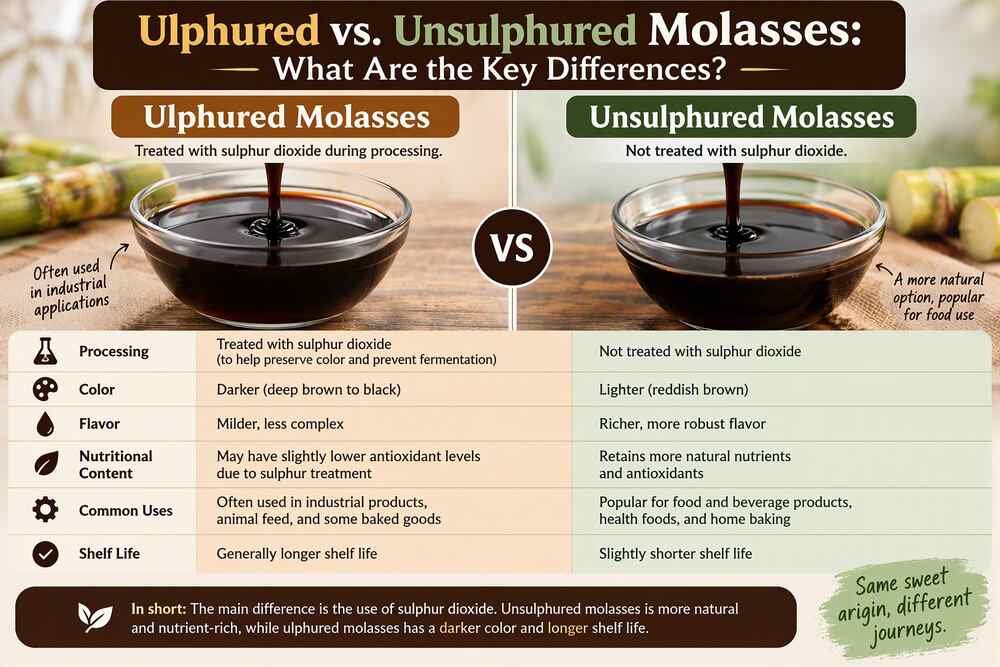
The most significant difference is the use of sulfur dioxide. Sulphured molasses undergoes sulfur dioxide treatment during processing, while unsulphured molasses does not have this intentional treatment.
2. Flavor and Aroma
Sulphured molasses may have a stronger or more distinctive aroma, depending on its processing conditions. Unsulphured molasses is often described as having a cleaner, more natural sugar-cane flavor. However, taste varies considerably by grade and source.
3. Color and Appearance
Both varieties generally have a dark brown to nearly black appearance. Sulfur dioxide can influence color stability, but the final shade depends on factors such as the sugar cane variety, heating temperature, concentration, and processing duration.
4. Sulfite Considerations
Sulphured molasses may contain residual sulfites, depending on the manufacturing process. Unsulphured molasses is produced without intentionally adding sulfur dioxide, making it a potential alternative for buyers seeking to avoid added sulfites. Product testing and documentation are still important.
5. Intended Applications
The choice between the two products depends on the intended use. Unsulphured molasses is commonly selected for food products where flavor is important, while sulphured molasses may be suitable for applications that permit its processing characteristics and meet relevant specifications.
Applications in Food and Beverage Production
Molasses is an important ingredient in many food manufacturing processes. It contributes sweetness, color, moisture, and a distinctive flavor to products such as gingerbread, cookies, marinades, sauces, and baked goods.
Unsulphured molasses is often favored in recipes that emphasize a balanced, rich flavor. Its characteristics can complement spices, whole grains, and other ingredients without introducing an unwanted aroma.
Sulphured molasses can also be used in certain food applications, provided that its composition meets the relevant food safety and labeling requirements. Manufacturers should consider customer preferences, product formulations, and local regulations when selecting a grade.
Industrial and Agricultural Uses
Beyond food production, molasses has applications in agriculture and industry. It is used as an ingredient in animal feed, a carbon source in some fermentation processes, and a raw material in selected industrial applications.
In animal nutrition, molasses can improve palatability and provide readily available carbohydrates. Its suitability depends on the animal species, feed formulation, mineral content, and overall nutritional requirements.
In fermentation, molasses can provide sugars that microorganisms convert into useful products, including ethanol and other fermentation-derived materials. The appropriate grade depends on sugar concentration, impurities, microbial requirements, and process economics.
For these applications, buyers should evaluate more than the sulphured or unsulphured classification. Parameters such as total sugar content, moisture, ash, viscosity, and consistency between batches may be equally important.
How to Choose the Right Type of Molasses
Selecting the right molasses starts with identifying the intended application. Food manufacturers may prioritize flavor, color, sulfite content, and regulatory compliance. Agricultural buyers may focus on nutritional composition, palatability, and cost efficiency.
Industrial users should review technical specifications, sugar concentration, impurity levels, and compatibility with their production processes.
It is also advisable to request a product specification sheet and, where appropriate, a certificate of analysis from the supplier. These documents help buyers verify product quality and confirm whether the material meets their requirements.
Price and availability are additional considerations, particularly for businesses purchasing molasses in bulk. Consistent quality and reliable supply can be just as important as the initial purchase price.
Conclusion
Sulphured and unsulphured molasses share the same basic origin but differ in their processing methods and potential product characteristics. Sulphured molasses is treated with sulfur dioxide during processing, while unsulphured molasses is produced without intentionally adding it.
Neither type is automatically the best choice for every application. The right option depends on flavor preferences, sulfite requirements, processing conditions, quality specifications, and intended use.
By understanding these differences and checking supplier documentation, buyers can make informed decisions and select molasses that meets their food production, agricultural, or industrial needs.