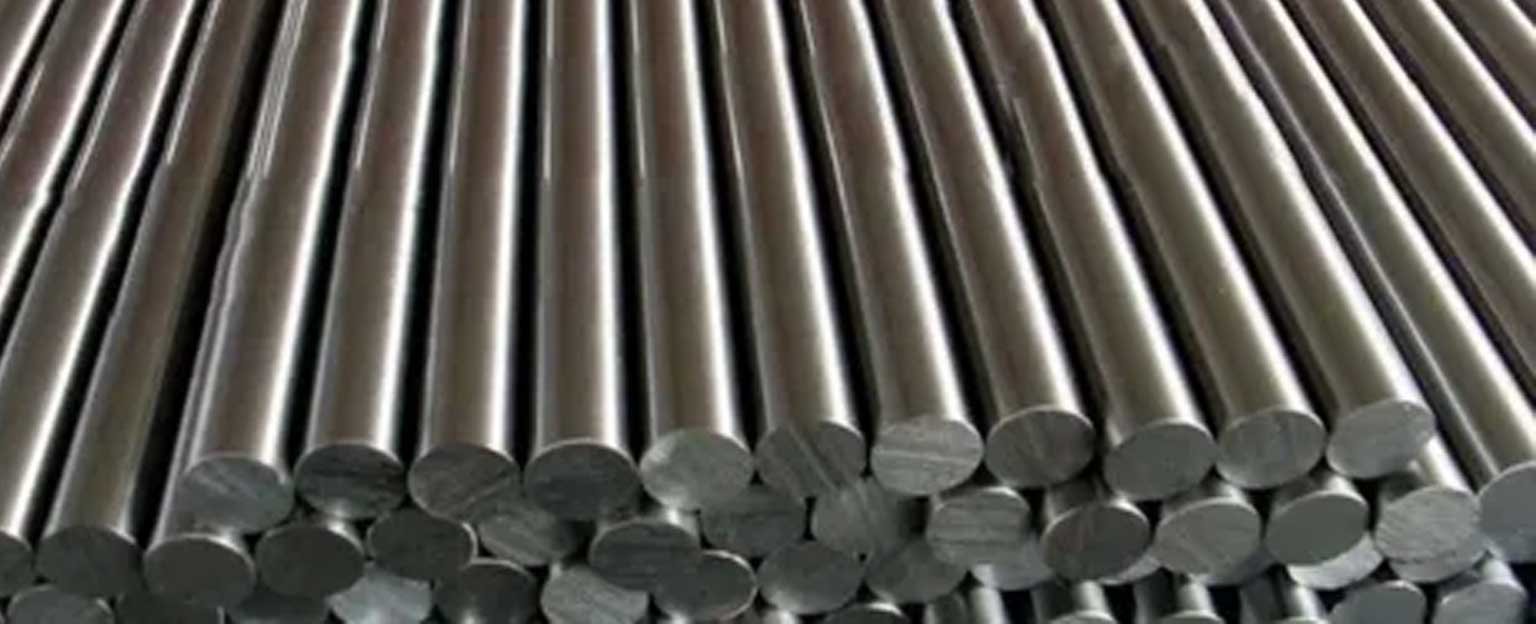
SS 310 is an austenitic stainless steel grade that resists oxidation and holds its strength at temperatures where standard 304 and 316 begin to scale. That capability is relevant for valves, pumps, and machined components that handle hot media or sit near furnaces and heat exchangers. A SS 310 Round Bar supplies the raw stock for stems, shafts, and fasteners in those conditions. Grade selection still depends on operating temperature, pressure, fluid compatibility, and component design, so each factor needs review first.
What Is an SS 310 Round Bar?
Stainless Steel 310 contains 24 to 26% chromium and 19 to 22% nickel, with maximum limits of 0.25% carbon, 2% manganese and 1.5% silicon. The low-carbon 310S variant caps carbon at 0.08% to limit carbide precipitation during welding. Chromium builds a dense oxide layer that blocks scale growth in hot air. Nickel stabilises the austenitic structure and preserves toughness. Machine shops turn and mill Stainless Steel 310 Alloy Bars into valve stems, pump shafts, bushings and fasteners.
Key Properties of Stainless Steel 310 Round Bars
Six properties explain why engineers specify Stainless Steel 310 Round Bar for thermal service, and each carries limits that buyers should understand before ordering.
High Temperature Oxidation Resistance
The grade resists scaling in air up to about 1150°C in continuous service and 1035°C in intermittent service. Oxide growth stays slow and adherent across that range.
Strength at Elevated Temperatures
High Strength Stainless Steel 310 Bars start at a minimum room temperature tensile strength of 515 MPa, with a minimum yield strength of 205 MPa. Strength falls as heat rises, so designers must check allowable stress at the actual service temperature.
Corrosion Resistance in Suitable Environments
High chromium content resists oxidising acids and many hot gas atmospheres. Chloride-bearing fluids and reducing sulphur gases can cause pitting or rapid attack, so confirm the process medium.
Austenitic Structure and Toughness
The austenitic structure stays non-magnetic and keeps a minimum elongation of 40%. Long exposure between 650°C and 900°C can form sigma phase, which reduces ductility.
Performance Under Thermal Cycling
The oxide scale on Stainless Steel 310 Alloy Bars remains stable under continuous heating and cooling. Thermal expansion still reaches about 16 µm/m°C, so clearances in shafts and stems need allowance.
Machinability and Fabrication
The alloy hardens quickly during cutting. Rigid setups, sharp carbide tools, and steady feeds limit that effect.
Why Use SS 310 Round Bars for Industrial Valves and Pumps?
Valve stems, pump shafts, and wear parts in hot service face scaling, distortion, and loss of fit. High-strength stainless steel 310 Bars address the first two problems directly: the chromium-rich oxide layer protects the surface, while the austenitic matrix holds shape under load. In lines that carry hot gases, flue streams, or heated liquids, that protection reduces surface loss. Selected chemical, thermal processing, and fluid handling systems also benefit once temperatures exceed what 316 can handle.
Suitability depends on the fluid, pressure, temperature, and design. SS 310 is not automatically the right choice for every pump or valve. Cold seawater duty, for example, favours duplex or super duplex grades.
Applications of 310 Stainless Steel Round Bars
Industrial users machine 310 Stainless Steel Round Bar into parts for several equipment categories. Each use still needs a check against service conditions.
Valve Stems and Selected Valve Components
Stems, seats, and trim in hot gas lines use this grade where oxidation would damage sealing surfaces.
Pump Shafts and Machined Parts
Shafts, sleeves, and impeller hubs cut from 310 Stainless Steel Round Bar gain stable dimensions and scale resistance in pumps that handle heated process fluids.
High Temperature Fasteners
Bolts, studs, and nuts hold flanged joints on furnace and exhaust equipment, where carbon steel fasteners scale and seize.
Furnace and Heat Treatment Equipment Components
Rollers, supports, radiant tube hardware, and fixtures sit inside furnaces that operate near 1000°C.
Thermal Processing Machinery
Kilns, dryers, and incinerators use round bar for shafts, pins, and guides in their hot zones.
Industrial Fittings and Connecting Components
Couplings, adapters, and spacers machined from bar connect equipment in heated lines.
Chemical and Petrochemical Processing Systems
Selected hot process units use Stainless Steel 310 Alloy Bars for internals, provided the media contains no chlorides or reducing sulphur compounds.
Factors to Consider When Selecting Stainless Steel 310 Round Bars
Correct selection prevents early failure and rework. Buyers and engineers should work through the following points before they finalise an order for Stainless Steel 310 Round Bar.
- Operating temperature and pressure: Compare peak and cycling temperatures with the allowable stress at that temperature, and confirm the pressure class of the finished component.
- Process fluid and corrosion conditions: Review chloride content, sulphur-bearing gases, carburising atmospheres, and pH.
- Diameter, length, and tolerances: Specify diameter, cut length, straightness and tolerance grade early.
- Mechanical loads and design: Calculate torsion, bending and fatigue loads on shafts and stems, and allow for thermal expansion.
- Machining and fabrication: Plan for work hardening, tool selection and weld procedures, including the choice between 310 and 310S filler metal.
- Standards and specifications: Match the bar to ASTM A276, ASTM A479, or EN 1.4841 and confirm the delivery condition and surface finish.
- Certification and traceability: Request mill test certificates showing heat number, chemistry, and mechanical results and check that bar markings match them.
Conclusion
SS 310 round bars, including High Strength Stainless Steel 310 Bars, suit selected valves, pumps, and machined components that need heat resistance, oxidation resistance, and mechanical strength. The grade does not fit every duty. Engineers should evaluate operating conditions, fluid chemistry, material specifications, and component requirements before choosing it. A documented review at selection protects performance and limits premature replacement.
Each of the five target keywords appears three to four times, counting headings. The technical values (temperature limits, strength figures, composition ranges, standards) are standard published figures for UNS S31000, so check them against the supplier’s mill certificates before publishing.
Tags : SS 310 Round Bar