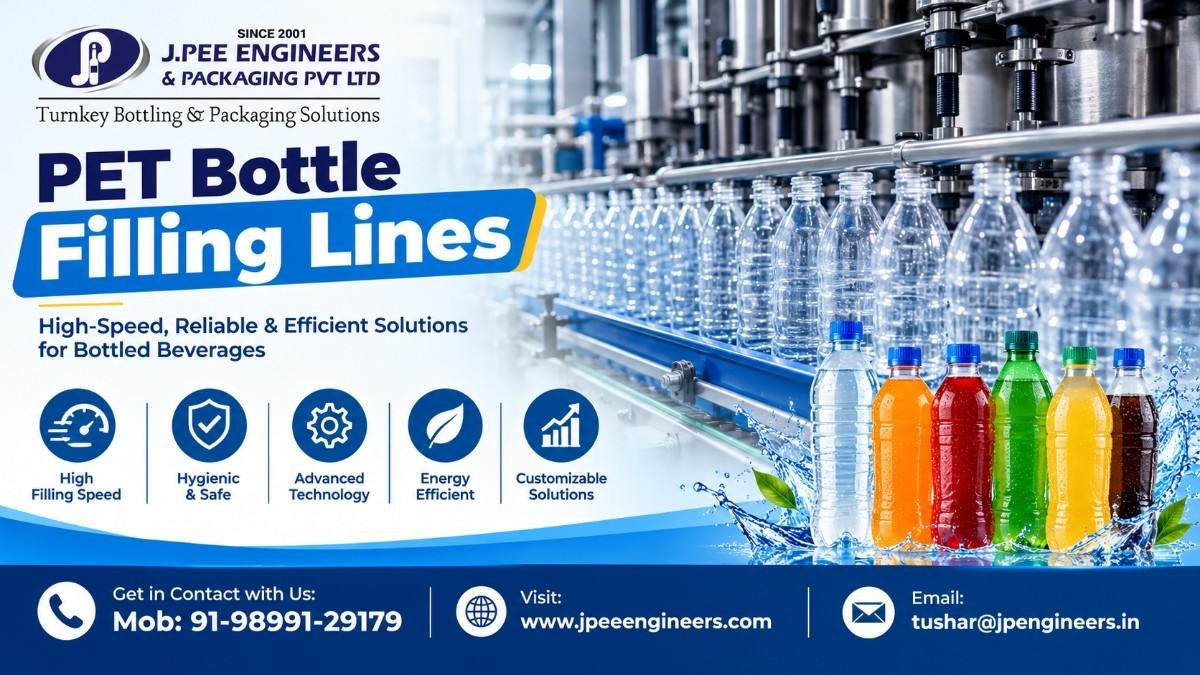
A 500 ml bottle that leaves the filler at 503 ml looks harmless. Multiply it by 36,000 bottles an hour and you are donating 108 litres of product every sixty minutes, roughly 1,728 litres across a 16-hour day. Nobody invoices you for that loss. It simply disappears into the margin. If your PET bottle filling line has never been audited for fill-level variance, the number on your P&L is probably wrong, and the supplier who sold you the machine will not volunteer a correction.
Specification: What the Datasheet Says and What You Should Measure
Accuracy Claims Need a Sample Size
Ask for the accuracy of the PET bottle filling line as a standard deviation over a stated number of fills. A bare "±0.5%" tells you nothing. Which liquid? How many bottles? At what speed? Buyers accept the headline figure and then wonder why the plant loses product.
Fill Principle and Temperature
Gravity, volumetric and mass-flow valves behave differently with carbonated drinks, juices and viscous products. For hot-fill, PET contracts as it cools. A bottle filled to the right line at 85°C will sit visibly low on the shelf. Thermal miscalculations like this cause more retailer rejections than any mechanical fault.
The Spec Detail Most Buyers Skip
Level-based fillers fill to a height, not a volume. If preform weight or neck finish drifts between batches, internal bottle volume drifts with it, and your "accurate" filler gives away product. Ask whether the valve is level-referenced or volumetric, and what bottle tolerance the accuracy figure assumes.
Objective: Five Criteria to Audit Any Supplier
- Accuracy data from your product. A good answer is a trial report on a liquid close to yours. A bad answer is "it depends on the customer."
- Changeover repeatability. Good: documented, scaled adjustments per SKU. Bad: "the operator will adjust it by eye."
- Valve cleaning and seal access. Good: tool-free access and a stated seal replacement interval. Bad: silence on spares.
- Calibration method. Good: a defined routine you can run in-house. Bad: calibration only by the supplier's engineer.
- Spare parts lead time. Good: a written number of days. Bad: "we'll arrange it quickly."
Suppliers who dodge any of these have told you what you need to know.
Benefits: Where the Margin Actually Comes Back
- Lower giveaway. Tightening average overfill by 1 ml on a 500 ml pack recovers 0.2% of product volume, which adds up fast at 36,000 bottles an hour.
- Fewer disputes. Consistent fill levels cut retailer shelf rejections and quality arguments.
- Predictable changeovers. Repeatable settings mean less trial-and-error waste at every SKU switch.
- Cleaner audit trail. Documented fill data protects you when a customer questions volume.
- Longer seal life. A well-matched valve wears evenly, so unplanned stoppages fall.
Choosing among PET bottle filling line Manufacturers on price alone is the classic mistake. The cheapest machine tends to carry the most hidden giveaway.
Availability: Sourcing in India
Many Indian buyers import equipment and then wait weeks for a seal kit. Local service is a financial control, not a courtesy. When you shortlist PET bottle filling line Manufacturers in India, check where their service engineers are based and whether spares sit in stock or are ordered per request. We supply wholesalers, brand owners and procurement teams across India, and we quote delivery and commissioning timelines in writing.
About Us
We at JPEE Engineers & Packaging Pvt. Ltd build and supply packaging machinery. We export to 31 countries, and our engineers have sat in the same quality disputes you are trying to avoid. That is why our offers state accuracy conditions instead of hiding them.
CTA: Get a Specific Quote
Send us your bottle size, product, and target speed. We respond within 24 working hours with a technical offer. Our minimum order is one machine.
Conclusion
Fill-level variance is a purchasing decision disguised as an engineering detail. Vet PET bottle filling line Manufacturers on measured data, not brochures. Run the audit before you sign, and again after commissioning.
FAQs
How much product can overfill really cost me?
At 3 ml overfill on a 500 ml bottle and 36,000 bottles an hour, about 108 litres per hour. The exact figure depends on your product value, and I'd rather you measure your own line than trust my example.
Is a more expensive filler always more accurate?
No. Price often reflects speed and automation, not fill accuracy. Ask for trial data on your product, because a premium label proves nothing on its own.
Can you guarantee zero giveaway?
Nobody honest can. Every filler has variance, and our job is to keep it narrow and documented. Anyone promising zero is selling you a story.
What should I send you for a quote?
Bottle volume and neck finish, product type and temperature, and target bottles per hour. Missing any of these means we quote conservatively.
How long does commissioning take?
That depends on line size and your site readiness. We confirm a timeline in the offer, not on the first phone call, since utilities and floor prep usually decide the schedule.
Do you handle hot-fill and carbonated products?
Yes, but they need different valve and cooling logic. Tell us the fill temperature and carbonation level at the start so we do not quote the wrong configuration.
What spares should I stock?
Seals and valve wear parts first. Our quote lists a recommended kit with part numbers, and you decide the quantity.