How to Choose the Right Soldering Station for Reliable Electronics Manufacturing
By Reliable Consumables 15-10-2026 32
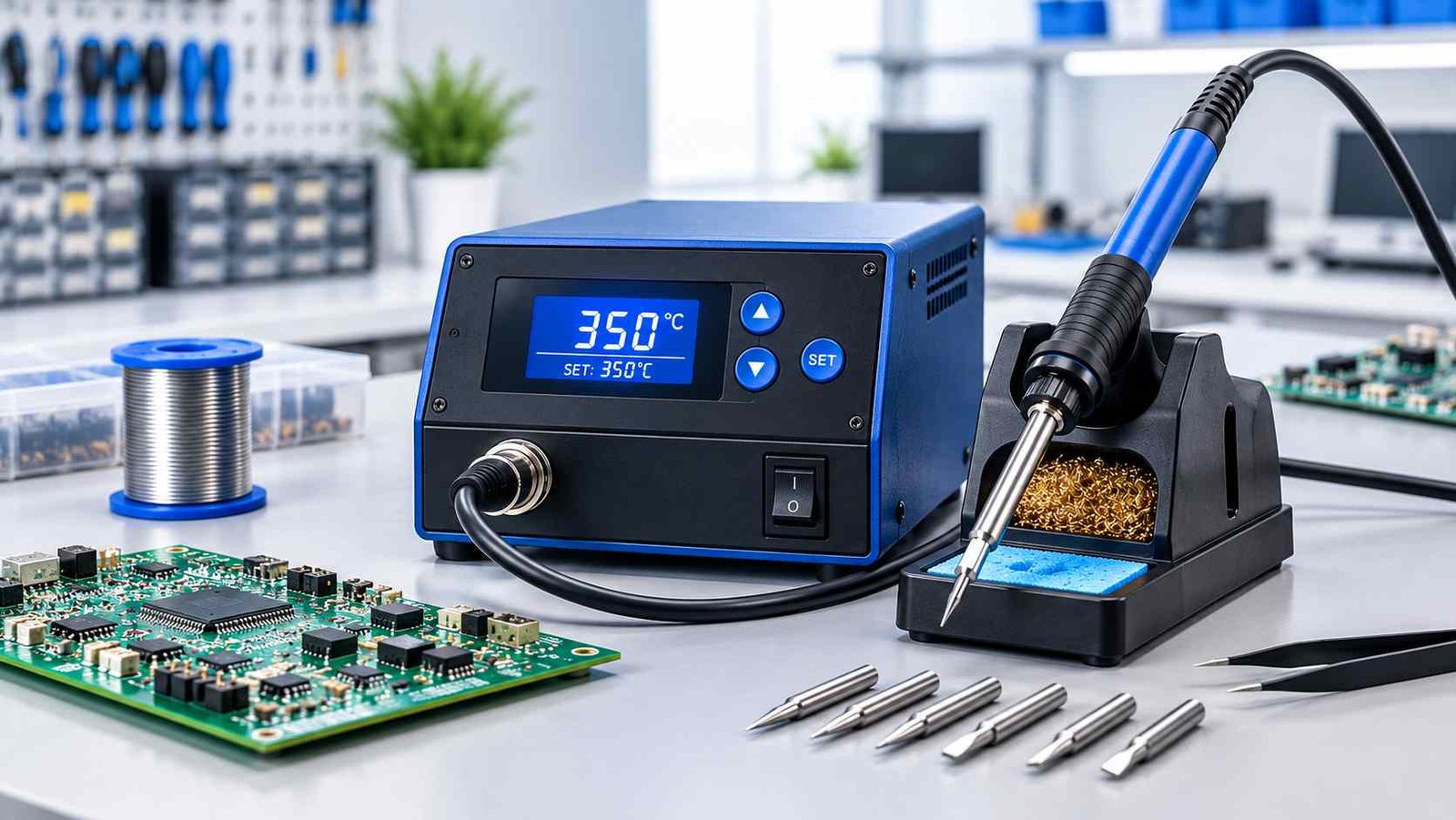
Electronics manufacturing depends on accurate soldering, consistent joint quality, and careful handling of sensitive components. Whether a business assembles printed circuit boards (PCBs), repairs electronic equipment, or operates an electronics production line, the right Soldering Station can make a measurable difference to everyday work. Temperature instability, unsuitable soldering tips, and poor heat recovery can lead to defective joints, damaged components, and unnecessary rework.
For production managers, procurement teams, and electronics technicians, selecting soldering equipment should involve more than comparing prices. Performance, application requirements, operator comfort, and long-term maintenance all deserve attention.
What Is a Soldering Station?
A Soldering Station is an electronic tool used to join components, wires, and circuit-board connections using controlled heat and solder. Unlike a basic soldering iron, a station generally includes a temperature-control unit, a soldering handpiece, and a stand. Depending on the model, it may also provide digital temperature displays, rapid heating, and other features for precision work.
These stations are commonly used in PCB assembly, electronics manufacturing, component replacement, circuit-board repair, prototyping, and industrial maintenance. They are particularly useful when operators need repeatable results across multiple soldering tasks.
For professional applications, selecting equipment that matches the component size, soldering process, and workload helps maintain consistent production quality.
Why Temperature Control Matters in Electronics Soldering
Temperature control is one of the most important factors when evaluating a Soldering Station. If the tip temperature is too low, solder may not wet the surfaces properly, potentially producing weak or unreliable joints. Excessive heat or prolonged contact can damage sensitive components, lift PCB pads, or degrade nearby materials.
A suitable station helps operators maintain the temperature required for their specific soldering process. However, the correct setting depends on the solder alloy, component specifications, PCB design, tip geometry, and thermal demands of the joint.
Important performance characteristics include:
Temperature stability: Helps maintain consistent working conditions.
Heat recovery: Allows the tip to regain temperature after contact with a joint.
Adjustable settings: Support different components and soldering applications.
Tip compatibility: Makes it easier to select suitable tip shapes and sizes.
ESD protection: Helps reduce electrostatic-discharge risks when working with sensitive electronics, provided the equipment is designed and used appropriately.
A temperature display alone does not guarantee soldering quality. Operators must also use the correct tip, maintain clean surfaces, and follow the applicable soldering procedure.
Key Factors to Consider Before Buying a Soldering Station
1. Identify Your Application
Start by determining where and how the equipment will be used. PCB assembly, micro-soldering, industrial electronics production, and repair work can have different requirements.
Fine-pitch components may require a small, precise tip, while larger terminals and heavier connections may need greater thermal capacity. Choose a station according to the actual workload rather than purchasing the most powerful model available.
2. Evaluate Temperature Accuracy and Recovery
For repetitive production work, temperature consistency is important. A station with suitable control and recovery performance can help operators maintain a repeatable process during continuous soldering.
Check the manufacturer's specifications and consider whether the equipment meets your process requirements. Where soldering quality is critical, include tip-temperature verification and maintenance in your work instructions.
3. Check ESD Safety Requirements
Electronic components can be vulnerable to electrostatic discharge, even when the damage is not immediately visible. If the station will be used in an ESD-protected area, verify its grounding arrangements, handpiece compatibility, and relevant manufacturer specifications.
Also maintain the wider ESD control programme, including suitable work surfaces, grounding equipment, and operator procedures. An ESD-safe soldering station should complement these controls rather than replace them.
4. Consider Ergonomics and Daily Workload
A comfortable handpiece, accessible temperature controls, and a stable stand can improve usability during extended shifts. For high-volume production, these practical details matter because operators may perform similar tasks hundreds of times a day.
Review heating performance, operating requirements, replacement-tip availability, and the suitability of the station for continuous use before making a purchase.
5. Assess Maintenance and Support
Soldering tips are consumable components. Their service life depends on operating temperature, solder alloy, cleaning methods, and maintenance practices.
Before selecting a model, check the availability of compatible tips, replacement parts, and technical assistance. A low initial purchase price may not represent the best long-term value if essential consumables are difficult to source.
Why Businesses Compare Soldering Station Manufacturers in India
Demand for reliable soldering equipment spans electronics manufacturing companies, EMS providers, PCB assembly facilities, repair centres, and industrial production units. As a result, buyers often compare Soldering Station Manufacturers in India and suppliers to find equipment that fits their technical and procurement requirements.
A useful supplier evaluation should include:
Clear product specifications and application guidance.
Information about temperature control and compatible accessories.
Suitable models for the intended workload.
Availability of replacement consumables and support.
Transparent quotations, warranty terms, and delivery arrangements.
Buyers should also distinguish between a manufacturer, an authorised dealer, and a supplier. These roles are not interchangeable. Ask about the actual source of the equipment and the support available after purchase instead of relying on a broad marketing claim.
The right purchasing decision balances technical suitability, serviceability, and total cost of ownership.
Common Soldering Mistakes That Affect Quality
Even a good Soldering Station cannot compensate for poor working practices. Some recurring mistakes include using the wrong tip size, setting an unsuitable temperature, applying excessive pressure, and leaving the tip dirty or oxidised.
Another common problem is assuming that a shiny-looking joint always indicates a reliable connection. Joint appearance depends on the solder alloy and process, so operators should follow the applicable workmanship criteria rather than relying on appearance alone.
To improve consistency:
Select a tip appropriate for the joint and component.
Use the temperature specified by the validated process.
Keep the tip clean and properly maintained.
Avoid unnecessary heating time and mechanical pressure.
Inspect solder joints according to the relevant quality standard.
Document recurring defects and investigate their causes.
These practices help reduce avoidable rework and support more predictable manufacturing outcomes.
Explore Soldering Stations from Reliable Spares & Consumables
Reliable Spares & Consumables supports electronics manufacturing and industrial workplaces with ESD protection products and industrial electronics tools, backed by 19 years of industry experience.
Businesses evaluating soldering equipment can explore the available models, review product specifications, and identify options suitable for PCB assembly, electronics repair, and production applications.
Visit the Soldering Station product page to explore available solutions. You can also review the BGA Rework Station range for specialised PCB rework requirements and the Fume Extractor range for managing soldering fumes in the workplace.
Frequently Asked Questions
1. What is a Soldering Station used for?
A Soldering Station is used to join electronic components and wires with controlled heat. Typical applications include PCB assembly, component replacement, prototyping, and electronics repair.
2. How do I choose the right Soldering Station?
Consider your application, temperature-control requirements, heat recovery, ESD protection, compatible tips, operating workload, and maintenance needs. Match these features to the actual soldering process.
3. Why should I evaluate Soldering Station Manufacturers in India?
Evaluating manufacturers and suppliers helps buyers compare technical specifications, product suitability, consumable availability, warranty conditions, and after-sales support before purchasing.
4. Is temperature control important for PCB soldering?
Yes. Appropriate temperature control helps reduce the risk of poor solder wetting and heat-related component damage. The correct setting depends on the solder alloy, PCB design, components, and process requirements.
Conclusion
Choosing the right Soldering Station is an important step towards consistent solder joints, efficient repair work, and dependable electronics manufacturing. Focus on application suitability, temperature performance, ESD requirements, ergonomics, and long-term support rather than price alone.
By comparing equipment carefully and following disciplined soldering practices, businesses can make informed purchasing decisions and build a more reliable electronics production process.
Tags : .....


















