Industrial manufacturers need consistent raw materials to maintain product quality, improve processing efficiency, and achieve reliable production results. In applications involving textile finishing, mould release, lubrication, and surface treatment, Silicone Emulsion is a versatile material that can help meet specific performance requirements. Its suitability depends on the formulation, substrate, application method, and desired result.
For procurement managers and industrial buyers, choosing the right grade is not simply about price. Product stability, compatibility, technical documentation, and dependable supply are equally important. Working with experienced Silicone Emulsion Manufacturers can help businesses evaluate these factors and identify a suitable product for their operations.
Plustech Chem, based in Gandhinagar, Gujarat, India, supplies silicone-based chemicals for industrial applications. This guide explains the properties, uses, selection criteria, and sourcing considerations that buyers should understand before purchasing silicone emulsion.
What Is Silicone Emulsion?
Silicone emulsion is a formulation in which silicone material is dispersed in water with the assistance of emulsifiers or other stabilising ingredients. This water-based delivery system allows silicone properties to be used in applications where direct use of silicone oil may not be convenient.
Depending on its chemical composition and intended purpose, a silicone emulsion may provide lubrication, surface conditioning, water repellency, release properties, or improved surface appearance.
Not all emulsions offer identical performance. Their characteristics can vary according to silicone chemistry, active content, ionic nature, particle size, and formulation design. Therefore, industrial buyers should review the product's technical data sheet (TDS) rather than selecting a grade based on its name alone.
Major Industrial Applications of Silicone Emulsion
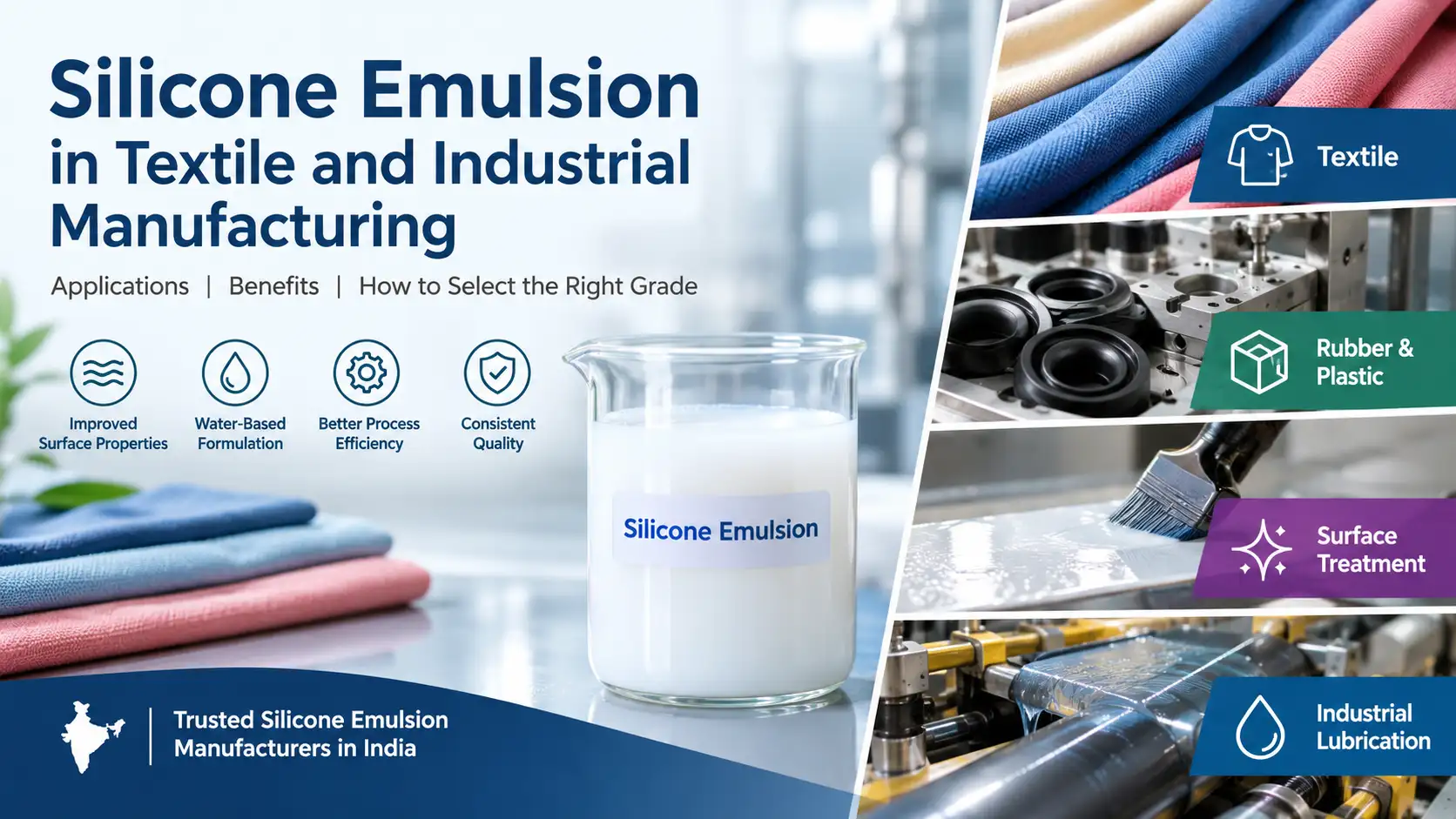
1. Textile Processing and Fabric Finishing
Textile manufacturers use selected silicone emulsions to improve fabric softness, smoothness, and surface feel. Depending on the formulation, these products can reduce friction between fibres and contribute to the desired finish.
The appropriate grade depends on fabric composition, processing conditions, finishing equipment, and the required feel of the final material. Manufacturers should conduct trials to assess softness, absorbency, colour appearance, and compatibility with other finishing chemicals.
2. Mould Release and Manufacturing Operations
In rubber and plastic processing, certain silicone emulsions are used as release agents to help components separate from mould surfaces. Proper selection can support smoother demoulding and reduce sticking during production.
However, the release formulation must be compatible with the substrate and subsequent processes. Where parts require painting, bonding, printing, or coating, manufacturers should verify that the selected product does not interfere with adhesion or finishing quality.
3. Surface Treatment and Gloss Enhancement
Silicone emulsions are also used in selected surface-treatment formulations to improve smoothness, appearance, and surface protection. Depending on the grade, they may contribute to gloss, slip, or water-repellent characteristics.
The final result depends on concentration, application technique, substrate properties, and drying conditions. Small-scale testing helps determine whether the product delivers the desired finish without unwanted residue or uneven coverage.
4. Industrial Lubrication and Processing
Some silicone emulsions support lubrication and slip-related applications where a water-based formulation is preferred. They may be used in suitable manufacturing processes involving rollers, belts, or treated surfaces.
The product should be evaluated against operating conditions, friction requirements, application concentration, and compatibility with the process. A grade designed for one purpose should not automatically be assumed suitable for another.
Key Benefits of Using the Right Silicone Emulsion
When selected and applied correctly, silicone emulsion can provide several operational benefits:
Improved surface properties: Helps achieve the required softness, smoothness, slip, or finish.
Water-based application: Can simplify incorporation into processes designed for aqueous formulations.
Process efficiency: Suitable release and lubrication grades may help reduce sticking or friction-related difficulties.
Application flexibility: Different formulations are available for specific substrates and industrial requirements.
Consistent production quality: A properly specified grade can support repeatable results when handling and process conditions remain controlled.
Actual performance varies by formulation and application. Buyers should validate product claims through technical documentation and production trials.
How to Select the Right Silicone Emulsion
Choosing the correct grade requires a clear understanding of the intended application. Industrial buyers should evaluate the following factors before placing an order.
Application requirements: Define whether the primary objective is fabric softening, mould release, lubrication, gloss enhancement, or water repellency.
Product specifications: Check active content, appearance, pH, ionic character, viscosity, and other parameters relevant to the application.
Stability and dilution: Confirm the recommended storage conditions, dilution procedure, water compatibility, and resistance to separation under normal handling conditions.
Substrate compatibility: Test the product on the actual material being treated. Different fabrics, plastics, rubbers, and coated surfaces may respond differently to the same formulation.
Technical documentation: Request the TDS and Safety Data Sheet (SDS). Review handling instructions, recommended application methods, and relevant safety precautions.
Production trials: Test the emulsion at the intended concentration and under representative operating conditions before approving it for routine production.
These steps help procurement teams compare products on technical suitability and total process value rather than purchase price alone.
Evaluating Silicone Emulsion Manufacturers in India
Businesses sourcing from Silicone Emulsion Manufacturers in India should assess more than product availability. A suitable supplier should provide clear specifications, consistent communication, relevant documentation, and realistic information about product origin and supply capabilities.
Buyers should also clarify whether the business manufactures the product directly or supplies products from established manufacturers. This distinction helps set appropriate expectations for technical support, traceability, and quality documentation.
For ongoing procurement, it is useful to maintain an approved product specification, record batch details, confirm packaging requirements, and establish delivery schedules in advance. These practices can help minimise supply interruptions and simplify quality checks when repeat orders are placed.
Why Consider Plustech Chem for Silicone Emulsion?
Plustech Chem serves industrial buyers from Gandhinagar, Gujarat, India, with a range of silicone-based chemicals and related products. Businesses evaluating silicone emulsion can discuss their application, required specifications, order quantity, and documentation needs with the company.
To explore the available product category, visit the Silicone Emulsion product page.
For applications requiring a different silicone-based material, buyers can also review the Silicone Fluid range and Silicone Oil products. These internal links help buyers compare related product categories according to their processing requirements.
Before finalising an order, confirm the selected grade's suitability, availability, technical specifications, packaging, and commercial terms.
Conclusion
Silicone emulsion can support a wide range of industrial processes, from textile finishing and mould release to lubrication and surface treatment. However, achieving reliable results requires the right formulation, correct application, and proper quality checks.
When comparing Silicone Emulsion Manufacturers, buyers should prioritise technical suitability, product consistency, documentation, and long-term supply reliability. Businesses looking for Silicone Emulsion Manufacturers in India can begin by identifying their application requirements and discussing suitable grades with an experienced supplier.
Plustech Chem invites industrial buyers to explore its silicone emulsion range and enquire about products suited to their operational needs.