How to Automate VAT Returns and Reduce Manual Accounting Work in Saudi Arabia
By anwaarmashair 22-10-2026 1
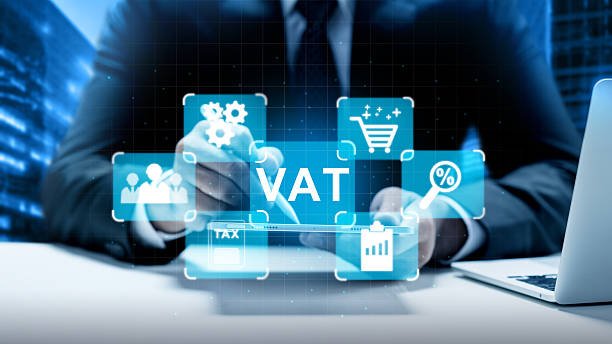
Managing Value Added Tax (VAT) returns can be challenging for businesses in Saudi Arabia, especially when accounting teams spend hours entering invoices, calculating taxes, reconciling transactions, and preparing financial reports. The use of manual accounting may enhance chances of inaccuracy, loss of documents and lateness. Luckily, automation provides a smarter approach to make these tasks simpler. Businesses that Automate VAT Returns in Saudi Arabia can reduce repetitive tasks, improve accounting accuracy, and save valuable time . Using the appropriate technology, firms can automate their financial processes and make VAT reporting easier and enable employees to concentrate on growth of the business.
The selection of credible zatca accounting software is a significant move towards automating accounting processes. Zakat, Tax and Customs Authority (ZATCA) regulates the VAT and electronic invoicing in Saudi Arabia and proper financial records are therefore necessary to relevant businesses. Quickdice SA underlines the need to embrace effective digital accounting habits which can facilitate systematic reporting and improved financial management. Through automation, processes can be simplified by businesses in their daily accounting operations to process invoices, track tax transactions, and prepare the VAT information more efficiently.
Why Is VAT Automation Important in Saudi Arabia?
VAT compliance means that it records the sales, purchases, calculates the tax and keeps the documentation to support this. When such activities are done manually, accounting staff may not cope with rising volumes of transactions and strict reporting timelines.
Automation assists businesses to cope with these tasks by standardizing its operations and centralizing financial data.
Key benefits include:
More precision: Automated computations minimize frequent data-entry and arithmetic mistakes.
Saving of time: Employees will save time in doing the repetitive accounting processes.
More organization: Financial records and invoices can be easier to administer.
Quickened reporting: The accounting departments will be able to create VAT summaries more effectively.
Better compliance: Checks regularly will assist in detecting discrepancies prior to submission.
Scalability of business: Automation of workflows will be able to handle increased volumes of transactions.
These advantages render automation an effective remedy to companies that want to achieve more effective accounting processes.
1. Choose the Right Accounting Software
The initial one is to choose an accounting software that facilitates the financial operations of the company, and the relevant Saudi VAT.
An appropriate solution must provide automatic VAT computation, invoice processing, taxation, general ledger connectivity and safe storage of documents. Companies required to comply with ZATCA electronic invoicing must also ensure the software meets the necessary technical requirements and integration processes.
These are a few of the things to consider before picking a solution based on volume of transactions, reporting, your current accounting systems, and your employees. This has to be properly configured since software was not created to ensure compliance when tax settings were not correct or the transaction classesifications.
2. Automate Sales and Purchase Invoice Processing
One of the accounting activities that are the most time-consuming is invoice processing. Manual entry of customer details, supplier invoices, and amounts verification and classification are often required of the employees.
This can be made easier through automation which will arrange invoice information in an accounting system. There are also solutions that also offer document scanning and optical character recognition (OCR) in order to access information in uploaded invoices to review their content.
The automated invoice management assists the businesses to:
Take note of sales and purchase transactions.
compute relevant VATs.
Arrange the invoices and documents.
Minimize data entry.
Determine unfinished or conflicting information.
The accounting teams are still advised to check the details of invoices and to ensure that the purchase transactions are subject to the relevant conditions to enable them recover input VAT.
3. Improve VAT Calculations and Tax Classification
Proper tax classification is needed to have proper VAT reporting. Supplies can be of standard rate, zero rate or exempt or will be subject to other applicable rules depending on the transaction.
Accounting software should be able to use predefined codes of tax to compute VAT and classify the transaction uniformly. This helps in lowering the manual calculation of every transaction by employees.
Nevertheless, companies need to set-up tax codes as per the relevant Saudi VAT legislation. Such unusual transactions, adjustments, and intricate tax circumstances could need a professional review.
Consistently revising tax settings and software updates can ensure that the calculations are consistent and preventable reporting mistakes.
4. Simplify VAT Return Preparation
VAT returns can be done manually, which frequently requires gathering data in various spreadsheets, invoices, and accounting books. Automation combines all these details, and transactions can be easily reviewed and a VAT report generated.
Businesses that Automate VAT Returns in Saudi Arabia can streamline the preparation process through the following steps :
Document sales and purchases of the period of reporting.
Use the appropriate VAT classifications.
Check invoices, credit notes and amendments.
Balance VAT accounts with supporting records.
Research differences and rectify mistakes.
Create the VAT summary and overview it.
File and make the return using the relevant process of ZATCA.
Keep the returned return and documentation.
Automated reports can be used to minimize the number of calculations that have to be made manually and to identify missing information. Nevertheless, companies are obliged to check the final amounts and make the necessary registration and payments within the necessary timeframes. The creation of a report is not necessarily an indication of a returned.
5. Integrate Electronic Invoicing With Accounting
In Saudi Arabia, electronic invoicing is a key factor to consider by businesses. ZATCA has established e-invoicing requirements in stages and the requirement is dependent on the taxpayer and the arrangements of the implementation.
The adoption of e-invoicing along with accounting programs can minimize the repetition of data and enhance alignment of invoices and financial statement.
Companies ought to make sure that their systems accommodate the invoice format that is applicable, data fields that are required and clearance/reporting requirements. They are also expected to keep track of validation errors, keep invoice records and check on technical updates.
Connected workflow assists accounting teams to have a better documentation and enhance efficiency of tax reporting.
6. Reduce Manual Reconciliation and Data Entry
Reconciliation is done to verify that the financial records are accurate and reflective of the supporting documents and transactions. When done manually, it may take much time especially to business that deals with many invoices.
Automation of accounting can assist in aligning the transactions, detecting duplications, and pointing out the differences that need to be addressed. Banking and accounting systems can also be integrated and this can make it easier to compare the transactions of a bank and the entries to be made.
Regular schedules of reconciliation should be set and employees assigned by businesses to find the exceptions. Human control is still relevant in terms of refunds, invoices in dispute, adjustments and transactions that are out of the norm.
The need to decrease the amount of repetitive reconciliation work enables accounting teams to focus on critical financial variances.
7. Use Alerts and Internal Controls
Unnecessary compliance risks may arise due to missed deadlines or missing records of work incomplete. The accounting software can assist business to keep track of the approaching deadlines, approvals, and unfinished transactions.
Some of the useful controls are automated reminders, user permissions, approval workflow and audit trails of modifications to accounting records.
These will enhance accountability and assist managers track the process of VAT preparation. Reports and authorizing adjustments and ensuring that returns are correct before submissions should also be the responsibility of employees.
Conclusion
Automation of VAT can assist Saudi Arabian business to save on manual accounting processes, enhance tax accuracy, and streamline tax reporting. Companies can save time and have better financial records by automating the process of invoice processing, standardizing tax calculations, integrating electronic invoicing, and enhancing the reconciliation process. In order to successfully Automate VAT Returns in Saudi Arabia, the business has to choose the right software, keep the accurate data about the transactions, and adhere to the relevant ZATCA requirements.
Quickdice SA can highlight the importance of smarter accounting practices that can facilitate efficiency and business development. Having the right technology, skilled workers, and regular internal controls, companies will be able to simplify their VAT processes, and enhance financial transparency. By investing in automation, accounting teams can devote decreased time to redundant administrative duties and additional time to assist with strategic choices to help businesses construct a more dependable and scalable accounting system.
Tags : VAT Automation Saudi Arabia