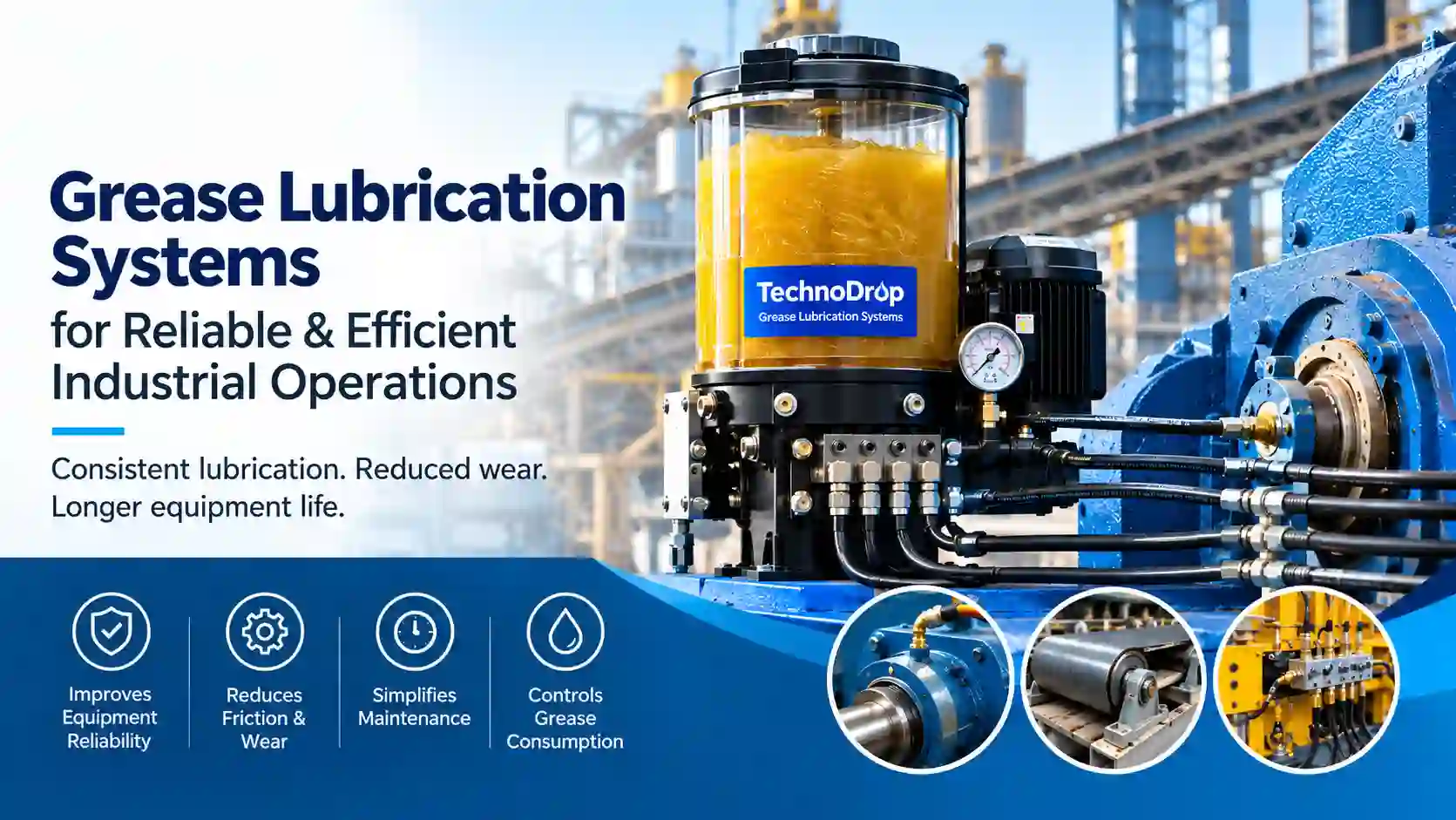
Industrial machinery relies on numerous moving components to maintain continuous production. Bearings, rollers, gears, joints, and sliding surfaces experience friction during operation, making proper lubrication essential for equipment reliability. However, applying grease is not enough on its own. The lubricant must reach the correct components in suitable quantities and at appropriate intervals.
This is why grease distribution deserves attention when planning an industrial maintenance strategy. Grease Lubrication Systems help deliver lubricant to designated machine components, supporting consistent lubrication and reducing the need for repetitive manual greasing.
For industries operating conveyors, production lines, heavy machinery, and automated equipment, an appropriately designed system can help improve maintenance efficiency and support longer component service life.
Why Is Proper Grease Distribution Important?
Grease provides a lubricating film between contacting surfaces, helping reduce friction and wear. It can also help protect suitable components against contaminants and moisture when the correct grease and sealing arrangements are used.
However, grease distribution problems can occur when lubricant quantities are incorrect, supply lines become blocked, or lubrication points are overlooked.
A well-designed distribution arrangement helps address these challenges by delivering grease through a planned network. This is particularly valuable for machines containing multiple bearings or lubrication points spread across a large installation.
For a broader understanding of industrial lubrication solutions, visit TechnoDrop's lubrication system page.
How Grease Lubrication Systems Work
A typical grease lubrication system consists of several interconnected components. Their exact configuration depends on the machine, lubricant requirements, and number of lubrication points.
1. Grease Reservoir
The reservoir stores the grease required for system operation. Its capacity should suit the application's lubricant demand and maintenance schedule. Keeping the reservoir clean and monitoring grease levels helps prevent interruptions in supply.
2. Lubrication Pump
The pump moves grease from the reservoir into the distribution network. Pump selection depends on the grease characteristics, required pressure, delivery volume, and system configuration.
3. Distribution and Metering Components
Distributors and metering devices divide the grease supply among designated lubrication points. Correct sizing is important because each component may require a different quantity of lubricant.
4. Pipelines and Lubrication Fittings
Pipelines carry grease to the required locations, while fittings provide suitable connection points. Proper routing, secure connections, and regular inspection help minimize leakage and blockages.
5. Control and Monitoring Devices
Depending on the design, a system may include timers, controllers, pressure monitoring, or other devices that help manage and check lubrication operation.
Together, these components form a coordinated arrangement for supplying grease where it is needed.
Key Benefits of Proper Grease Distribution
Reduced Friction and Wear
When the correct grease reaches the intended surfaces, it helps maintain a protective lubricating film. This can reduce direct surface contact and support reliable operation under specified conditions.
More Consistent Lubrication
Centralized and automatic systems can make lubricant delivery more repeatable than manual methods, particularly when numerous lubrication points must be serviced.
Improved Maintenance Efficiency
Routing grease through a distribution network can reduce the time required to access individual lubrication points. Maintenance teams can use the time saved for inspections and other preventive maintenance activities.
Better Control Over Grease Consumption
Appropriate metering helps supply the required lubricant quantity. This can limit unnecessary grease use while avoiding the problems associated with inadequate lubrication.
Support for Equipment Reliability
Consistent lubrication is one part of an effective reliability strategy. When combined with proper installation, inspections, alignment, and condition monitoring, it can help reduce lubrication-related failures.
Factors That Affect Grease Distribution Performance
Even a well-designed system requires suitable operating conditions and regular maintenance. Industrial buyers should consider several important factors before selecting equipment.
Grease consistency and compatibility: The grease must be compatible with the pump and distribution components. Low temperatures, unsuitable grease consistency, or incompatible lubricants can affect flow and system performance.
Operating pressure: The pump must provide sufficient pressure for the system's design and operating conditions. Excessive pressure can also create problems if components are not rated for it.
Pipeline length and layout: Long lines, unsuitable pipe diameters, sharp bends, and poorly planned routing can influence grease delivery. The distribution network should be designed according to the application's requirements.
Lubrication quantity: Each point needs an appropriate quantity based on component specifications, operating conditions, and lubrication intervals.
Environmental exposure: Dust, moisture, vibration, and temperature extremes can influence component selection and inspection frequency.
These factors should be assessed during system design rather than addressed only after lubrication problems appear.
Choosing the Right Grease Lubrication Systems Manufacturers
Selecting experienced Grease Lubrication Systems Manufacturers can help businesses identify equipment suited to their machinery and operating environment.
When comparing Grease Lubrication Systems Manufacturers in India, evaluate their understanding of lubrication requirements, distribution design, pump selection, component quality, technical documentation, and after-sales support.
A suitable supplier should be able to assess the number of lubrication points, grease specifications, required delivery quantities, pipeline arrangement, and operating conditions before recommending a configuration.
It is also useful to consider spare-part availability and the ease of inspecting and maintaining the installed system.
Techno Drop Engineers provides industrial lubrication solutions for a range of machinery applications. Businesses exploring grease-based lubrication can review the company's grease lubrication systems to learn more about relevant options.
For machinery designed to use circulating or supplied oil instead of grease, TechnoDrop also provides information about lubricating oil systems.
Where Are Grease Lubrication Systems Used?
Grease lubrication systems are used across several industrial sectors, including:
Steel and rolling mills: For designated bearings and supporting machinery.
Cement manufacturing: For suitable conveyor, crusher, and material-handling components.
Mining and mineral processing: For equipment operating under dusty and demanding conditions.
General manufacturing: For production machinery with multiple lubrication points.
Material handling: For conveyor bearings, joints, and other specified components.
Heavy engineering: For machinery requiring planned grease delivery across several components.
The system should be selected according to the actual equipment requirements, rather than assuming the same configuration is suitable for every application.
Frequently Asked Questions
1. What is the difference between manual and centralized grease lubrication?
Manual lubrication requires grease to be applied individually at each service point. Centralized lubrication distributes grease from a common supply to multiple designated points through a connected network.
2. Can grease distribution systems prevent all lubrication failures?
No. They can improve delivery consistency, but failures may still occur because of incorrect grease selection, contamination, blocked lines, component damage, or unsuitable system settings.
3. How can I maintain a grease lubrication system?
Follow the manufacturer's maintenance instructions, check reservoir levels, inspect lines and fittings for leaks, verify distributor operation, and investigate unusual pressure or delivery conditions.
4. How do I select the right industrial grease lubrication system?
Assess lubrication points, grease requirements, operating conditions, pump capacity, distribution layout, and maintenance needs before choosing a system.
Conclusion
Proper grease distribution is essential for maintaining suitable lubrication conditions in industrial machinery. By delivering grease to designated components in controlled quantities, a well-designed system can support maintenance efficiency, help reduce friction-related wear, and improve lubrication consistency.
For industrial businesses evaluating Grease Lubrication Systems Manufacturers in India, the most effective approach is to match the system design to the machinery, lubricant, and operating environment.
Explore TechnoDrop's grease lubrication systems to learn more about lubrication solutions for industrial applications.
Tags : Grease Lubrication Systems