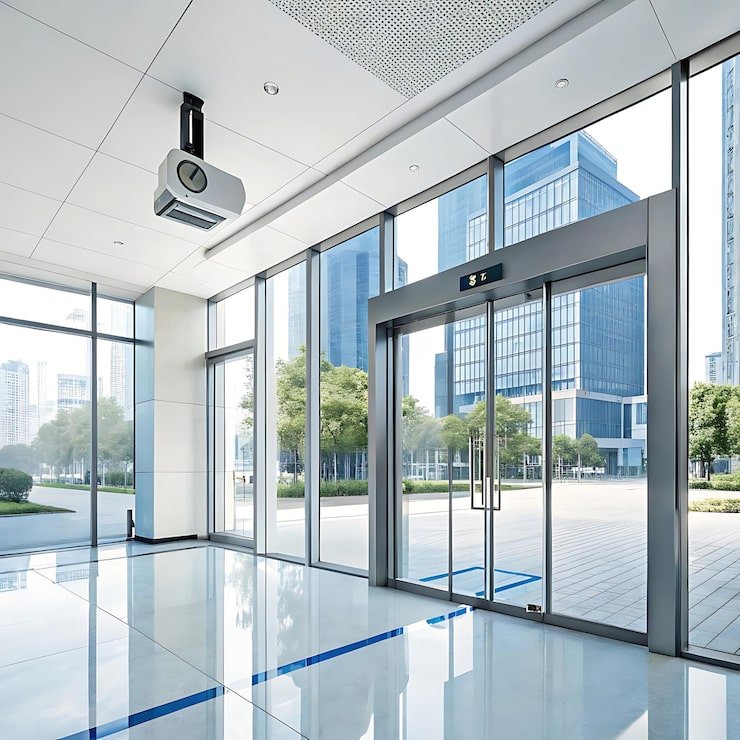
In Singapore's climate and high-density built environment, auto door maintenance is not optional — it is a facility management responsibility. Most automatic doors in commercial, retail, and residential settings should be serviced every three to six months, depending on foot traffic volume, operating hours, and environmental exposure. High-traffic sites may require monthly inspections to remain compliant and safe.
If you manage a building, shopping mall, hospital, or office complex, your automatic door system is one of the hardest-working assets on-site. It opens and closes hundreds — sometimes thousands — of times each day. Without a structured servicing schedule, small mechanical issues become costly failures, and safety risks go undetected until it is too late. Understanding the right auto door maintenance frequency starts with knowing what actually drives wear and tear.
What Factors Determine How Often Automatic Doors Need Servicing?
There is no single answer that applies to every installation. Maintenance frequency is directly shaped by three core variables: usage intensity, operating environment, and door type.
Foot Traffic Volume
A sliding automatic door at a supermarket entrance may complete 1,500 to 2,000 cycles per day. A door at a low-traffic office lobby might see 100 to 200. Higher cycle counts accelerate wear on rollers, belts, sensors, and motors. As a general benchmark:
- Low traffic (under 300 cycles/day): Service every six months
- Medium traffic (300–800 cycles/day): Service every three to four months
- High traffic (800+ cycles/day): Service every one to two months
These are starting points, not fixed rules. A door that operates within a hospital or transport hub should be treated as high-traffic regardless of cycle count, given the consequences of unexpected failure.
Singapore's Tropical Climate
Humidity, heat, and frequent rainfall take a measurable toll on automatic door components. Rubber seals degrade faster. Metal tracks attract moisture and can corrode. Sensors become less reliable when exposed to condensation or dust. In Singapore, where average humidity hovers above 80%, automatic door inspection intervals should account for this added environmental stress — particularly for externally facing doors.
Type of Automatic Door System
Different systems have different maintenance profiles. Sliding doors with floor-mounted tracks accumulate dust and debris more readily than overhead-hung systems. Swing door operators are sensitive to alignment shifts. Folding and bi-folding systems have more mechanical articulation points, each requiring lubrication and adjustment. Your servicing schedule should be tailored to the specific system installed, not applied generically.
Recommended Auto Door Maintenance Schedule by Facility Type
Facilities management teams often ask for a practical reference. The table below reflects guidance appropriate for Singapore's operating conditions.
These frequencies assume Singapore's ambient conditions. If a facility runs 24-hour operations or has seasonal traffic spikes — such as during major sales events or festive periods — service intervals should be shortened accordingly.
What Does a Professional Automatic Door Inspection Cover?
A routine automatic door inspection is not just a visual walkthrough. A qualified technician should systematically check and document the following:
- Sensor calibration: Motion, presence, and safety sensors must detect correctly and respond within specification
- Drive mechanism: Motor performance, belt or chain tension, and drive arm alignment
- Track and roller condition: Debris clearance, wear levels, and lubrication status
- Door leaf alignment: Ensure panels move without friction or binding
- Opening and closing speed: Adjust to safe, compliant levels for the site
- Safety reverse function: Verify the door reverses or stops when it encounters an obstruction
- Electrical connections: Check for loose wiring, corrosion, or signs of overheating
- Emergency breakout function: Confirm the door can be pushed open manually in an evacuation
Every service visit should produce a written report. This documentation matters for building audits, insurance claims, and demonstrating duty-of-care compliance.
Why Preventive Door Maintenance Saves More Than It Costs
Reactive maintenance — fixing things only when they break — consistently costs more than preventive door maintenance. A failed door operator on a Monday morning at a retail entrance can mean lost revenue, frustrated customers, and an emergency call-out fee that is two to three times the cost of a routine service visit.
Beyond cost, there is a safety dimension that building managers cannot ignore. Automatic sliding doors that malfunction can close unexpectedly, trap individuals, or fail to open during a fire evacuation. Under Singapore's Building and Construction Authority (BCA) guidelines, building owners carry responsibility for maintaining safe access systems. A documented, consistent servicing programme is part of demonstrating that obligation is being met.
Signs Your Automatic Door Needs Immediate Attention
Do not wait for the next scheduled visit if you observe any of the following:
- Door hesitates, stutters, or stops mid-cycle
- Unusual grinding, squealing, or clicking sounds during operation
- Sensor failure — door does not detect approaching occupants
- Door closes faster than expected or fails to hold open long enough
- Visible damage to panels, tracks, or weather seals
- Door remains open or closed and does not respond to activation
Any of these symptoms points to a component under stress. Early intervention prevents further damage and keeps your occupants safe.
Building a Compliant Maintenance Programme
For facilities teams managing multiple automatic door systems across a building or portfolio, a structured programme is far more manageable than responding to faults on an ad hoc basis. A well-designed maintenance programme should include:
- Asset register: Log each door unit, model, installation date, and location
- Usage assessment: Estimate daily cycle count per door or install a cycle counter
- Tiered servicing schedule: Assign high, medium, or low-frequency intervals based on usage data
- Service records: Keep inspection reports, parts replaced, and technician sign-offs on file
- Escalation protocol: Define who is notified when a fault is detected outside of scheduled visits
This kind of structured approach also supports budgeting. When you know how many doors need servicing and at what intervals, annual maintenance costs become predictable — not a surprise line item every quarter.
Choosing the Right Automatic Door Servicing Partner in Singapore
Not all maintenance providers offer the same depth of service. When evaluating a contractor, look for technicians who are trained on the specific brands and systems you have installed, who provide detailed written reports after every visit, and who carry the necessary parts to complete most repairs on the first call.
For building managers and facilities teams looking for a reliable partner in Singapore, Multiwall offers professional auto door maintenance and installation services designed for commercial and high-traffic environments. Their team works with a range of automatic door systems and provides structured service programmes suited to Singapore's operational demands.