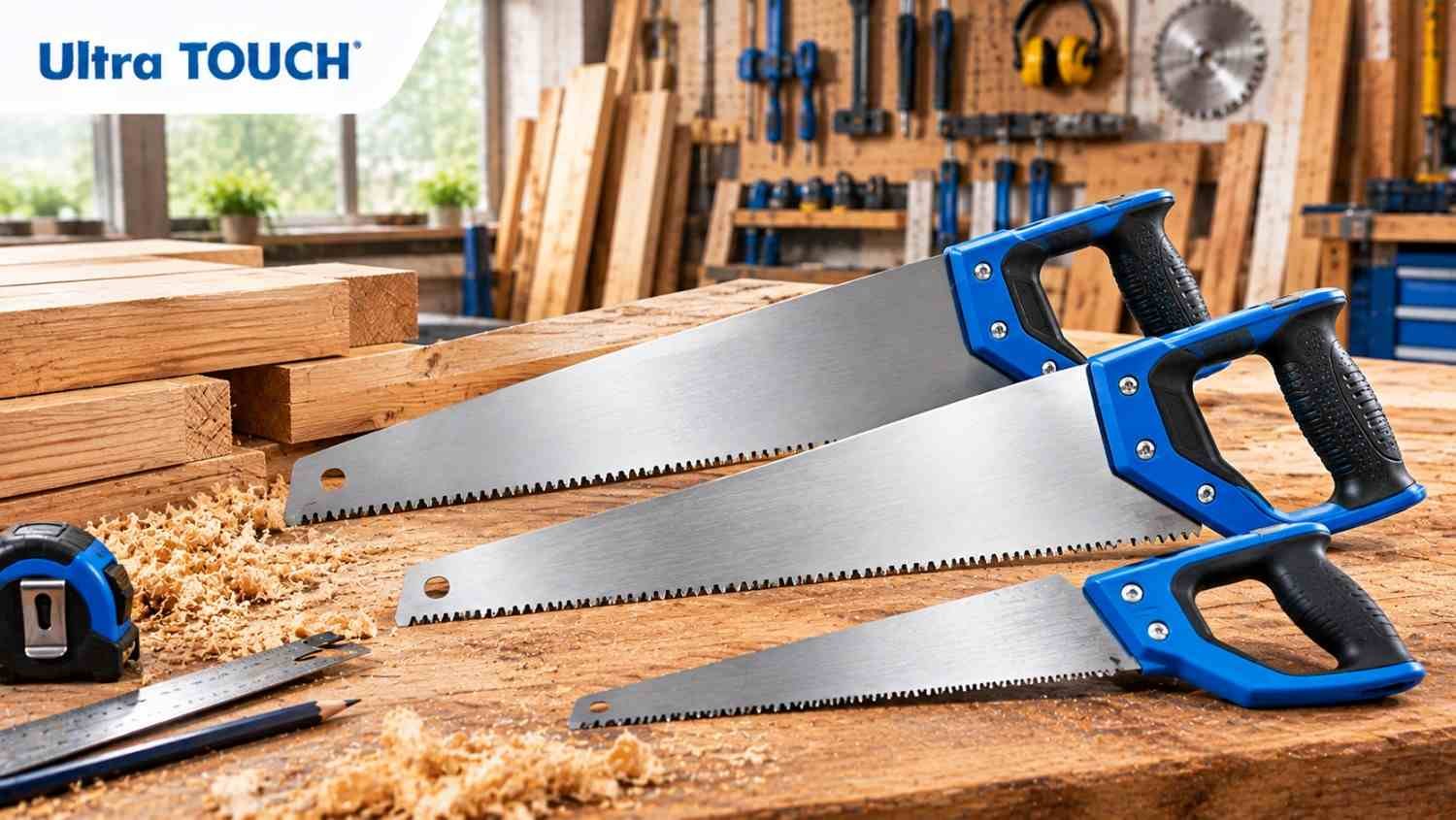
A carpenter opens a new shipment of hand saws. The blades look identical, but after a few hours of cutting, some start pulling sideways. Others lose their sharpness unusually quickly. By then, the distributor has already paid for the stock.
Hand Saws may look like simple cutting tools, but blade quality, tooth geometry, and manufacturing consistency make a considerable difference to their performance.
India has a well-established hand tools manufacturing industry, yet its international presence remains limited. According to NITI Aayog's April 2025 report, India accounted for approximately 0.6% of global handsaw exports. For wholesalers and procurement managers, understanding the industry's capabilities, specifications, and supply chain challenges is essential before placing bulk orders.
Hand Saws Specifications: What Separates Reliable Tools from Cheap Stock?
Hand saws are manually operated cutting tools used in woodworking, furniture production, construction, and maintenance. Their effectiveness depends primarily on blade material, tooth design, handle construction, and intended cutting applications.
Blade Materials and Common Hand Saw Types
High-carbon steel is widely used for hand saw blades because it can provide the hardness needed for effective cutting when properly processed.
Common types include:
- Crosscut saws: Designed for cutting across wood grain.
- Rip saws: Used for cutting along the grain.
- Back saws: Feature reinforced backs for controlled, precise cuts.
- General-purpose saws: Suitable for routine carpentry and workshop applications.
The Specification Most Bulk Buyers Overlook
Tooth count, measured in teeth per inch (TPI), has a direct effect on cutting behaviour. A coarse 5–7 TPI blade generally removes material faster, while a finer 10–12 TPI configuration can produce cleaner cuts in suitable materials.
But TPI alone doesn't guarantee cutting performance.
Tooth set, heat treatment, blade straightness, and handle alignment matter just as much. A supplier who only quotes blade length and price is leaving out information that can determine whether the product actually performs as expected.
Five Criteria for Evaluating Hand Saws Manufacturers
Selecting Hand Saws Manufacturers requires more than comparing quotations. A low purchase price means little if defective stock increases complaints and replacement costs.
Procurement teams should evaluate these five factors:
- Material consistency: Ask about blade steel, heat treatment, and hardness specifications. A bad answer is simply "premium quality steel" without any technical details.
- Cutting performance: Request samples for testing on the intended material. A supplier who refuses sample evaluation but pushes for a bulk advance is creating unnecessary risk.
- Production consistency: Compare several pieces from the same batch for tooth alignment, finishing, and handle fit. A bad answer is claiming every batch is identical without demonstrating inspection procedures.
- Commercial transparency: Confirm pricing, MOQ, packing quantity, payment terms, and replacement conditions. Vague promises to adjust defective items later are not an acceptable substitute for a written policy.
- Delivery reliability: Ask whether products are ready for dispatch or require production. A supplier promising immediate delivery without checking stock availability is giving you a deadline you cannot trust.
Sample approval is often easier than maintaining consistent quality across a repeat order.
Benefits of Choosing Properly Specified Hand Saws
The commercial advantage of reliable hand saws is not merely a sharper cutting edge. It is the reduction of avoidable expenses throughout the distribution chain.
Six Advantages That Protect Buyer Margins
- Lower replacement costs: Proper blade processing and inspection can reduce premature wear and related complaints.
- Better cutting consistency: Suitable tooth geometry helps users achieve predictable results, reducing the likelihood of product returns.
- Reduced operator fatigue: Balanced construction and comfortable handles can improve control during repeated cutting.
- Simpler inventory planning: Consistent specifications make it easier to reorder familiar models without repeatedly evaluating alternatives.
- Improved retailer confidence: Dealers are more willing to restock products that generate fewer complaints from end users.
- Reduced operating dependence: Manual hand saws require no electrical supply, making them practical for outdoor work, maintenance, and locations without convenient power access.
For distributors, these advantages can support repeat business while protecting margins that would otherwise disappear into replacements, freight charges, and unsold inventory.
Availability and Market Trends for Hand Saws in India
India's hand tools manufacturing ecosystem is concentrated around established industrial centres.
According to NITI Aayog's 2025 industry report, Punjab accounts for approximately 80% of India's hand tools exports, with Jalandhar and Ludhiana serving as major manufacturing clusters.
Other centres include Mumbai, Nagpur, and Nagaur.
This geographical concentration creates purchasing opportunities, but it also raises logistical questions.
Hand Saws Manufacturers in India compete across product specifications, production capacity, distribution arrangements, and delivery commitments. Buyers should consider the total landed cost rather than the factory quotation alone.
How Distribution Channels Influence Availability
- Hand Saws Suppliers: Support procurement through product availability, quotations, and dispatch coordination.
- Hand Saws Dealers: Serve regional hardware markets, workshops, contractors, and retail buyers.
- Hand Saws Wholesalers: Handle bulk distribution and recurring inventory requirements across different markets.
Mumbai can offer distribution advantages through its commercial networks and access to port infrastructure, although freight costs still depend on shipment size and destination.
Three Industry Trends Worth Watching
India's hand saw sector is influenced by developments in the wider hand tools market.
1. Export diversification: International buyers are examining alternative sourcing markets. However, India's approximately 0.6% share of global handsaw exports shows that the sector still has substantial ground to cover.
2. Greater attention to specifications: For buyers managing multiple retail outlets, documented product consistency can become more valuable than a small reduction in purchase price.
3. Pressure on manufacturing costs: NITI Aayog identifies a 14–17% structural cost disadvantage for India's wider tools industry compared with competitors such as China. Raw materials, financing, productivity, and logistics remain important challenges.
Nobody should mistake export potential for guaranteed business growth. Manufacturers still have to prove their pricing, reliability, and production capabilities.
About Ultra Touch: Our Approach to Hand Saw Quality
At Ultra Touch, we focus on tools intended for practical working conditions across carpentry, construction, and maintenance applications.
Our hand saw range uses high-carbon steel blades and carefully designed tooth patterns to support controlled cutting. We also focus on handle comfort and tool balance, because cutting performance depends on how the entire tool behaves during use.
One product detail we highlight is the relationship between blade-tooth design and grip control. A sharp blade alone cannot compensate for poor handling during repeated cutting.
We operate from 330, Samuel Street, Vadgadi, Mumbai – 400003, Maharashtra, India. We understand that our B2B customers need clear product information before committing to stock, particularly when ordering for resale or regular workshop use.
We welcome enquiries from distributors, wholesalers, hardware retailers, and procurement teams looking for Hand Saws.
For a relevant quotation, please send us:
- Required saw type and blade length
- Preferred tooth configuration or application
- Estimated order quantity
- Delivery city and PIN code
- Packaging or branding requirements, if applicable
We will need to confirm the model-specific MOQ, product availability, quotation response time, and dispatch schedule against your enquiry. We do not publish a guaranteed response time or standard MOQ for this product range.
Conclusion
The Indian market for Hand Saws offers opportunities for manufacturers, wholesalers, and industrial buyers, but competitive pricing alone will not build reliable supply relationships. Blade construction, documented specifications, and predictable deliveries remain central purchasing considerations. As India's tool manufacturing capabilities develop, businesses that maintain consistent product quality and transparent commercial terms will be better positioned for future demand.
Frequently Asked Questions
1. What should buyers check before purchasing Hand Saws in bulk?
Start with blade steel, tooth configuration, handle attachment, and intended cutting material. Request samples before approving a substantial order. The cheapest blade may cost more once returns and replacements are included.
2. Which factors distinguish reliable Hand Saws Manufacturers in India?
Look for consistent specifications, sample availability, documented inspection procedures, and clear order terms. A manufacturer's location or production claims alone cannot establish product reliability.
3. Do Hand Saws Suppliers provide different blade sizes and tooth patterns?
Many suppliers handle multiple specifications, but their actual range varies. Confirm blade length, TPI, stock status, and application suitability before placing an order. Not every supplier keeps every configuration ready for dispatch.
4. How do Hand Saws Dealers typically purchase products for resale?
Dealers generally assess local demand, selling price, packing quantity, and repeat availability. Some purchase directly from manufacturers, while others work through regional distributors. The better arrangement depends on order volume and freight costs.
5. What should Hand Saws Wholesalers confirm before ordering large quantities?
Confirm the exact model, carton quantity, product consistency, payment conditions, delivery schedule, and defect handling process. Get commercial commitments in writing rather than relying on verbal assurances.
6. Are Indian Hand Saws Manufacturers suitable for export procurement?
Potentially, yes. India has established hand tools manufacturing clusters, but a domestic supplier is not automatically export-ready. Buyers should verify export documentation, packaging standards, destination-market requirements, and relevant compliance evidence.
7. Can Ultra Touch support B2B enquiries for Hand Saws?
We accept product enquiries from business buyers through our Mumbai contact office. Share your required specifications, quantity, and delivery destination so we can discuss availability and quotation terms. MOQ and dispatch timing need confirmation for the selected model.